Australian PM reveals next steps on Indigenous referendum
The Hindu
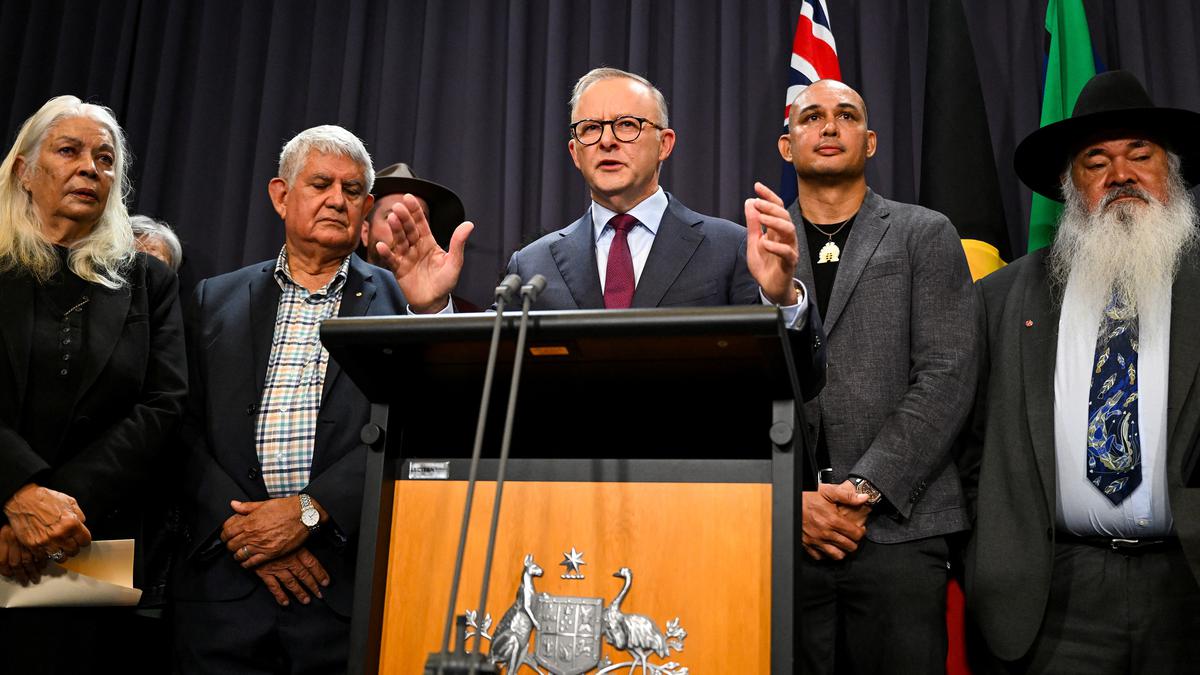
Australian Prime Minister Anthony Albanese fought back tears on Thursday as he revealed the question the government wants to put to a vote in a proposed federal referendum to constitutionally recognize Aboriginal and Torres Strait Islander people.
Australian Prime Minister Anthony Albanese fought back tears on Thursday as he revealed the question the government wants to put to a vote in a proposed federal referendum to constitutionally recognize Aboriginal and Torres Strait Islander people.
"If not now, when?," said Mr. Albanese, choking up during a televised media conference.
"For many...this moment has been a very long time in the making," Mr. Albanese said, standing alongside several Indigenous leaders. "Yet they have shown such patience and optimism through this process, and that spirit of cooperation and thoughtful, respectful dialogue has been so important at arriving at this point in such a united fashion."
Australia is seeking to give more recognition to its Aboriginal people, who have inhabited the land for 60,000 years but are not mentioned in the 122-year-old constitution. Any constitutional alterations require a national referendum.
Making up about 3.2% of Australia's nearly 26 million population, Indigenous people track below national averages on most socio-economic measures and suffer disproportionately high rates of suicide and imprisonment. Aboriginal people were marginalized by British colonial rulers' doctrine of terra nullius - nobody's land - and were not granted voting rights until the 1960s.
Australians will be asked to vote between October and December on amending the constitution to create a consultative committee in parliament called the Aboriginal and Torres Strait Islander Voice. It would provide non-binding advice to parliament on matters that affect First Nations people.
The government will introduce the constitution alteration bill next week, hoping to pass it in the parliament by the end of June.


Vietnam accelerates its shift to ethanol fuel as rising energy prices from the Iran war impact its economy.

Teenagers sue Musk's xAI, alleging its image-generator created explicit images of them as minors, sparking concerns over AI safety.

Shorts News:Watch: Netanyahu: Israel ‘acted alone’ in Iranian gas field attack

Indonesian billionaire Michael Bambang Hartono, co-founder of Djarum Group, has died at 86, leaving a significant legacy.

European nations, Japan, and Canada unite to ensure safe passage through the Strait of Hormuz and stabilize energy markets.

Some of the estimated 20 billion yuan ($2.9 billion) worth of equipment, including screen-printing production lines, will require export approval from Chinese regulators, according to the people. It wasn't immediately clear how much of the equipment would require approval or how long it would take.

Three men, including a Super Micro VP, charged with smuggling U.S. AI technology to China, threatening national security.

Trump compares U.S. strikes on Iran to Pearl Harbor in meeting with Japan's PM, highlighting the element of surprise.

Iran-Israel war: Follow the latest updates from The Hindu on the West Asia conflict on March 20, 2026

The closure of the Strait of Hormuz disrupts a vital artery of the global economy, triggering price increases and turmoil in energy markets; as supply shocks reshape the geopolitics of energy, countries like India, the U.S., and Russia recalibrate strategies amid shifting oil flows and rising dependence

EU lawmakers advance U.S. trade deal legislation, overcoming delays and adding safeguards amid concerns over compliance from the Trump administration.

Pro-Iran Iraqi group pauses U.S. embassy attacks for five days, imposing conditions amid ongoing regional tensions and strikes.

Russia condemns the Israeli airstrike injuring RT journalists in Lebanon, calling it deliberate amid ongoing regional conflict.