Auditor general's findings no surprise to London-area Indigenous leaders
CBC
Indigenous leaders in the London area say the findings of this week's scathing federal auditor general's report about Indigenous Services Canada (ISC) come as no surprise to them.
Auditor general Karen Hogan found the department has fallen far behind in implementing numerous recommendations from past department audits, despite a near-doubling in spending since 2019.
As a result, First Nations have been left to face persistent barriers accessing health care, safe drinking water and emergency management services, the report says.
"Sustained focus from Indigenous Services Canada to redesign how it delivers programs and collaborating with First Nations to improve their capacity are important steps for resolving these persistent issues, improving outcomes, and advancing reconciliation," Hogan said in a statement.
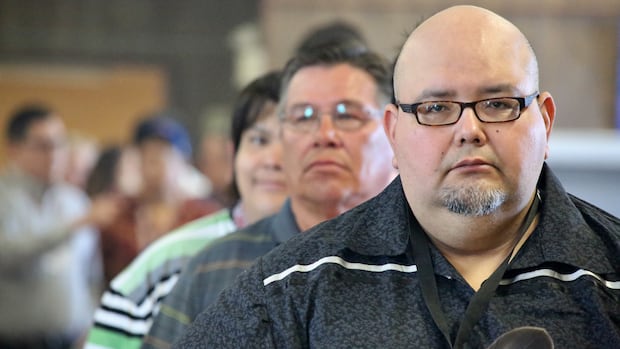
For Joel Abram, Grand Chief of the London-based Association of Iroquois and Allied Indians, the report confirms what First Nations have been saying for years — that the system is deeply broken, isn't working to empower Indigenous communities, and needs a complete overhaul.
"Seeing on social media, a town 20 minutes away saying, 'We have extended hours for our splash pad,' meanwhile, 20 minutes away we don't even have drinking water, that tells you something is really wrong with the system," he told CBC's Afternoon Drive on Wednesday.
Abram is a member of Oneida Nation of the Thames. The First Nation has been under a long-term drinking water advisory since 2020. It's one of 36 First Nations communities currently under an advisory, including neighbouring Chippewas of the Thames and Munsee-Delaware Nation.
Oneida's water is sourced from an aquifer under the Thames River, but a process to upgrade and connect the system to Lake Huron has been underway for years. In 2023, Oneida secured $43 million in federal funding for the work, with a completion goal of 18 to 24 months.
ISC's website shows the project has completed the design phase, and anticipates the drinking water advisory will be lifted in fall 2026.
The federal government has yet to bring back legislation to ensure First Nations have access to clean drinking water, and they still lack enforceable water quality standards, Hogan's report said.
Speaking with reporters on Tuesday, Indigenous Services Minister Mandy Gull-Masty defended her department, framing the report as a positive review of its work.
"We are the department that works with our partners; we co-develop. This is where our greatest successes lie. That's what the auditor general's report also reaffirms for me," Gull-Masty said.
"There are some things in the report that are guideposts for us. We're going to continue working on this. It is a pathway forward."
The minister added that First Nations haven't always received enough funding, historically, and that there were some things in the report she didn't necessarily agree with.


Toronto police say they are creating a counter-terrorism unit and a specialized task force that will see officers with semi-automatic rifles stationed at key locations in the city.

ATCO Ltd. says it's taking a 40 per cent ownership stake in the company building the Grays Bay Road and Port project.

Justice Minister Sean Fraser says he has no plans to change how judges are appointed in Canada despite four premiers writing to Prime Minister Mark Carney to ask for more of a say in the process.

An RCMP-led corruption investigation is underway and at least one current and one former Calgary city councillor, as well as a business were subject to search warrants executed last week, CBC News has learned.

Ontario’s education minister is telling school boards to ensure their upcoming graduation ceremonies don’t express any “political views” or “engage in divisive or contentious issues of any kind,” according to an internal memo obtained by CBC News.

A new daily non-stop flight between Charlottetown and Montreal is set to begin this summer.

The Crown has dropped mischief charges for a second time against a London, Ont., doctor accused of spraying ketchup on the office of a local MP during a 2024 protest.

An RCMP-led corruption investigation is underway into at least one current Calgary city councillor as well as a business, CBC News has learned.

Much of Newfoundland is digging out of a blustery and messy day as another storm slams into the island.

Timiskaming—Cochrane MPP John Vanthof recalls the meeting in Thunder Bay earlier this month. He was part of the nine-day road trip along Highways 11 and 17 with other NDP MPPs.

A bill before the Nova Scotia Legislature is proposing raising the age limit for support for young people who have been in the foster care or group home system to 26.

The Fredericton Police Force has reallocated funds so new staff can be hired this year to better manage evidence after a police error upended murder cases against five people.

One of two pilots killed in a plane crash at New York's LaGuardia Airport Sunday earned his wings at an Ontario college, CBC News has learned.