Asteroid that could wipe out a city is near, but don't fear
The Hindu
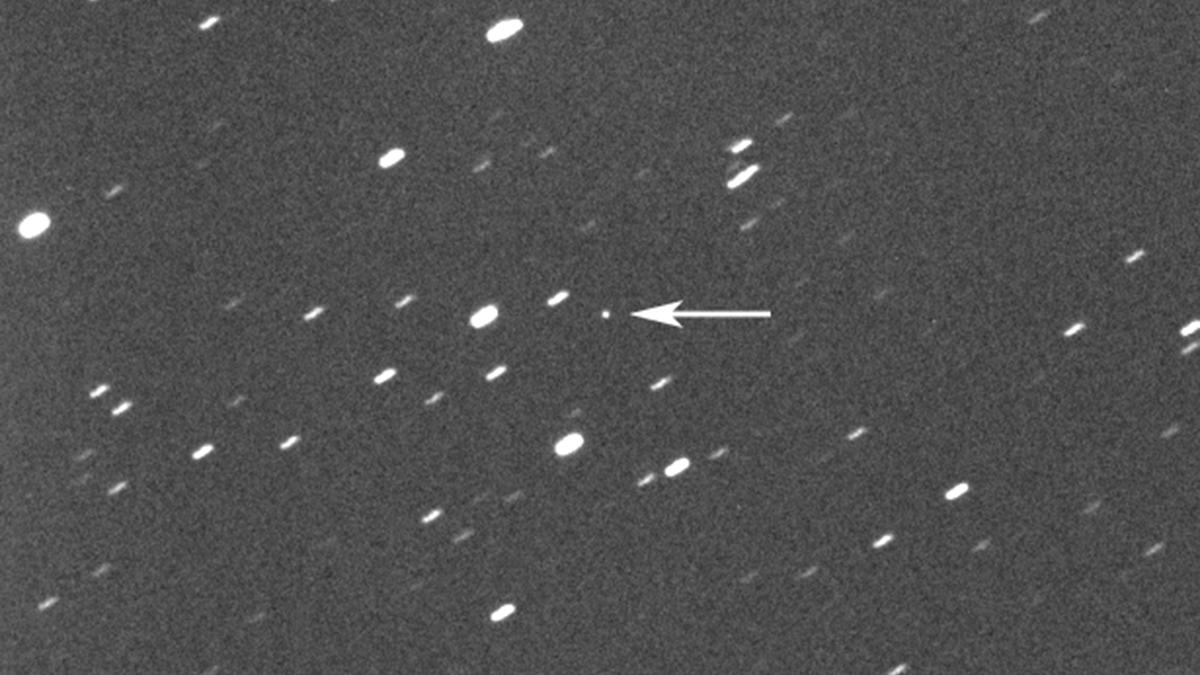
An asteroid big enough to wipe out a city will fly between the earth and moon’s orbit this weekend and miss both the celestial bodies.
An asteroid big enough to wipe out a city will zip harmlessly between Earth and the moon's orbit this weekend, missing both celestial bodies.
Saturday’s close encounter will offer astronomers the chance to study a space rock from just over 100,000 miles (168,000 kilometers) away. That’s less than half the distance from here to the moon, making it visible through binoculars and small telescopes.
While asteroid flybys are common, NASA said it’s rare for one so big to come so close — about once a decade. Scientists estimate its size somewhere between 130 feet and 300 feet (40 meters and 90 meters).
Also Read | NASA’s DART spacecraft hits target asteroid in first planetary defence test
Discovered a month ago, the asteroid known as 2023 DZ2 will pass within 320,000 miles (515,000 kilometers) of the moon on Saturday and, several hours later, buzz the Indian Ocean at about 17,500 mph (28,000 kph).
“There is no chance of this ‘city killer’ striking Earth, but its close approach offers a great opportunity for observations,” the European Space Agency’s planetary defense chief Richard Moissl said in a statement.
Astronomers with the International Asteroid Warning Network see it as good practice for planetary defense if and when a dangerous asteroid heads our way, according to NASA.


Chefs and cookery experts share smart kitchen hacks, hybrid cooking methods and appliance tips to help households reduce LPG use without compromising on food

Discover groundbreaking research on Titan's lakes, bat vaccinations, and the unique aroma of ripening bananas in just one minute.

IRSO's NavIC system faces challenges as the last atomic clock fails, reducing operational satellites for navigation services.

Discover efficient pressure cooking techniques to save up to 50% on fuel. OPOS B Ramakrishnan tells you how

Mercedes-Benz CLA 250+ with EQ Technology review: design, performance, range and features explained. Discover how the new electric CLA combines advanced AI, long range, fast charging and futuristic styling for the next generation of luxury EVs.

Pi Day is celebrated every year on March 14, honouring the significance of the mathematical constant π and its applications in mathematics.

Discover how sculptural interior design transforms modern spaces, blending creativity and functionality to evoke emotion and identity.

A study reveals that certain antibiotics can cause long-lasting changes in gut microbiome diversity for up to eight years.

Indian scientists and international experts are divided over a study questioning the viability of a nuclear reactor fuel called HALEU-thorium; while critics cite safety risks, proponents argue the technology is vital to achieve national energy goals.

ISRO and AIIMS partner to enhance space medicine research, focusing on human health during long-duration space missions.

A practical guide to induction setups for students, families, and home food businesses as India’s LPG supply faces its biggest disruption in years

Explore the electrifying Oscars 2026 race, featuring standout films, baffling nominations, and memorable performances amid a cinematic transition.

Zai and Rom Whitaker’s latest book for young readers, The Book of Indian Snakes, tackles common misconceptions surrounding snakes, highlighting their utility to humans