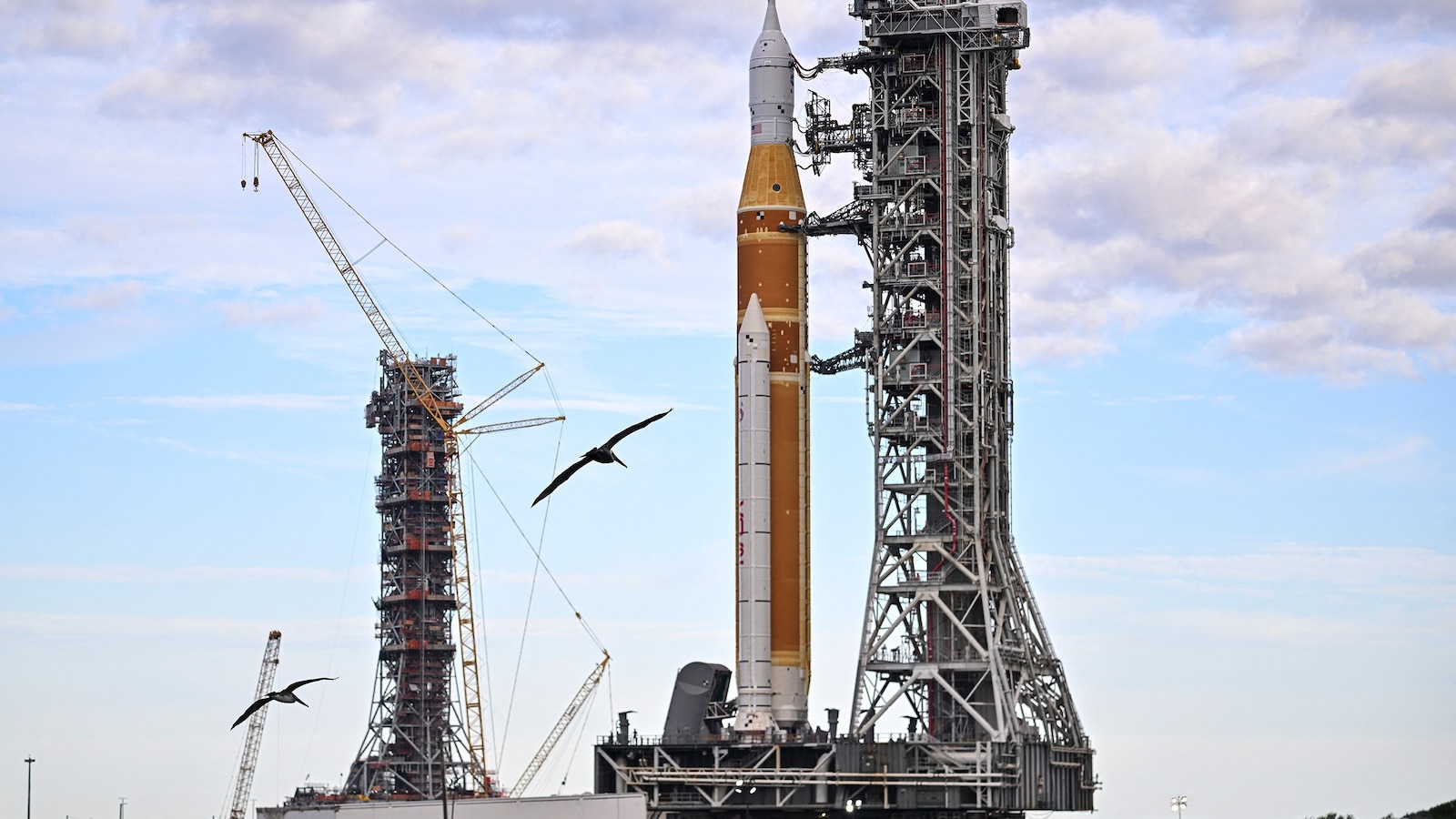
Artemis II rocket mission to the moon: What you need to know
ABC News
The U.S. is once again challenging itself to go to the moon, and this time, NASA and the Trump administration want to establish a long-term presence on the lunar surface.
In 1961, during the height of the Cold War with the Soviet Union and in an address to a joint session of Congress, President John F. Kennedy challenged the country to land a person on the moon by the end of the decade.
"I believe that this nation should commit itself to achieving the goal, before this decade is out, of landing a man on the moon and returning him safely to the Earth. No single space project in this period will be more impressive to mankind, or more important for the long-range exploration of space; and none will be so difficult or expensive to accomplish," Kennedy said.
A year later, in a speech at Rice University, Kennedy’s words would become forever connected with the Apollo program when he said, "We choose to go to the moon. We choose to go to the moon in this decade and do the other things, not because they are easy, but because they are hard."
NASA and the aerospace industry met this challenge, and to this day, the United States is the only country to have ever sent humans to the moon. But that feat required steps. Before Apollo 11 saw Neil Armstrong and Buzz Aldrin set foot on the lunar surface, Apollo missions 4 through 10 laid the foundation for that historic accomplishment.
The U.S. is once again challenging itself to go to the moon, and this time, NASA and the Trump administration want to establish a long-term presence on the lunar surface. Before they can build a settlement, however, they need to show that our new moon mission rocket, spacecraft and technology work as intended.


Nairobi County has introduced Kenya’s first menstrual leave policy for female government staff, aiming to boost health and productivity

Rocks from outer space are constantly hurtling toward Earth, slamming into the atmosphere and often exploding into fireballs that both delight and alarm people

Arizona has become the first state to file criminal charges against Kalshi, accusing the prediction market platform of operating an illegal gambling business within its borders

Nairobi County has introduced Kenya’s first menstrual leave policy for female government staff, aiming to boost health and productivity

Closing arguments are set to kick off Tuesday in a trial filed against Elon Musk by former Twitter shareholders

Can you scream your way to happiness

A federal judge in Boston has blocked federal health officials from cutting the number of vaccines recommended for every child, and says U.S. Health Secretary Robert F. Kennedy Jr. likely violated federal procedures in revamping a key vaccine advisory ...

Health officials say seven people in three states, including children, have been sickened by E

Major League Baseball’s experiment of a robot umpire technology system allowing challenges to checked swing calls is moving from Class A to Triple-A

Climbing stairs has been increasingly ingrained in exercise guidance, but it can sometimes be hard to find a place to do it

A former Colorado funeral home owner who helped her ex-husband hide nearly 200 decomposing bodies in a building is asking for leniency ahead of her sentencing in federal court

Conductor Juanjo Mena, former principal conductor of the Cincinnati May Festival, says he will retire this year because of Alzheimer’s disease

As the U.S. flu season winds down, health officials say the flu vaccine didn’t work very well