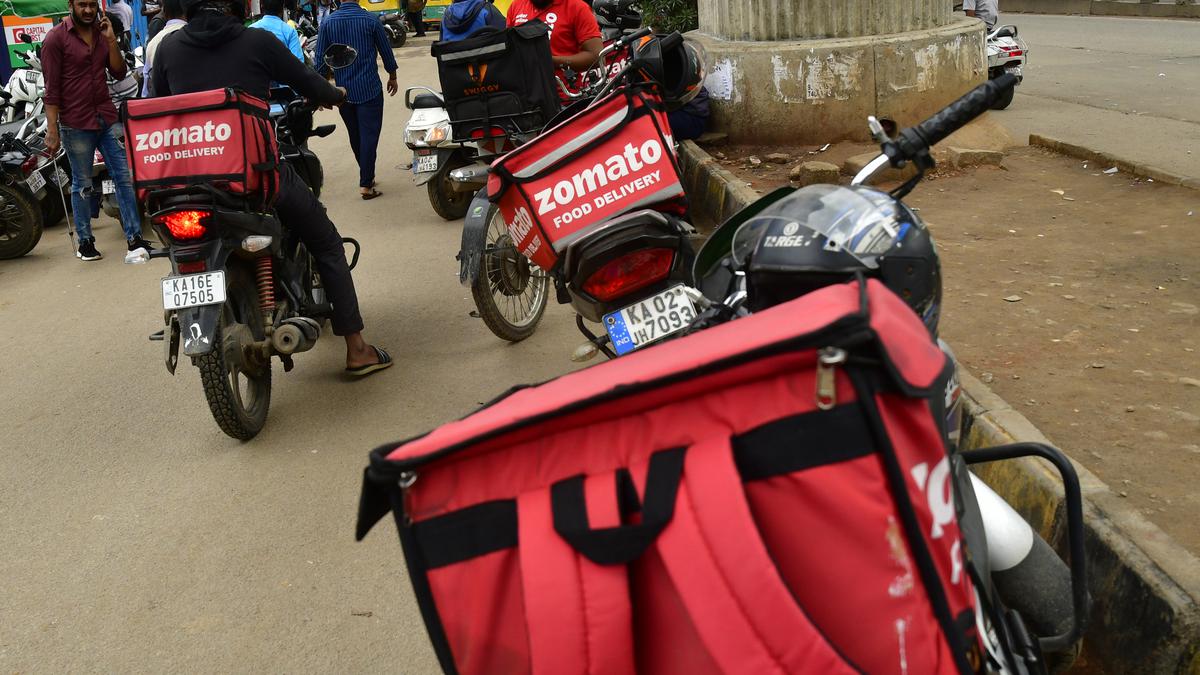
Are gig workers nobody’s employees?
The Hindu
There are about 15 million gig workers across the country. The platforms they work for do not recognise them as employees, and there is no proper regulatory framework
Sreenivas G., 37, is a veteran in the home delivery industry in the city; one of the first to join Flipkart as a delivery personnel, shift to multiple food delivery platforms, and perhaps the only person to sue a food delivery firm for blocking him from the platform for protesting against slashing incentives in 2021. His story encapsulates best the ordeal of those working in the home delivery sector in Bengaluru.
“I have been working in the sector for at least a decade now. My experience over the years has been that incentives have been squeezed out completely,” said Mr. Sreenivas.
“Instead, today, most of these firms even levy fines on delivery boys, who need to pay ₹1,200 even for the delivery bag and a T-shirt with the company logo. Most companies revise their incentive structures arbitrarily almost twice a year and the general trend has been drying up of earnings. I started in the food delivery industry earning over ₹1,000/day, some days even up to ₹2,000. Now, it is a herculean task to take home ₹400-500 a day, after working more than 12-14 hours a day,” he said.
He became part of the unionising efforts in 2019, and attended a protest against revision of pay structure at a food delivery platform the same year, when the firm lodged multiple police complaints against him and threatened to block him from the platform.
“I wanted the job badly, and resumed work. But again, they slashed our incentives in 2021, when I was part of the protests and they blocked me. I have sued the firm in labour court,” he said.
From being a fringe factor earlier, the gig workers’ community is rapidly expanding now and becoming an integral part of the mainstay employment pool of the country. The low-entry barriers make it more attractive for a large number of job seekers.
However, the workers — about 15 million strong across the country, with Bengaluru being the hotspot — are a troubled and exploited lot. The platforms they work for do not recognise them as employees, and in the absence of any regulatory framework, they are at the platforms’ mercy.


The actor, along with director Shashant Shah, speak about their upcoming series ‘Chiraiya’, Divya’s process of working on the dialect, Sushant’s approach to telling a story about women, and more

Sri Lanka's Minister Bimal Rathnayake announces support for Indian refugees, urging political sensitivity from Tamil Nadu and India.

51 couples take thebig plunge at Udaipur mass wedding event

India shows significant progress in reducing child mortality, despite global slowdowns, highlights a new UN report on child health.

Puducherry's upcoming elections test the NDA's governance model amid opposition rifts and promises of stability and welfare delivery.

A Russian oil tanker diverts to India, boosting local refineries despite sanctions and geopolitical tensions.

Supreme Court questions if temple activities like book publishing and prasadam manufacturing qualify as industrial activities under current laws.

Ten of Kozhikode's 13 incumbent MLAs are seeking re-election, with no women candidates from CPI(M) in the upcoming polls.

Height restrictions near airports are stifling Bengaluru's growth, prompting calls for a review to boost development potential.

Explore the Gandhi Bunakar Mela in Vijayawada, showcasing traditional textiles and supporting handloom weavers until March 31.

MDMK leader Vaiko announces a movement to remove Prosopis juliflora trees in Tamil Nadu following a landmark High Court directive.

Lok Sabha Speaker Om Birla emphasizes the importance of Question Hour over meetings and urges decorum during obituary references.

Karnataka approves 300-bed Puttur Government Medical College Hospital project, enhancing healthcare in the coastal region.