Anniversary of 'Red Paper' highlights First Nations' fight against assimilation
CBC
A grassroots group in Edmonton honoured those who stood up for First Nations rights back in 1970 when the Canadian government was proposing to erase legal distinctions between First Nations and other citizens, at an event Wednesday.
The gathering on June 4 honoured the work that went into creating the document called Citizens Plus (also known as the Red Paper) which argued against the Canadian government's proposal to abolish the Indian Act and end treaties.
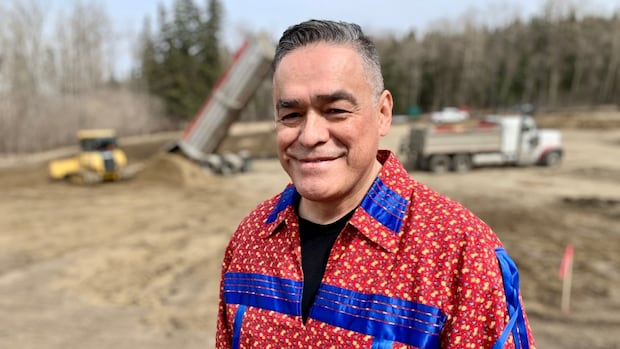
Lewis Cardinal from Sucker Creek First Nation in Alberta is the senior advisor for Indigenous Knowledge and Wisdom Centre where the event was held.
Cardinal said the Red Paper was a watershed moment that deserves to be remembered.
"A lot of people don't know the significance of it… [because] the context and the significance of it just hasn't been told enough," he said.
Cardinal also has a personal connection to the history — his father Don Cardinal was a vice-president of the Indian Association of Alberta and part of the group that helped create the paper.
In June 1969, Jean Chretien, then minister of Indian Affairs, presented the Statement of the Government of Canada on Indian Policy, also known as the White Paper, to Parliament. The paper proposed abolishing the Indian Act and ending Indian status purportedly as a way to improve outcomes for First Nations people and achieve "full and equal participation" in Canadian society.
First Nations leaders were outraged by the paper's push toward assimilation and spent the next year organizing before publishing their own paper emphasizing the importance of treaties and the distinct rights of First Nations.
Cardinal said Joe Couture was the person responsible for giving the paper its colloquial name.
"Of course they always had a sense of humour. 'There's a White Paper, let's have a Red Paper,'" Cardinal said.
The Red Paper begins by emphasizing the importance of treaties and says that "the government has devised a scheme whereby… our people would be left with no land and consequently the future generation would be condemned to the despair and ugly spectre of urban poverty."
It also criticizes the paternalism of the Indian Act but adds that "it is neither possible nor desirable to eliminate the Indian Act."
The Indian Act remains controversial but Cardinal says it's still important to preserve Citizens Plus's point: that as the first people of the land, First Nations people are more than just regular citizens.
"We all agree that the Indian Act has to go, but we don't just get rid of that and not have it replaced with something," he said.


Scientists studying polar bears were greeted with a most unexpected surprise during a recent tracking expedition in northeastern Manitoba.

At 51, Dr. Nili Kaplan-Myrth had been postmenopausal for eight years. So when she started bleeding again in May, the Ottawa family physician knew something wasn’t right.

The Canadian government has lost in court — again — to a First Nations grandmother fighting to fix extensive mould at her home on Oneida Nation of the Thames, near London, Ont.

Indigenous community members in British Columbia say they are celebrating after OneBC said it had removed MLA Dallas Brodie as its party leader.

Before NASA astronaut Sally Ride’s historic launch aboard the space shuttle in 1983 as the first American woman in space, she was asked a question: Would 100 tampons be the right number for her week-long mission?

Ashley Stevens has scars inside and out from her time in an Ontario jail.

Winnipeg resident John Ruhland first began taking medication for his depression in 2000 when a period of enormous stress — both at work and in his personal life — landed him in the hospital.

A group of young adults from Cumberland House Cree Nation travelled to British Columbia in November to take part in a program designed help them develop the skills needed to succeed should they decide to move away from their home northeast of Saskatoon.

In just a few short months, Canadian astronaut Jeremy Hansen will make history.

Chiefs from Treaty 8 First Nations of Alberta are calling for a pause on the pipeline memorandum of understanding until they are consulted and sign off on the potential project. And they're threatening legal action if that doesn't happen.

When dolphins swam onto the scene during a study on northern resident orcas off the coast of B.C., at least one researcher admitted to being a little annoyed.

Researchers say there's been a dramatic rise in the number of people going on medications to treat attention deficit/hyperactivity disorder in Ontario, suggesting factors such as more time spent online and the rise of private assessments for the mental condition could be behind the increase.

Baby, it’s cold outside — but it’s worth putting on that heavy winter coat, scarf and boots and heading out for one of the best meteor showers of the year: the Geminids.