Analysis | Syria’s hopes of rebuilding after quake grow dim as civil war enters 13th year
The Hindu
Oil-rich Arab countries have been stepping up efforts to normalise ties with the Assad government, but the ongoing political paralysis is likely holding them back from pumping billions of dollars for reconstruction into Syria
The recent deadly earthquake in Turkey and Syria which caused billions of dollars in damage has boosted the prospects of Syria’s once widely shunned president’s return to the Arab fold, but appears unlikely to jump-start large-scale reconstruction in the war-ravaged country.
As Syria’s conflict enters its 13th year on March 13, President Bashar Assad’s government still refuses to make concessions to his domestic opponents, rejecting long-standing demands by the United States and its allies as a political solution remains elusive.
Oil-rich Gulf Arab countries have been stepping up efforts to normalize ties with the Assad government, but analysts say the ongoing political paralysis is likely holding them back from pumping billions of dollars for reconstruction into Syria.
The February 6, earthquake that hit Turkey and Syria, killing more than 50,000 people, including about 6,000 in Syria, exacerbated the destruction caused by Syria's 12-year conflict which has killed nearly half a million people.
The World Bank estimated in an initial post-earthquake assessment that the disaster had caused $5.1 billion worth of physical damage across both government- and rebel-held Syria. It estimated some $226 billion in losses — including economic and physical damage — during the first four years of the war in 2016, about four times Syria’s 2010 gross domestic product.
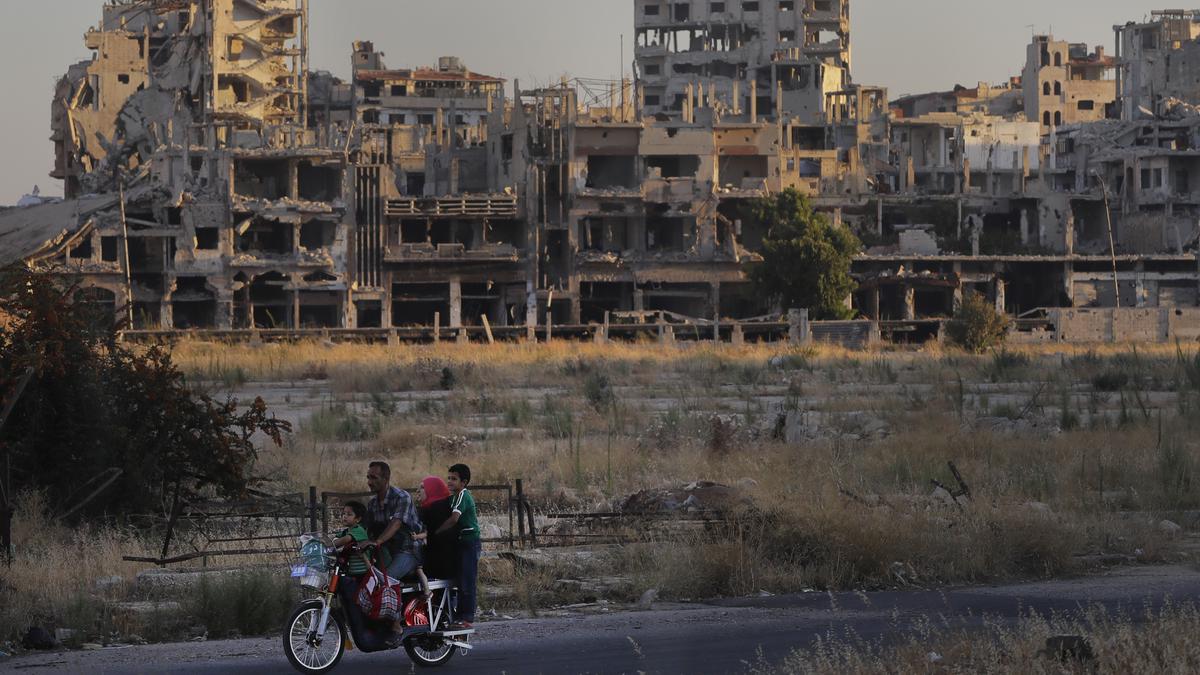
Since the balance of power shifted in Mr. Assad’s favor over the past few years, the government has rebuilt small parts of the country with the help of its allies. These include a section of the centuries-old market in the northern city of Aleppo and some historic mosques in Aleppo and the central city of Homs. However, entire cities, towns and villages remain in ruins, while the conflict has caused lasting damage to the country's electric, transportation and health systems.
The quake worsened the situation.


Trump temporarily waives maritime law to lower energy costs amid rising gasoline prices from the Iran-Israel conflict.

Gideon Levy discusses Israel's militarism, the Palestinian question, and the challenges of achieving peace in West Asia.

Israel claims to have killed another top Iranian official as Iran's missile attacks near Tel Aviv leave two dead.

Test your knowledge with our daily quiz on significant events that occurred on March 18.

Iran's Foreign Minister asserts nuclear doctrine remains unchanged and advocates for a new protocol for the Strait of Hormuz post-war.

Exploring Banksy's identity reveals the significance of his anonymity and the cultural impact of his provocative art.

Iran's Foreign Minister asserts Larijani's assassination won't destabilize the political system, while the IRGC pledges revenge.

Shorts News:Watch: Cuba right now in ‘very bad shape’: Trump

As political loyalties shift, Vice President Vance navigates the turbulent MAGA landscape amidst Trump's new war strategy.

Oil prices drop over $2 as Iraq and Kurdish authorities finalize an export deal, easing supply concerns amid ongoing conflict.

Marco Rubio denies U.S. efforts to oust Cuba's President, calling a New York Times article "fake" and misleading.

Shooting at Holloman Air Force Base in New Mexico leaves one dead and another wounded; lockdown lifted, base declared safe.

The U.S. offers undocumented migrants $2,600 and free flights to voluntarily self-deport through a new DHS program.