An exhibition of textile labels at MAP-Bengaluru reveals the history of branding and advertising in India
The Hindu
Explore the cultural and historical significance of Indo-British textile labels at the ongoing exhibition in Bengaluru's Museum of Art And Photography.
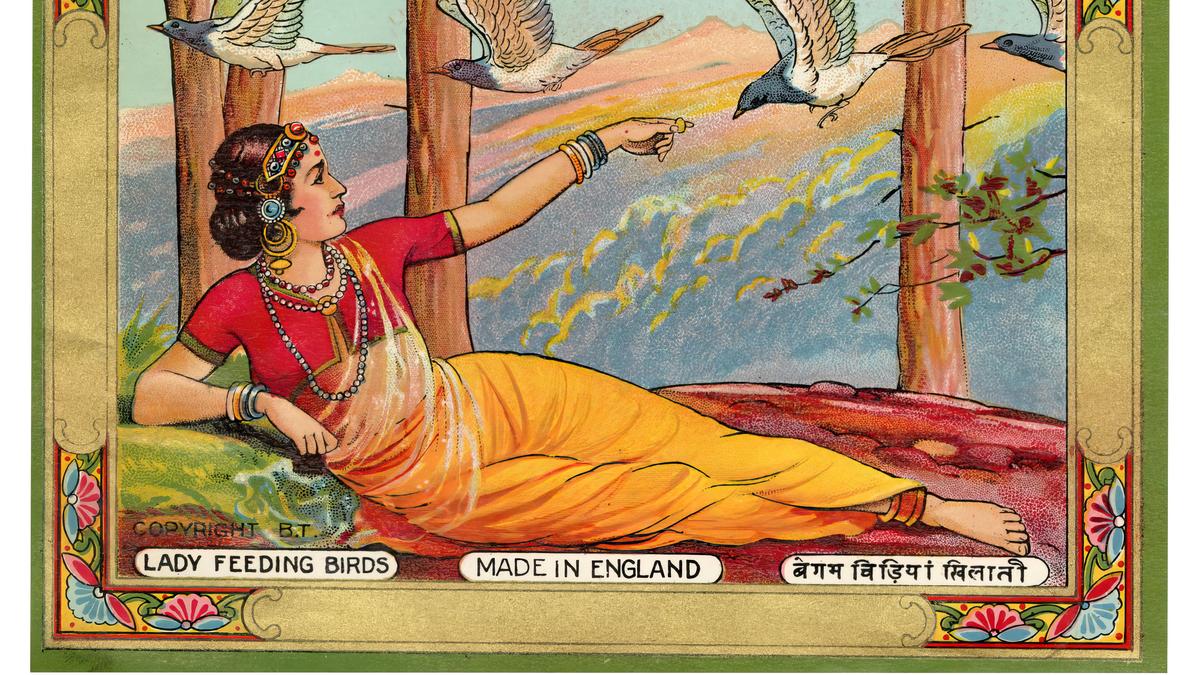
During the Indo-British textile trade, between the late 19th and mid-20th centuries, a few unique textile labels emerged. They were were known as tikats, tikas or chaaps. They were not simple tags attached to fabric, they carried imaginative and colourful visuals. Today, these textile labels are being seen as cultural and historical markers.
Four hundred such labels are on display at ‘Ticket Tika Chaap, The Art of the Trademark in Indo-British Textile Trade’, an ongoing (till November) exhibition at Museum of Art And Photography (MAP) in Bengaluru. Curated by Shrey Maurya, research director-MAP Academy and Nathaniel Gaskell, author, editor and co-founder-MAP, the exhibition features labels, correspondences between merchants and trademarking officers in England, stamp markings that were applied on bales of clothes and a few photographs.
MAP has a collection of 7,000 textile labels and Shrey and Gaskell took up the subject as an yearly curatorial project. “Popular art is something we wanted to look at this year. It took us close to two years to put the exhibition together. A year-and-a-half was largely spent on researching and looking at images,” shares Shrey.
The labels carry diverse visuals — dancing elephants, portraits of maharajas, deities, women in traditional attires, symbols of industrialisation such as fans, telephones and buses, British imperialistic symbols, religious iconography and photographs of Indian merchants. All tickets have a well-defined margin with names of the business printed on them in English and regional languages.
The curators went through 7,000 images and categorised them into subject-based groups. “It was exhausting but it opened up a whole new world. The visuals on the labels had a meaning and seemed to hold within them several untold stories from the past. The creativity that had gone into making them led us to the history of branding and advertisement,” says Shrey.
She adds not much has been written about textile labels in the art-historical context except for a few by the likes of Jyotindra Jain, Kajri Jain and the Tasveer Ghar Project.
While putting together the exhibition, the curators constantly thought about the people and processes behind the creation of these labels. “It was truly intriguing. Not just the trademarking process and printing, we wondered how they came up with the idea of images on labels and who would have drawn them. There is no record of the artists.”


BTS's comeback concert in Seoul drew over 100,000 fans, featuring their new album "ARIRANG" and a global livestream.

Khalid Rahman is reuniting with Malayalam superstar Mammootty after Unda (2019). The Thallumaala director has teamed up with the veteran for Mattancherry Mafia.

Bollywood actor Akshay Kumar paid tribute to the martial arts grandmaster and Hollywood’s action star, Chuck Norris, who passed away on Thursday, March 19, 2026.

Renowned Odissi dancer Madhumita Raut, aged 59, dies of cardiac arrest, leaving behind a legacy of artistic achievements.

Chuck Norris, iconic martial arts master and actor, dies at 86, leaving behind a legendary legacy and internet memes.

South African naturalist Steve Boyes speaks on ghost elephants, ancestral tracking, and Werner Herzog’s documentary exploring Angola’s elusive highland giants

Actor-director Amol Palekar will receive META's Lifetime Achievement award for 2026 on March 25 in New Delhi.

India's artists unite against rising censorship, advocating for creative freedom and support for marginalized voices in the arts.

Written and directed by Kunal, the film also stars Sparsh Shrivastava and Vanshika Dhir

This year, Bharatnatyam artistes will present the Tyagaraja Aradhane as a dance performance

This year, Bharatnatyam artistes will present the Tyagaraja Aradhane as a dance performance

The actor, along with director Sushant Shah, speak about their upcoming series ‘Chiraiya’, Divya’s process of working on the dialect, Sushant’s approach to telling a story about women, and more

An independent video, ‘Feel the Spark’ by Raleigh Rajan with vocals by Ciera Dumas that celebrates Tamil literary giants, garnered 1.4 million views in less than 36 hours.