A powerful portrait of dissent
The Hindu
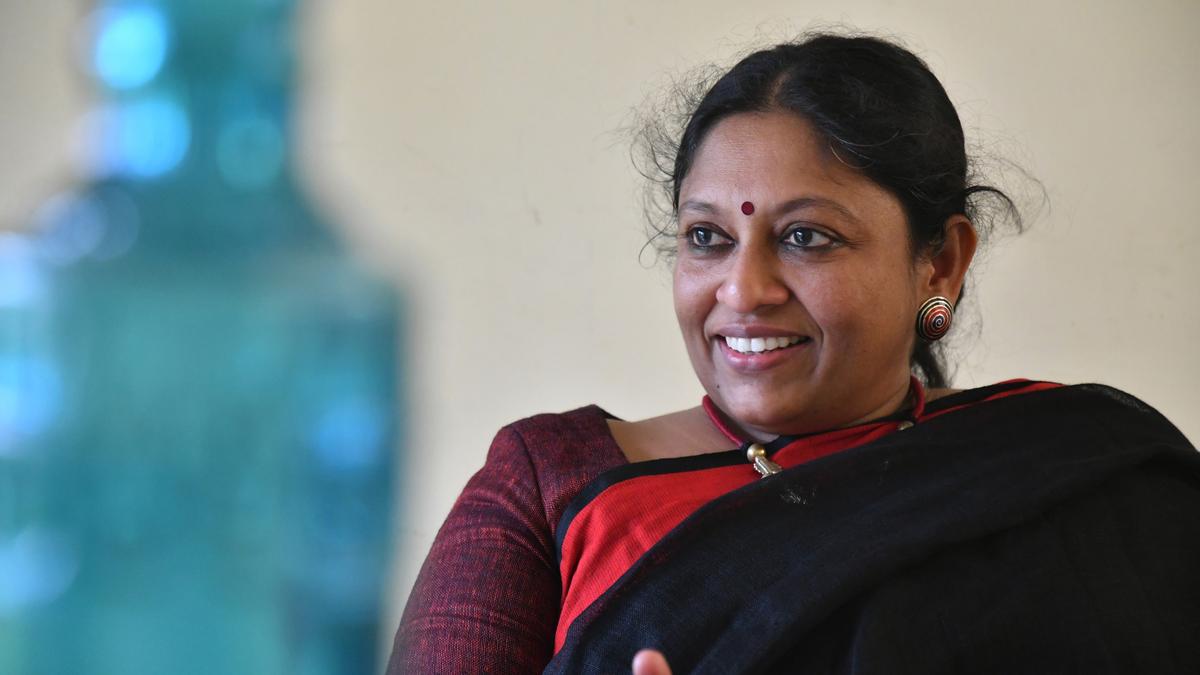
Meera — who shared the stage with writers Githa Hariharan, Irenosen Okojie, and Neha Dixit at a session titled Dissent is a Language, moderated by Anuradha SenGupta — went on to make a compelling observation: women are increasingly at the forefront of dissent, she said, citing recent movements like the Women in Cinema Collective in Malayalam cinema as a testament to female solidarity.
“We are living in times where fiction is far less strange than reality,” said writer K.R. Meera at the recently concluded Bangalore Literature.
Meera — who shared the stage with writers Githa Hariharan, Irenosen Okojie, and Neha Dixit at a session titled Dissent is a Language, moderated by Anuradha SenGupta — went on to make a compelling observation: women are increasingly at the forefront of dissent, she said, citing recent movements like the Women in Cinema Collective in Malayalam cinema as a testament to female solidarity.
Hariharan, the author of novels like The Thousand Faces of Night and I Have Become the Tide, offered profound insights into the psychology of resistance. “It is a scary space,” she emphasised, “and one must first acknowledge the fear.” Paradoxically, in her opinion, this very fear becomes a catalyst for community building. Hariharan also championed the power of humour, asserting that “once you can laugh at a monster, everything becomes less scary.”
The panel also critically examined institutional structures, with Hariharan referencing the controversial removal of Dalit author Bama’s work from Delhi University’s syllabus. “Who are these institutions really protecting?” she stated, urging students to question the narratives imposed upon them.
Irenosen Okojie, a Nigerian novelist based in the United Kingdom, on the other hand, offered a global perspective to the discussion. Drawing from her experiences in predominantly white and male-dominated spaces, she discussed the unspoken expectation for people of colour to be perpetually grateful. “But I wanted more than a seat at the table; I wanted to shake the table,” said Okojie, who, as a fellow of the Royal Society of Literature, strives to ensure that more diverse voices are given exposure.
Moderator Anuradha Sen Gupta questioned the accessibility of dissent, challenging its potential confinement within specific class and linguistic boundaries and the feasibility of layman citizens joining movements such as that of Delhi’s Shaheen Bagh. At the discussion, journalist and author of The Many Lives of Syeda X, Neha Dixit, provided a ground-level perspective, arguing that dissent is not a privileged act but a fundamental human survival strategy. “For a migrant worker to make it alone in a new city, survival itself becomes dissent,” she remarked, underlining the profound courage inherent in most marginalised communities.
The panel painted a powerful portrait of dissent, not as a monolithic concept, but as a dynamic, nuanced, and deeply personal form of resistance that transcends individual experiences. “If art is a nation, then dissent is its language”, concluded Meera.


The actor, along with director Shashant Shah, speak about their upcoming series ‘Chiraiya’, Divya’s process of working on the dialect, Sushant’s approach to telling a story about women, and more

Sri Lanka's Minister Bimal Rathnayake announces support for Indian refugees, urging political sensitivity from Tamil Nadu and India.

51 couples take thebig plunge at Udaipur mass wedding event

India shows significant progress in reducing child mortality, despite global slowdowns, highlights a new UN report on child health.

Puducherry's upcoming elections test the NDA's governance model amid opposition rifts and promises of stability and welfare delivery.

A Russian oil tanker diverts to India, boosting local refineries despite sanctions and geopolitical tensions.

Supreme Court questions if temple activities like book publishing and prasadam manufacturing qualify as industrial activities under current laws.

Ten of Kozhikode's 13 incumbent MLAs are seeking re-election, with no women candidates from CPI(M) in the upcoming polls.

Height restrictions near airports are stifling Bengaluru's growth, prompting calls for a review to boost development potential.

Explore the Gandhi Bunakar Mela in Vijayawada, showcasing traditional textiles and supporting handloom weavers until March 31.

MDMK leader Vaiko announces a movement to remove Prosopis juliflora trees in Tamil Nadu following a landmark High Court directive.

Lok Sabha Speaker Om Birla emphasizes the importance of Question Hour over meetings and urges decorum during obituary references.

Karnataka approves 300-bed Puttur Government Medical College Hospital project, enhancing healthcare in the coastal region.