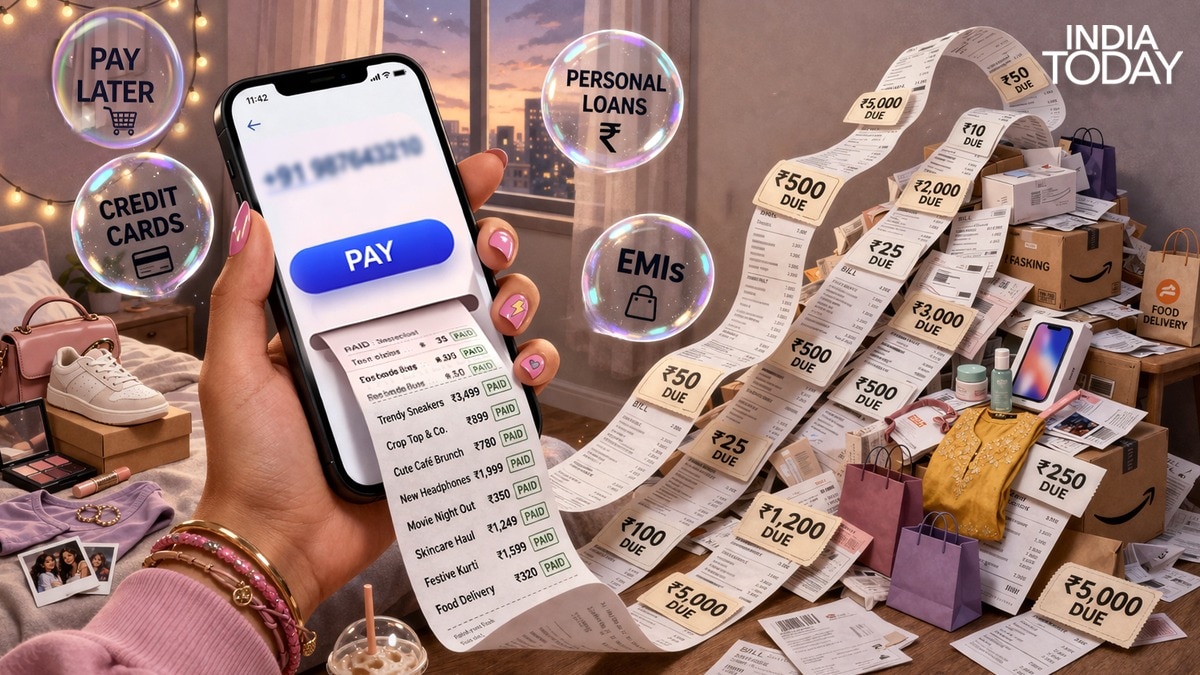
41% borrowers are Gen Z: Is hidden debt rising among young Indians?
India Today
A growing number of young Indians are turning to credit early in life. With Gen Z now making up 41% of borrowers, is this a sign of financial confidence or a warning of rising hidden debt? Let's find out.
If you think your friends in their 20s are just casually swiping cards for the latest gadgets, travel, or dinner outings, you’re not entirely wrong. But beneath those small, seemingly harmless transactions, a hidden risk is growing — one that financial experts are calling “silent debt.” Surprisingly, 41% of new borrowers in India belong to Gen Z, and experts warn that these young earners are shouldering more hidden liabilities than ever before.
Sachin Jain, Managing Partner at Scripbox, explains the shift in India’s borrowing landscape: "Younger earners in India experience a vastly different economic climate than their predecessors in the 1990s and early 2000s. Today, access to credit, social media, and better earning potential has created a 'Double Bonanza' for the youth," he explains.
What does this “Double Bonanza” mean? Simply put, young consumers now have easy access to credit cards, personal loans, and app-based EMIs. Coupled with exposure to global lifestyles through the Internet and social media, it’s no surprise that retail borrowing is on the rise. Phones, gadgets, online shopping, travel — these everyday luxuries are now frequently funded by credit.
Jain adds, “This surge in borrowing is reflected in the numbers: 41% of new borrowers are Gen Z, aged between 18 and 30. This cohort is driving faster consumption growth, helping merchants earn higher revenues and boosting e-commerce.”
Ramneek Singh Ghotra, Chief Growth Officer at Finvasia, defines silent debt as “multiple small, unsecured liabilities that don’t feel like traditional loans but collectively create repayment pressure, such as credit card balances, BNPL (Buy Now, Pay Later) dues, app-based EMIs, and personal lines of credit.”
“The main sources are credit cards, BNPL or ‘pay later’ products, digital micro-loans, and lifestyle EMIs. Credit card usage has surged with over 11 crore active cards, while BNPL growth continues to scale with ~Rs97,000 crore in digital credit disbursed in H1 FY25. BNPL and micro-loans are increasingly reported to credit bureaus, meaning they now affect formal credit histories and future access to larger loans,” says Ghotra.


As the war enters its fourth week, airlines are struggling to cope with a sharp rise in jet fuel prices, which have surged significantly in a short span of time. The impact is already visible for passengers, with ticket prices expected to rise in the coming months as airlines try to protect already thin profit margins.

The world is already feeling the heat as the West Asia conflict enters its fourth week, pushing global crude oil prices higher. In this article, we speak to experts to understand whether this shock could tip the world toward a recession.

The additional allocation will be subject to commercial establishments registering with oil companies and applying for a piped natural gas connection, according to a letter written by the oil secretary to states.

Civil Aviation Minister Ram Mohan Naidu said that the impact of the ongoing Iran war on the aviation sector is likely to be visible from April 1, when the Air Turbine Fuel (ATF) prices will be revised.

A new government directive on free seat allocation has triggered sharp opposition from airlines, who warn it could push up fares, hurt affordability and reshape how tickets are priced across India's aviation sector.

This is the third part of Lock & Key, a series that looks at how India's bank locker system works, the risks involved, and what customers need to know. After examining safety and insurance in the first two parts, this story focusses on a new problem – access.

The former RBI Govenor said a 15–20% global energy disruption would require sharp demand cuts, pushing oil to $150–$200 per barrel, risking severe economic stress if the conflict continues another month.


Venkataraman joined Flipkart in 2015 and has been part of the company's leadership team through a period of growth and restructuring. During his tenure, he helped strengthen the company's financial operations.

The gold rate today is around Rs 1.5 lakh per 10 grams for 24-carat gold, while 22-carat gold is near Rs 1.4 lakh, with prices edging higher after recent losses. Silver is also seeing a slight uptick after a volatile phase.

Early indicators suggest a positive start. GIFT Nifty futures were trading at 23,250.5 at around 08:24 am, indicating that the Nifty 50 may open above Thursday's close of 23,002.15.

With multiple energy hubs under threat, the risk to global supply chains has increased sharply. For countries like India, which depend heavily on imports, this means higher costs and tighter supply in the near term.