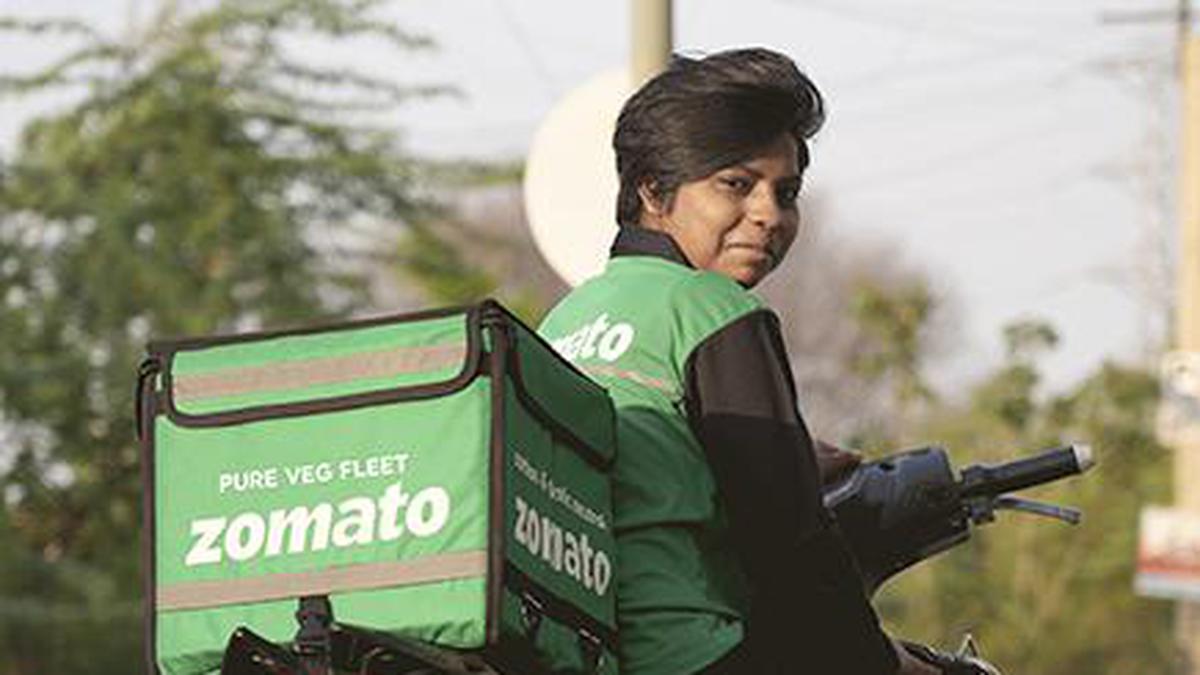
Zomato says its new ‘pure veg’ fleet will continue to wear red instead of green as originally announced
The Hindu
Zomato introduces pure vegetarian delivery fleet in red uniforms to cater to specific dietary preferences.
Popular food delivery and restaurant aggregator company Zomato has decided that its newly introduced pure vegetarian' delivery fleet will continue to wear Zomato's trademark red instead of green as originally conceived by the delivery start-up.
"All our riders -- both our regular fleet, and our fleet for vegetarians, will wear the colour red," Zomato founder Deepinder Goyal said on Wednesday, March 20,2024, in his latest update on X.
"This means that the fleet meant for vegetarian orders will not be identifiable on the ground (but will show on the app that your veg orders will be served by the veg only fleet). This will ensure that our red uniform delivery partners are not incorrectly associated with non-veg food, and blocked by any RWAs or societies during any special days...
our rider's physical safety is of paramount importance to us. We now realise that even some of our customers could get into trouble with their landlords, and that would not be a nice if that happened because of us" Mr. Goyal said in his post on X.
Earlier on March 19, Zomato said it had launched a 'pure peg' delivery fleet to serve customers with purely vegetarian dietary preferences. Zomato said this segment was introduced after getting feedback from purely vegetarian customers who are very particular about how their food is cooked, and how their food is handled.
Zomato had said that the 'pure veg' delivery mode would consist of a curation of restaurants that serve only pure vegetarian food and will exclude all restaurants which serve any non-veg food item.
"Our dedicated Pure Veg Fleet will only serve orders from these pure veg restaurants. This means that a non-veg meal, or even a veg meal served by a non-veg restaurant will never go inside the green delivery box meant for our Pure Veg Fleet," said Mr. Goyal in a post on his X timeline


Equity analysts downgrade earnings forecasts for oil marketing companies, citing rising costs and market pressures for fiscal 2027.

Plastic product prices may surge by 50-60% in April due to rising polymer costs amid ongoing geopolitical tensions.

Centre offers 10% more LPG to States that accelerate piped gas rollout amid ongoing supply challenges and increased consumer demand.

Indian-flagged vessels in the Strait of Hormuz carry 2 lakh MT LNG and 16.7 lakh MT crude, amidst geopolitical tensions.

Stock markets continue to rise for the third day as Sensex and Nifty gain nearly 1%, fueled by IT stocks.

Rising oil prices and LPG shortages are driving India's shift to electric cooking, offering cost-effective and energy-efficient alternatives.

The rupee fell to a record low of 92.63 against the dollar, while equities surged with Sensex up 633.29 points.

Alibaba is sharpening its artificial intelligence strategy by focusing on agents that connect the many businesses under its sprawling corporate umbrella.

India's semiconductor market is set to reach $300 billion by 2035, driven by local production and growing technology demands.

Iran continues to export millions of barrels of oil amid war, with 90 ships crossing the Strait of Hormuz despite sanctions.

Amazon CEO Andy Jassy said during an internal all-hands meeting he expects artificial intelligence could help cloud computing unit Amazon Web Services achieve $600 billion in annual sales, double his own prior estimate.

Government mandates airlines to allocate 60% of seats free, enhancing passenger rights and convenience across Indian aviation.

Microsoft is weighing legal action against Amazon and OpenAI over a $50 billion deal, the Financial Times reported