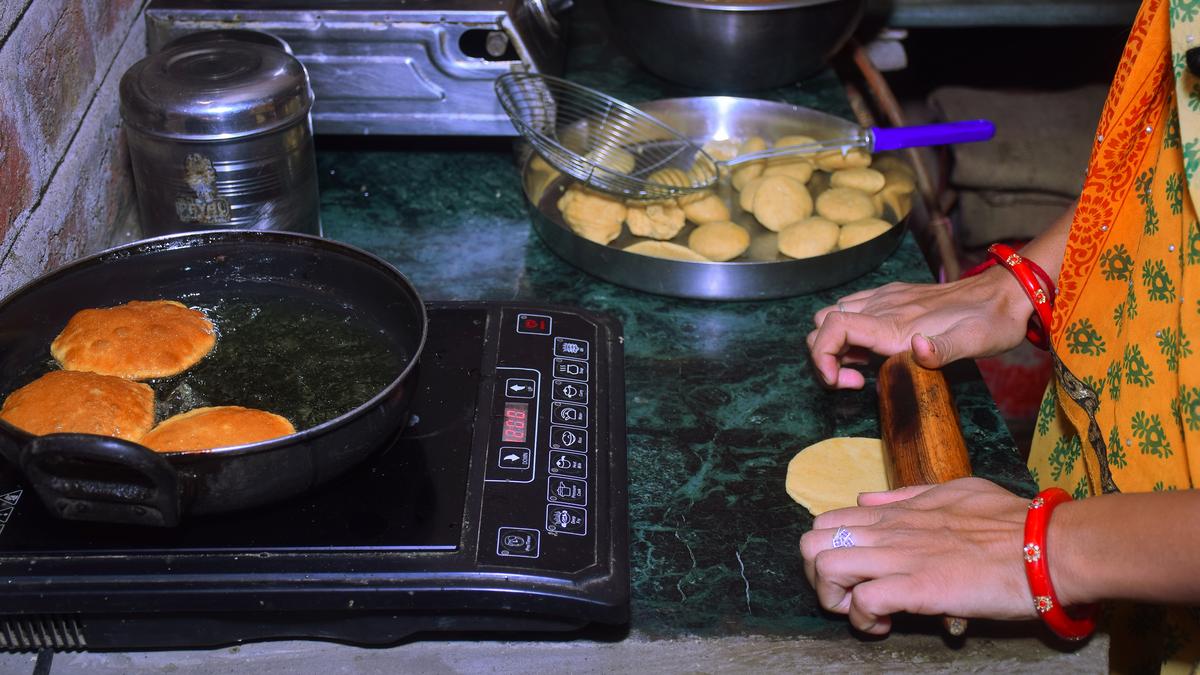
Oil shock fuels shift to electric cooking in India
The Hindu
Rising oil prices and LPG shortages are driving India's shift to electric cooking, offering cost-effective and energy-efficient alternatives.
A surge in global oil prices triggered by escalating tensions in West Asia is beginning to ripple through India’s domestic energy economy, disrupting cooking gas supplies and accelerating a shift toward electric alternatives.
Brent crude has climbed over $100/bbl in recent weeks amid fears of supply disruptions through key shipping routes, raising concerns for India, which depends on imports for the bulk of its energy needs. The impact is now being felt at the household level, with tighter availability of liquefied petroleum gas (LPG) and rising costs for commercial users.
India’s annual LPG consumption doubled between 2011-12 and 2024-25, rising from nearly 15 MMT to nearly 31 MMT, according to the International Institute for Sustainable Development (IISD) report. More than 93% of the increase in LPG consumption during this period was met through an increase in imports.
India’s domestic LPG supply is vulnerable to geopolitical shocks, as a large share is sourced from producers in West Asia. Industry participants have reported delays in LPG cylinder deliveries in several cities, increased diversion of supply toward households and rising costs for commercial cylinders used by restaurants and small businesses. For food service operators, the squeeze is immediate. Many small eateries and cloud kitchens are struggling to maintain margins as fuel costs climb.
Against this backdrop, electric cooking is gaining traction as a practical substitute. Appliance retailers in urban markets report a pickup in demand for induction cooktops, electric pressure cookers and infrared stoves. “In practice, induction cooking operates at roughly 80–85% efficiency, while LPG stoves typically achieve about 45–55% range due to heat losses to the surrounding air,” said Neha Dhingra, Director of the India Programme at CLASP, an international non-profit organisation focused on energy efficiency standards and policies for appliances and equipment.
The 2026 IISD report comparing LPG, piped natural gas (PNG), and electricity finds that electric cooking is already the most cost-effective option for most Indian households in terms of operating expenses.


OpenAI has signed a new deal to sell access to its AI models to U.S. defence and government agencies through Amazon’s cloud unit for classified and unclassified work, the ChatGPT maker said

Samsung Electronics said on Wednesday that it expects to start volume production of Tesla’s chips

The Trump administration said in a Tuesday court filing that the Pentagon’s blacklisting of Anthropic was justified and lawful

Mastercard Move aims to simplify cross-border payments for SMEs and students in India, enhancing efficiency and reducing costs.

SBI raises ₹6,051 crore through 10-year bonds, attracting strong investor demand with a 7.05% coupon rate.

In February, as per government data, domestic LPG production was slightly more than 1 million tonne.

Union Government urges States and UTs to expedite approval of gas pipeline projects to promote piped natural gas usage.

Parliamentary panel criticizes Ministry of Planning and Niti Aayog for persistent underutilization and poor financial management practices.

LPG consumption in India dropped 17.7% in March due to war-related supply disruptions, impacting household cooking gas availability.

LPG eKYC is required only for unauthenticated customers, clarifies the Ministry of Petroleum and Natural Gas.

India's second LPG carrier, 'Nanda Devi', arrives at Gujarat's Vadinar port, carrying 46,500 metric tonnes of gas.

European publishers, tech firms and startups have urged EU antitrust regulators to wrap up a near two-year probe into Alphabet unit Google’s alleged favouring of its own services in online searches and impose a fine on the tech giant.

OpenAI is in advanced talks with private equity firms including TPG, Advent International, Bain Capital and Brookfield Asset Management to form a joint venture