Wildlife traffickers moving ‘dirty money’ within web of organized crime, researcher finds
CBC
The illegal wildlife trade is deeply connected to other forms of organized crime, including arms dealing, drug trafficking and human smuggling, a new study has found.
Michelle Anagnostou led the research as part of her PhD at the University of Waterloo (UW).
She said she was struck to discover, while doing the research, the big knowledge gap that exists when it comes to the illegal activity that’s worth billions annually.
“We don't have the best sense of how these organized crime networks are moving their dirty money internationally,” Anagnostou told CBC K-W’s The Morning Edition.
“So, especially when they have this kind of sophisticated money laundering system that they may have established from their trafficking in drugs and human trafficking and now using it on the wildlife side, how can we better get at those people who are making millions and millions of dollars off of wildlife and human exploitation?
“And they're probably not even touching the product. So, we keep arresting poachers in protected areas and smugglers at the border, and oftentimes they're kind of lower on the value chain than the people we need to be targeting,” Anagnostou added.
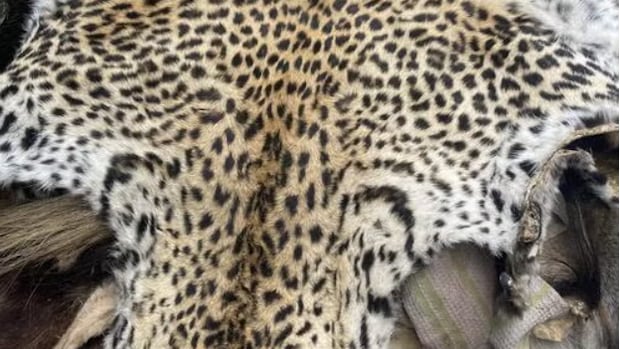
Wildlife trafficking is an illicit business involving the unlawful harvest or trade of animals and plants. According to the study, the illegal wildlife trade has wide-reaching implications for society globally.
The RCMP, Canada’s national police force, says it's committed to protecting Canadians and Canadian institutions by detecting, investigating, and disrupting the most significant criminal threats.
A spokesperson for the force said the majority of these investigations are focused on organized crime networks that traffic multiple commodities within and beyond Canada.
“The RCMP is committed to working with provinces, territories and international partners to address the illegal wildlife trade and investigate the involvement of organized criminal networks in this market,” Robin Percival wrote in an email to CBC News.
Percival said the RCMP works with partner law enforcement agencies and the private sector to investigate the laundering of proceeds of crime from the criminal trafficking of multiple commodities.
The force also investigates and charges criminal actors with suspected involvement in the trafficking of multiple commodities, Percival said.
Brent Doberstein, a professor in the Faculty of Environment at UW and Anagnostou’s doctoral supervisor, said the study is a prime example of the kind of research that can inform policy with real-world experience to solve a global problem.
“This work promises to both extend what we know about the complex world of illegal wildlife trade and help in designing interventions to reduce the extent of this crime,” Doberstein said.


After three weeks on the road in Yellowknife doing Inuvialuktun translation for the Northwest Territories legislative assembly, Lillian Elias says she's tired and ready to go home to Inuvik.

Metrolinx is reporting "significant" delays to several GO train lines late Monday afternoon due to a police investigation.

The federal government is spending $14.3 million to support over two dozen Yukon organizations and First Nations governments with arts, culture and language programming.

The war in the Middle East, the fear that it could escalate and the economic consequences were top of mind as Prime Minister Mark Carney met his British counterpart Monday in the United Kingdom at the tail of a whirlwind trip to Europe.

Alberta and Czechia will host the fourth edition of the World Cup of Hockey, a country-versus-country hockey tournament set to hit the ice in February 2028, the NHL announced Monday.

The Ontario government has confirmed it is cutting provincial funding for seven supervised drug consumption sites, days after harm reduction advocates said they were notified of the decision.

In the sprawling labyrinth of shops and showrooms in the Chinese city of Yiwu, parts of what’s widely known as the "world’s supermarket" are beginning to look more like a world-class warehouse.

The lawyer representing Umar Zameer, a man cleared in the death of a Toronto police officer two years ago, says he has "serious misgivings" about an upcoming report into the conduct of several officers involved in the case.

The system behind the emergency department wait times Winnipeggers see online had multiple flaws that made waits sometimes appear lower than they should, an internal memo shows.

Police on the west coast of Newfoundland say a 27-year-old woman was arrested on Friday night for impaired and dangerous driving, after being caught speeding down the main road in the rural community of Piccadilly at 88 km/h over the speed limit.

Scientists are seeing tropical fish in Nova Scotia with more frequency, and their arrival is prompting concerns about what their presence could mean for local species down the road.

New Brunswick Premier Susan Holt says health care won’t be exempt from her efforts to cut spending — even though her health minister says big spending increases will be unavoidable in coming years.

Pierre Ny St-Amand, the man who drove a bus into a Laval daycare in 2023, killing two young children and injuring six others, has been declared a high-risk accused.