Why the Strait of Hormuz remains central to global energy security Premium
The Hindu
Explore the strategic significance of the Strait of Hormuz and its impact on global energy security and economies.
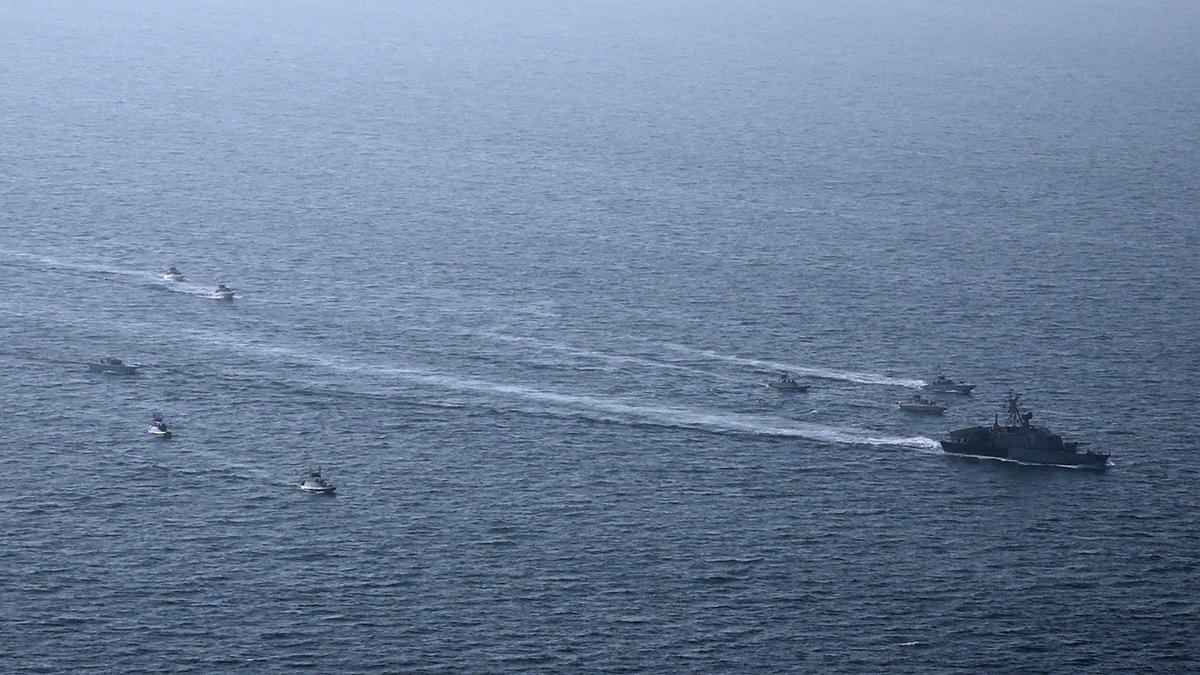
On February 16, Iran’s Islamic Revolutionary Guard Corps began a new round of military exercises in the Strait of Hormuz, according to state media.
The drills, launched on the eve of talks with the United States, were aimed at preparing for “potential security and military threats” in the strait, state television said, after Washington deployed a significant naval presence in the region.
The announcement has once again drawn significant attention to one of the world’s most critical energy chokepoints, a narrow maritime corridor whose stability underpins global oil flows and, by extension, the international economy. It could also increase the price of goods and services globally, and hit some of the biggest economies, including China, Japan and India, which are some of the biggest importers of crude oil through the strait. Especially for countries like India which are mainly dependent on energy imports, what happens in this narrow corridor has direct consequences.
In the past, Iran has threatened to close the strait, which would restrict trade and affect global oil prices, but has never followed through on the threat.
Both strategically and geographically, the Strait of Hormuz is one of the most important oil chokepoints in the world. It lies between Oman and the UAE on one side and Iran on the other. It links the Persian Gulf in the north with the Gulf of Oman to the south, and the Arabian Sea beyond.
At its narrowest, it is just 33 km wide. The designated shipping lanes within it are only about 3km in each direction separated by a buffer zone.


The U.S. Supreme Court struck down on February 20, President Donald Trump's sweeping tariffs that he pursued under a law meant for use in national emergencies, rejecting one of his most contentious assertions of his authority in a ruling with major implications for the global economy.

General Upendra Dwivedi's Australia visit enhances India-Australia military cooperation, focusing on strategic partnerships and joint exercises.

Iran's Foreign Minister asserts the U.S. hasn't demanded zero nuclear enrichment, contradicting statements from American officials.

U.K. Foreign Minister Yvette Cooper to discuss Diego Garcia base tensions with U.S. Secretary of State Marco Rubio amid Trump's criticisms.

Meet Punch, the baby monkey who finds comfort in a stuffed orangutan, charming visitors at Ichikawa City Zoo.

Netanyahu praises India as a "gigantic power" while announcing strengthened alliances ahead of Modi's upcoming visit to Israel.

Police search former home of Andrew Mountbatten-Windsor amid ongoing investigation following his arrest for misconduct linked to Epstein.

India has formally joined Pax Silica, a U.S.-led initiative focused on artificial intelligence and secure supply chains, signalling a reset in India-U.S. ties after a turbulent year. Pax Silica is aimed at protecting technology supply chains from strategic vulnerabilities — particularly amid concerns over China’s dominance in critical sectors.

Florida's Palm Beach International Airport is set to be renamed in honor of President Donald Trump, pending FAA approval.

A bitter feud delays the burial of Zambia's former President Edgar Lungu, highlighting deep political and spiritual tensions.

U.S. Secretary of State Marco Rubio will visit India soon, emphasizing the importance of the Quad and bilateral trade ties.

Japan's PM Sanae Takaichi vows to overhaul defense strategy and combat China's coercion amid rising security threats.

Elon Musk's move to cut Russian access to his Starlink satellites over Ukraine has probably disrupted Russian forces' tactical command and restricted their offensive capacity, but the war goes on.