White House aware of Gulf countries' concern about missile interceptor shortage
CBSN
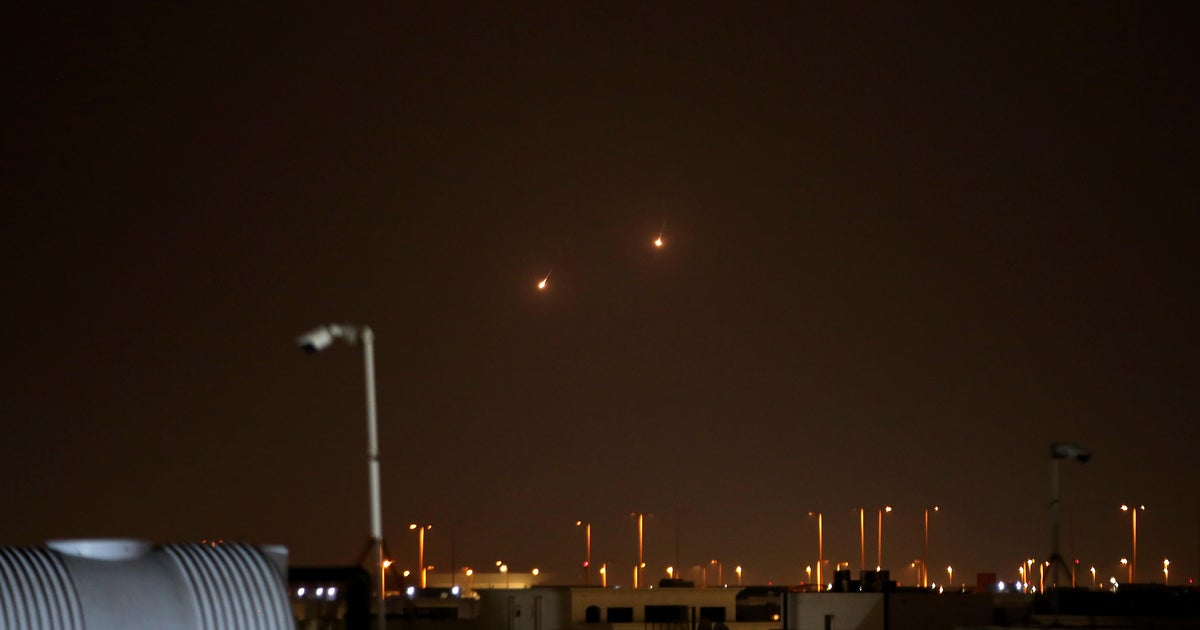
The White House is aware that Gulf countries have said they're running short on missile interceptors, and that they've said they're having to choose which objects to blow up — and which not to — multiple sources told CBS News. The White House has discussed the matter, the sources said. Margaret Brennan contributed to this report. In:
The White House is aware that Gulf countries have said they're running short on missile interceptors, and that they've said they're having to choose which objects to blow up — and which not to — multiple sources told CBS News. The White House has discussed the matter, the sources said.
CBS News' Margaret Brennan first reported on March 5 that Gulf states were running dangerously low on missile interceptors and had asked the U.S. to expedite new supplies. U.S. allies in the region were told that officials in Washington were creating a task force to get them new supplies, but the sources said it wasn't happening as quickly as they needed.
On "60 Minutes," CBS News chief Washington correspondent asked Defense Secretary Pete Hegseth about Brennan's reporting on the Gulf states' interceptor shortage and whether the U.S. was prepared to protect them and to help them restock.
"Very prepared — we plan for that," Hegseth replied. He added that Iran's missile capability had been reduced by 90% and said that "our projections of munitions are well beyond what we would need."
Hegseth indicated the U.S. would be able to help with resupply or "crossload for allies, if need be, always ensuring that our forces and our troops and our bases are taken care of first." And he said that "where we can help allies, we will."


One of Britain's most notorious child killers died Saturday, days after he was attacked by a fellow inmate in the workshop of a maximum-security prison. In:

Advocates for at least four American nationals who were jailed in Iran before the U.S.-Israeli strikes started are growing increasingly concerned about their safety, as intense bombing continues across the country. Camilla Schick and Olivia Gazis contributed to this report. In:

Russia is providing intelligence to Iran regarding U.S. positions during the ongoing military operation, three sources, including a senior U.S. official with direct knowledge, told CBS News on Friday. In:

Northern Iraq — Seven days into the U.S.-Israeli war on Iran, President Trump's end goal remains vaguely defined. He's said, however, that he wants to "go in and clean out" the Islamic Republic's theocratic regime, and on Friday he demanded "unconditional surrender." Justine Redman contributed to this report. In:

Decomposing and mutilated human remains found on a beach on the resort island of Bali belonged to a Ukrainian man kidnapped and tortured while on holiday, Indonesian police said Friday. In:

The assassination of Iran's Supreme Leader Ayatollah Ali Khamenei in the early hours of the U.S. and Israel's war on Iran has raised a simple but enormously consequential question: Who will replace him? In:

Washington — The Senate will hold a vote Wednesday on whether to block President Trump from using further military force against Iran, amid shifting messaging from the administration about the strikes and warnings about more American casualties to come. Ibrahim Aksoy, Patrick Maguire and Grace Kazarian contributed to this report. In:

As the U.S. Department of State urges Americans to leave 14 countries across the Middle East amid the widening war with Iran, some Americans are voicing frustration with the lack of help from their government. In:

Beijing — China is bracing for the full economic impact of the U.S. and Israeli war with Iran as its energy supplies are severely disrupted. China is the largest importer of energy in the world, and the disruption to oil imports caused by the conflict could be a potential Achilles' heel for Beijing, just weeks before President Trump's highly anticipated state visit to China. In:

Amazon said drones struck three of its Middle East data centers, causing outages related to the "ongoing conflict in the Middle East." Edited by Aimee Picchi In:

Stephanie Kirsop didn't believe her son when he phoned to say a crocodile was lurking in a creek near their home. In:

Satellite imagery captured Sunday and Monday by Vantor shows the aftermath of the U.S.-Israeli strikes on multiple sites in Iran. In:

At least 169 people were killed after insurgents raided a village in a remote area of South Sudan, a local official said Monday. It's the latest bout of sporadic violence that has left the country teetering on the verge of full-blown civil war. In: