Primary Country (Mandatory)

Other Country (Optional)

Set News Language for United States

Primary Language (Mandatory)
Other Language[s] (Optional)
No other language available

Set News Language for World

Primary Language (Mandatory)
Other Language(s) (Optional)

Set News Source for United States

Primary Source (Mandatory)
Other Source[s] (Optional)

Set News Source for World

Primary Source (Mandatory)
Other Source(s) (Optional)
  • Countries
    • India
    • United States
    • Qatar
    • Germany
    • China
    • Canada
    • World
  • Categories
    • National
    • International
    • Business
    • Entertainment
    • Sports
    • Special
    • All Categories
  • Available Languages for United States
    • English
  • All Languages
    • English
    • Hindi
    • Arabic
    • German
    • Chinese
    • French
  • Sources
    • India
      • AajTak
      • NDTV India
      • The Hindu
      • India Today
      • Zee News
      • NDTV
      • BBC
      • The Wire
      • News18
      • News 24
      • The Quint
      • ABP News
      • Zee News
      • News 24
    • United States
      • CNN
      • Fox News
      • Al Jazeera
      • CBSN
      • NY Post
      • Voice of America
      • The New York Times
      • HuffPost
      • ABC News
      • Newsy
    • Qatar
      • Al Jazeera
      • Al Arab
      • The Peninsula
      • Gulf Times
      • Al Sharq
      • Qatar Tribune
      • Al Raya
      • Lusail
    • Germany
      • DW
      • ZDF
      • ProSieben
      • RTL
      • n-tv
      • Die Welt
      • Süddeutsche Zeitung
      • Frankfurter Rundschau
    • China
      • China Daily
      • BBC
      • The New York Times
      • Voice of America
      • Beijing Daily
      • The Epoch Times
      • Ta Kung Pao
      • Xinmin Evening News
    • Canada
      • CBC
      • Radio-Canada
      • CTV
      • TVA Nouvelles
      • Le Journal de Montréal
      • Global News
      • BNN Bloomberg
      • Métro
What is vertical fiscal imbalance?

What is vertical fiscal imbalance?

The Hindu
Friday, September 06, 2024 03:16:38 AM UTC

The article discusses the Vertical Fiscal Imbalance in Indian fiscal federalism and the need for increased tax devolution.

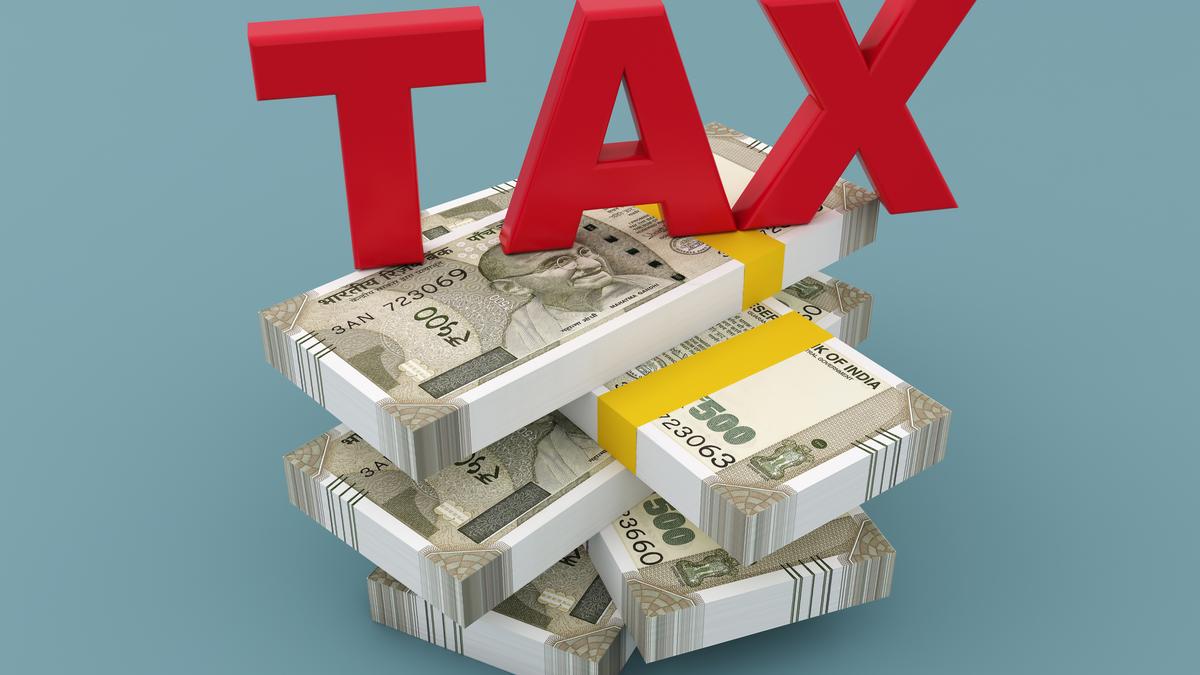
The financial relationship between the Union government and the States in India is asymmetrical, as in many other countries with a federal constitutional framework. As the 15th Finance Commission noted, States incur 61% of the revenue expenditure but collect only 38% of the revenue receipts. In short, the ability of the States to incur expenditures is dependent on transfers from the Union government. Consequently, there is the problem of Vertical Fiscal Imbalance (VFI) in Indian fiscal federalism where expenditure decentralisation overwhelms the revenue raising powers of the States.

Constitutionally, the financial duties of the Union government and the States are divided. On the revenue front, to maximise the efficiency of tax collection, the Personal Income Tax, the Corporation Tax and a part of indirect taxes are best collected by the Union government. But on the expenditure front, to maximise the efficiency of spending, publicly provided goods and services are best supplied by the tier of the government closest to its users. It is in this context that the extent of VFI merits attention.

The 15th Finance Commission had noted that India has had a larger, and rising, vertical imbalance than most other federations. These imbalances were further magnified during periods of crises, such as the COVID-19 pandemic, which drove a large wedge between one’s own revenues and expenditure responsibilities at the sub-national level.

The problem of VFI falls under the purview of the Finance Commission, and it deals with broadly two questions. The first question is how to distribute the taxes collected by the Union government to the States as a whole. These transfers are made as a prescribed share of the “Net Proceeds” (Gross Tax Revenue of the Union less surcharges, cesses and costs of collection). The second question is how to distribute taxes across States. The matter of VFI arises as part of the first question.

Apart from devolving taxes, the Finance Commissions also recommend grants to States in need of assistance under Article 275 of the Constitution. But these are generally for short periods and for specific purposes. There are also transfers to the States that fall outside the Finance Commission’s ambit. For example, the Union government spends substantial amounts — under Article 282 of the Constitution — on subjects falling in the State and Concurrent lists through centrally sponsored schemes and central sector schemes. But such grants are tied transfers that include conditionalities. In sum, the devolution of taxes from the net proceeds is the only transfer to the States that is untied or unconditional.

Here we try to estimate the VFI in India after the devolution of taxes to the States. We measure VFI at the level of “all States”, and not separately for each State. For this, we use a globally accepted method. We first estimate a ratio where the numerator is the sum of the Own Revenue Receipts (ORR) and the tax devolution from the Union government for all States. The denominator is the Own Revenue Expenditure (ORE) for all States. If this ratio is less than 1, it implies that the sum of own revenue receipts and tax devolution of the States is inadequate to meet the ORE of the States. If we subtract this ratio from 1, we get the deficit in receipts. It is this deficit that we use as a proxy for VFI after devolution.

We can then ask the simple question: how much should tax devolution rise over and above that recommended by the past Finance Commissions to equalise the ratio to 1? Equating the ratio to 1 would eliminate VFI. In the attached table, we show that the average share of net proceeds devolved to the States between 2015-16 and 2022-23 should have been 48.94% to eliminate the VFI. But the shares of tax devolution recommended by the 14th and 15th Finance Commissions were only 42% and 41%, respectively, of the net proceeds.

Read full story on The Hindu
Share this story on:-
More Related News
Silver futures hit new peak of ₹2.32 lakh/kg as global prices cross $75-mark

Silver futures soar to ₹2.32 lakh/kg as global prices exceed $75, marking a record high in commodities trading.

Stock markets trade lower in early deals

Stock markets decline as Sensex and Nifty fall amid foreign fund outflows and low trading volumes on December 26, 2025.

Rupee falls 23 paise to 89.94 against U.S. dollar in early trade

Rupee drops 23 paise to 89.94 against the dollar amid negative equity trends and rising crude prices.

Navi Mumbai region heads for rapid infra, realty growth 

The commencement of commercial flight from the Navi Mumbai International Airport (NMIA) is expected to speed up infrastructure and real estate development across Navi Mumbai and surrounding regions, analysts & industry executives said.

GCCs keep India’s tech job market alive, even as IT services industry embarks on a hiring moratorium

Global Capability Centres, offshore subsidiaries set up by multinational corporations, mostly known by an acronym GCCs, are now the primary engine sustaining India’s tech job market, contrasting sharply with the hiring slowdown witnessed by large firms in the country.

Why manufacturing has lagged in India

India’s manufacturing sector underperforms compared to China and South Korea, partly due to public sector wages that raise costs and reduce competitiveness.

GCC NRIs’ investment pace tempered due to currency fluctuation concerns: Geojit ED

Non-Resident Indians (NRIs) from the Gulf Cooperation Council (GCC) region, once prominent investors in the Indian equity market are seen shying away due to rupee depreciation and have moved to global funds, said a top financial services executive.

Mobile phones are migrating to smaller chips to accelerate AI workloads: MediaTek

Mobile phones are increasingly migrating to smaller chips that are more energy efficient and powerful supported by specialised Neural Processing Units (NPUs) to accelerate AI workloads directly on devices, said Anku Jain, India Managing Director for MediaTek, a Taiwanese fabless semiconductor firm that claims a 47% market share India’s smartphone chipset market.

Bharti Enterprises, Warburg Pincus to pick up 49% stake in Haier India 

In one more instance of a wholly owned subsidiary of a Chinese multinational company in India getting ‘Indianised’,  Bharti Enterprises, a diversified business conglomerate with interests in telecom, real estate, financial services and food processing among others, and the local arm of private equity major Warburg Pincus have announced to collectively own a 49% stake in Haier India, a subsidiary of the Haier Group which is headquartered in Qingdao, Shandong, China.

Stock markets end lower in volatile trade

Indian stock markets closed lower amid volatility, with key firms lagging as global trends influenced trading activity.

Bharti, Warburg Pincus pick up 49% stake in Haier India

Bharti and Warburg Pincus invest in Haier India, acquiring a 49% stake to enhance growth and innovation in consumer durables.

Net FDI negative for third straight month in October 2025, as inflows fell & outflows grew

India's net FDI remains negative for October 2025, with outflows surpassing inflows amid trade deal uncertainties.

Bombay High Court stays fraud notices to Anil Ambani; questions banks’ compliance 

Bombay High Court halts fraud notices to Anil Ambani, questioning banks' compliance and the audit's validity.

PM Office directs Coal India to list all subsidiaries by 2030

PMO directs Coal India to list all subsidiaries by 2030 to improve governance, transparency, and unlock asset value.

What are the signals from the Indian economy? | Explained Premium

The Hindu explains: What are the signals from the Indian economy?

“Energy storage, green hydrogen to fundamentally reshape India’s renewable energy ecosystem”

In the next five years, technologies like energy storage and green hydrogen would fundamentally reshape India’s renewable energy ecosystem, says a top company official.

How India’s oil basket has changed over the years

Historically, energy security for the world’s third-largest oil consumer India has been about navigating the prevailing geopolitics whilst ensuring a positive economics for purchase of crude oil purchases.

How India secured RCEP’s advantages without exposing itself to the ‘China risk’

India leverages trade agreements with RCEP countries, strategically avoiding risks associated with China while maximizing market access.

IndiGo faces ₹13 lakh penalty related to GST

IndiGo contests a ₹13 lakh GST penalty imposed by Punjab's tax department, claiming the ruling is erroneous.

Will Indians still ride the gold wave in 2026?

Indian investors had a tumultuous year as the benchmark Nifty returns dipped to negative with overall market turnover hitting a low in December 2025. Howeve, investor interest in gold exchange traded funds (ETFs) increased this year.

Silver soars ₹9,350 to record ₹2.36 lakh/kg in Delhi; crosses $75/ounce mark in international markets

Silver prices surge to a record ₹2.36 lakh/kg in Delhi, fueled by strong global demand and market trends.

Coal Ministry notifies rules doing away with CCO nod for opening, restarting coal mines

Coal Ministry's new rules eliminate CCO approval for opening mines, expediting operations and enhancing efficiency in coal production.

India imposes anti-dumping duty on two Chinese products

India imposes anti-dumping duties on Chinese steel and refrigerant gas to protect domestic industries from unfair pricing.

Sensex declines for third day, sheds 367 points on foreign fund outflows

Sensex declines for the third day, losing 367 points due to foreign fund outflows and thin trading conditions.

Bitcoin volatility, stablecoin regulations, and North Korean hacks: Crypto events that marked 2025

Let’s take a look at some of the biggest crypto events of the year.

© 2008 - 2025 Webjosh  |  News Archive  |  Privacy Policy  |  Contact Us