What is next in the Israel-Iran war? Premium
The Hindu
Israel launches war against Iran, leading to assassination spree in Tehran, escalating conflict with uncertain outcomes.
When Israel launched its war against Iran on June 13, it went for an assassination spree in Tehran. Israeli strikes killed Iran’s armed forces chief, the commander of the elite Revolutionary Guards, other top generals and at least half a dozen nuclear scientists. Even though Israel’s declared objective was to dismantle Iran’s nuclear programme, the strikes were aimed at decapitating the Iranian state. In the subsequent days, Israel continued to carry out targeted killings. But if Israel thought such killings would blunt Iran’s capability to hit back, it was mistaken.
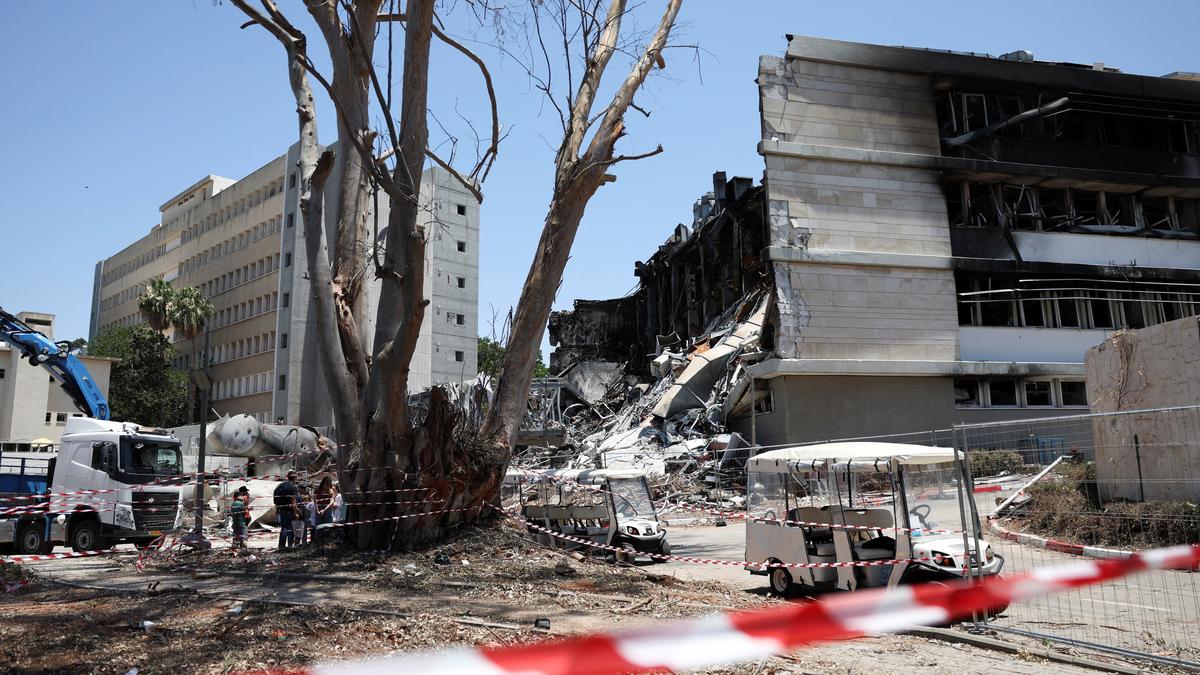
Iran recovered swiftly from the June 13 shock and replaced the assassinated commanders with new ones. Tehran launched its counterattacks on the same day, firing hundreds of ballistic missiles into Israel and hitting multiple locations, including an oil refinery in Haifa, the premier Weizmann Institute of Sciences near Tel Aviv and the Soroka hospital in Beersheba.
On day three of the war, Israel Defense Forces (IDF) claimed that they have complete aerial superiority over Tehran’s skies. The IDF also said they had destroyed at least “one-third” of Iran’s missile launchers, while defence officials told local media that relentless air strikes degraded Tehran’s counterattack capability. But Iran kept firing dozens of ballistic missiles every day, overwhelming Israel’s defence systems. On June 18, an unnamed American official told the Wall Street Journal that Israel was running low on its advanced Arrow missile interceptors. The official said the U.S. was also “burning through” its interceptors to defend Israel. And on June 19 morning, Iran launched another massive strike, hitting multiple locations, including the Soroka hospital.
As both sides continue to trade fire, there are questions on where the conflict is headed. Iran has suffered huge losses. But the government seems to be demonstrating resilience despite the setbacks. Several voices within Iran that were critical of the government and the clergy, including Nobel Prize winner Narges Mohammadi, came out against Israel’s war. Israel has operational freedom in Iran’s skies, but Iran, which is 75 times bigger than Israel in terms of landmass, possesses thousands of ballistic missiles. Israel wants to destroy Iran’s nuclear programme, but it lacks the kind of bunker buster bombs it needs to even attempt to destroy Iran’s most fortified nuclear facilities. If an air war of attrition continues, Israel’s missile defence systems could come under greater pressure.
Israeli officials are pressing the U.S. to join the war, according to American media. U.S. President Donald Trump has already demanded an “unconditional surrender” from Iran. White House officials say Mr. Trump has not taken a final call, while there are dissenting voices against the U.S. joining Israel’s war, even from Mr. Trump’s rightwing MAGA base. Iran’s Supreme Leader, Ayatollah Ali Khamenei, has ruled out “surrender”, and warned of “consequences” if the U.S. joined the war.
This means, Mr. Trump’s next decision would decide the course of the war.
One option before Mr. Trump is to rein in Mr. Netanyahu, who launched the war, and bring it to an end. Iran has said it will stop firing missiles if Israel stops the strikes. But if Mr. Netanyahu stops strikes now, with the Iranian government and its nuclear programme still standing, it will be considered a defeat. But if he continues to strike Iran and Iran keeps hitting back, he will be under greater pressure at home. Hence, the focus shifts to the U.S.


Trump claims “very good” talks with Iran, despite Tehran’s denial, as U.S. negotiators plan potential meetings in Pakistan.

Netanyahu discusses U.S.-Israeli military gains with Trump, emphasizing commitment to protect Israel's interests amid ongoing conflicts.

Pakistan reaffirms commitment to combat terrorism as Afghan ceasefire approaches end amid rising tensions and recent casualties.

Trump postpones military strikes on Iranian power plants for five days amid escalating tensions and ongoing diplomatic discussions.

Shorts News:Watch: NATO chief: 22-nation group forming to secure Strait of Hormuz

Saudi Aramco reduces crude supply to Asia for April, citing disruptions from the Iran-Israel conflict affecting trade routes.

Tencent launched a tool on Sunday to integrate its WeChat messaging platform with the OpenClaw agent

An Air Canada flight collided with a Port Authority vehicle at LaGuardia Airport, causing significant damage and police response.

Saudi Arabia and the UAE face missile attacks, with casualties reported and air defenses engaged amid escalating regional tensions.

Slovenia's parliamentary election results show a tight race between liberals and populists, signaling potential political instability ahead.

IEA chief warns of a potential energy crisis worse than the 1970s, with 11 million barrels lost daily amid regional conflicts.

Cuba begins restoring power after a nationwide grid collapse, affecting thousands amid an ongoing energy crisis and blackouts.

The Hindu LIVE updates on March 23 2026 on Iran-Israel war. Iran faces deadline of US President Donald Trump warning to open Strait of Hormuz