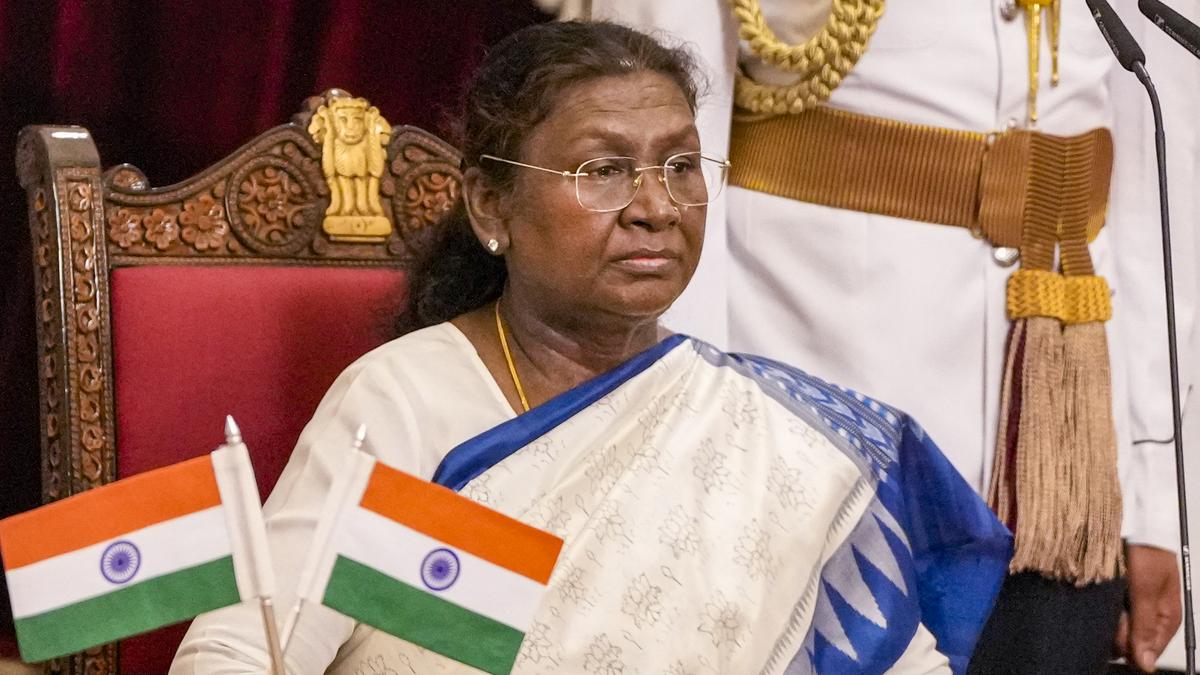
What is a Presidential reference? | Explained
The Hindu
President Droupadi Murmu seeks Supreme Court opinion under Article 143, sparking debate on advisory jurisdiction and constitutional interpretation.
The story so far: President Droupadi Murmu, has made a reference to the Supreme Court, under Article 143 of the Constitution, on certain questions of law and has sought its opinion on those questions.
The advisory jurisdiction of the Supreme Court under Article 143 is a relic of the Government of India Act, 1935. It vested the Governor-General with discretionary power to refer any question of law of public importance to the federal court for its opinion.
A similar provision is available in the Canadian constitution. This mechanism allows the Supreme Court of Canada to offer opinions on legal questions referred to it by the federal or provincial governments. The U.S. Supreme Court on the other hand has consistently declined to provide any advisory opinion to the executive as it would violate the strict separation of powers envisaged in its constitution.
As per Article 143, the President may refer any question of law or fact of public importance to the Supreme Court for its opinion. The President makes such a reference based on the advice of the Union council of ministers. Article 145 of the Constitution provides that any such reference shall be heard by a bench of minimum five judges.
The Supreme Court may provide its opinion after such hearing as it thinks fit. The opinion is legally not binding on the President, and does not hold a precedential value for the courts to follow in subsequent cases.
However, it carries a strong persuasive value and is usually followed by the executive and the courts.
There have been around fifteen references made since 1950 before the current reference. Some of the landmark opinions from such references is summarised here.


MP M. Sribharat urges collective efforts to revive Visakhapatnam Steel Plant, highlighting key reforms for crucial recovery and growth.

141 candidates have filed nominations for Kozhikode's Assembly elections, with scrutiny on March 24 and campaigning intensifying.

BJP's Vijayendra accuses Congress of using money to influence Bagalkot bypolls, urging voters to reject their tactics.

First randomization of electronic voting machines completed in Tirunelveli and Tenkasi districts for upcoming Assembly elections.

RPF seizes 10.12 kg of unclaimed cannabis worth ₹5.06 lakh from a train in Mangaluru.

Kolar's groundwater levels rise to 50-100 ft due to the K.C. Valley project, ensuring clean water and improved health outcomes.

Three smugglers arrested in Sangareddy with 574 kg of ganja valued at ₹2.87 crore during a police operation.

Mysuru MP urges a 'flex-free Mysuru' by discouraging birthday banners, promoting responsible celebrations to preserve the city's heritage.

Farmers of Kalakudi demand payment for paddy bags procured at DPC

BJP's seal on a 2019 Election Commission letter ignites controversy in Kerala, prompting claims of careless handling by CPI(M).

Transgenders go on rally condemning Transgenders Amendment Bill 2026

Supreme Court dismisses plea challenging Sonam Wangchuk's detention, noting the Centre revoked it on March 14, 2026.

Private medical shops in Telangana government hospitals face eviction due to expired leases and ongoing legal challenges, says Health Minister.