The 27th amendment, Pakistan’s democratic dilemma Premium
The Hindu
Constitutional democracy survives on the continued independence of courts, respect for institutional boundaries, and a shared commitment to restraint
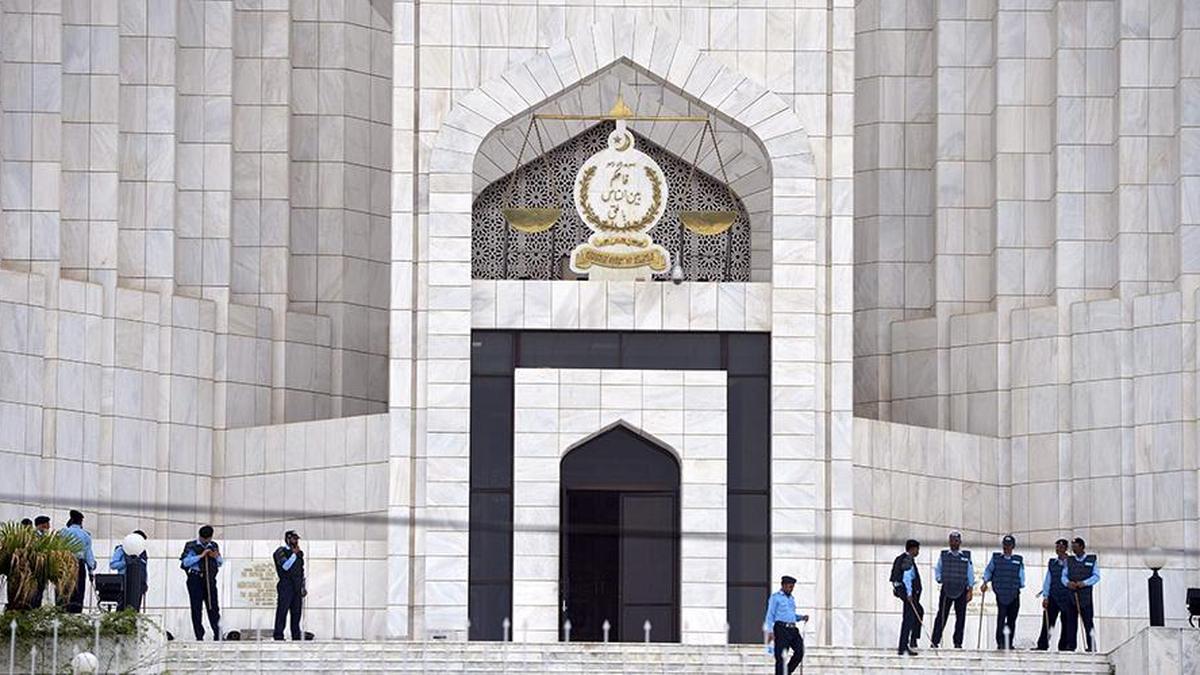
Last year, between November 12 and 13, Pakistan’s legislature passed the 27th Amendment, or PCA, which subsequently received presidential assent. Presented as a measure to reorganise aspects of the military command structure, the amendment has consequences that reach far deeper into the constitutional order. The PCA significantly diminishes the central role of the Supreme Court in Pakistan’s constitutional order. By transferring original jurisdiction over constitutional interpretation, fundamental rights and federal-provincial disputes to a newly created Federal Constitutional Court, or FCC, the amendment sidelines the Supreme Court from the most consequential questions of governance.
In recent years, it was precisely this jurisdiction that enabled the top court to adjudicate landmark political cases, including the Panama Papers case and the Memogate controversy. Stripping the top court of this authority not only fragments constitutional adjudication but also weakens its position as the final guardian of the Constitution, leaving it vulnerable to institutional marginalisation under executive influence.
The passage of the PCA must be viewed against a broader regional backdrop. South Asia is navigating a period marked by political instability, security concerns and institutional strain. These pressures are not confined to national borders. For countries in the Global South, where institutions are often tested by competing imperatives of security and governance, constitutional choices carry long-term consequences.
For India, examining such developments in its neighbourhood is neither voyeuristic nor adversarial. As the region’s largest constitutional democracy, India has a direct interest in how constitutional norms evolve — or erode — around it. The weakening of judicial independence or the normalisation of executive dominance elsewhere in South Asia carries cautionary lessons.
At the core of constitutional governance lies what English jurist A.V. Dicey famously described as the rule of law, a doctrine premised on the absence of arbitrary power, equality before the law, and the central role of independent courts as sentinels of rights. In Dicey’s conception, the law exists to restrain authority, with courts serving as the institutional bridge between power and liberty. It is precisely this equilibrium that the PCA unsettles.
By diluting the Supreme Court’s position as the final arbiter of constitutional questions and vesting that authority in a newly-constituted FCC, the PCA risks weakening institutional independence. Courts, in Dicey’s framework, are not mere forums for adjudication but constitutional guardians tasked with keeping executive power within bounds.


Decomposed body of a missing 25-year-old man discovered in Dindigul stone quarry, prompting calls for investigation and quarry closure.

SVEEP activities launched in The Nilgiris aim to boost voter turnout at 13 polling booths with low participation rates.

Learn who can vote by postal ballot in the upcoming Tamil Nadu Assembly election, including seniors and persons with disabilities.

Shorts News:Watch: UDF linked to communal forces in Kerala: CPI(M) leader A Vijayaraghavan

Karnataka government postpones Deendayal Upadhyaya event at KSOU Mysuru due to protocol violations and lack of government involvement.

Sameer Wankhede denies bribery allegations involving Shah Rukh Khan’s son in drugs case during Bombay High Court proceedings.

What does it take to design gloves, masks and uniform that factor in the various challenges faced by workers on the waste beat? Indore, Bengaluru and Pune have an answer

Gaurav Gogoi files nomination for Jorhat Assembly seat, marking his electoral debut in the upcoming Assam elections.

A round-up of events and programmes held at colleges in Tiruchi and other Cauvery delta districts

CPI(M) and Congress clash over accusations of aiding BJP, threatening the LDF-UDF duopoly ahead of Kerala Assembly polls 2026.

Shivamogga veterinarians demand accountability for the death of trainee vet Dr. Sameeksha Reddy, citing systemic failures in zoo administration.

BJP launches 'Mana Ooru–Mana Jenda' campaign on April 6 to strengthen grassroots connections and promote development in Andhra Pradesh.

Anuradha Jonnalagadda took over as in-charge Vice-Chancellor of the University of Hyderabad, focusing on continuity during the transition.