What happened just then? Demystifying the many causes behind syncope Premium
The Hindu
Syncope in clinical medicine: importance, causes, diagnosis, and management explained concisely by a medical professional.
‘The eyes see what the brain knows.’ This old adage, famous in the echelons of medicine, highlights why syncope is important in clinical medicine, for it is often missed while evaluating a patient.
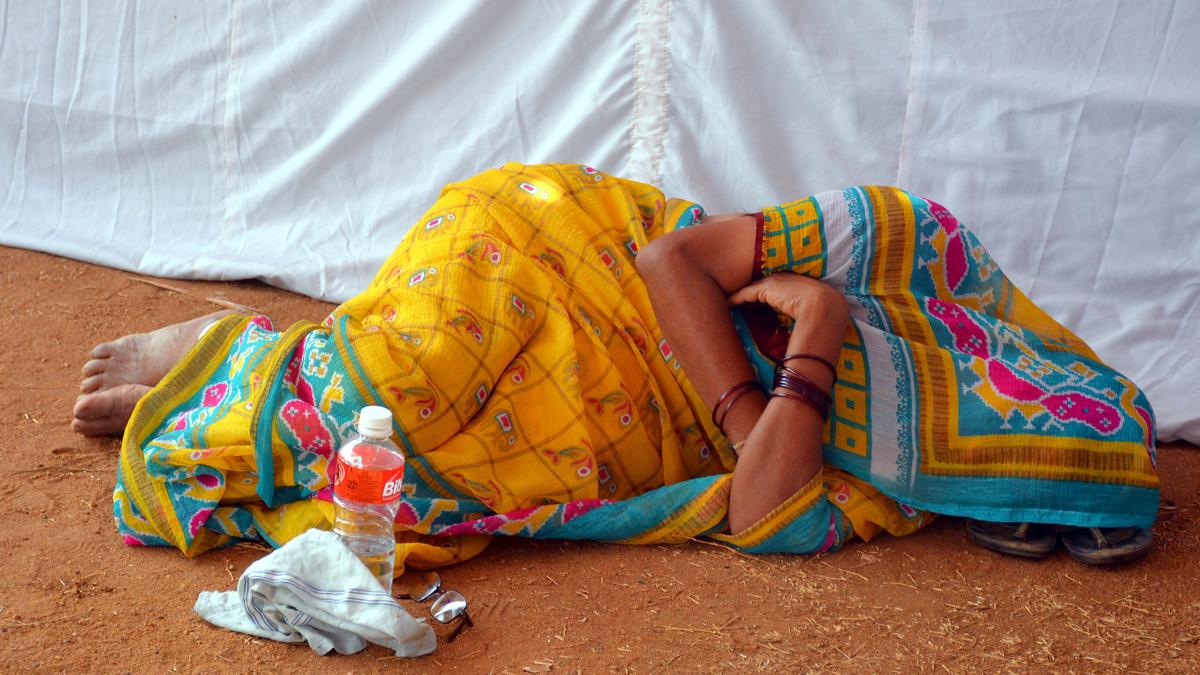
Syncope is a transient loss of consciousness due to cerebral hypoperfusion. In simple terms, it is a brief cut-off from reality, which is accompanied by a loss of tone and posture, and ends with regaining of consciousness once perfusion to the brain is reinstated.
The path to the hospital for syncope is as varied as are its causes. It is the end effect of multiple pathologies - neural, orthostatic hypotension, cardiac, all of which have a peculiar origin - an evolutionary bane.
Humans adopted the upright posture to enable greater range for themselves. However this produced a unique physiologic stress on the body - to maintain constant perfusion pressure against gravity to the brain. Consequently, about 1 litre of blood gets pooled in the vascular plexus in the lower limbs, which draws from the central circulation. The workaround for this is cerebral autoregulation. Cerebral autoregulation refers to the brain’s ability to maintain constant/stable blood despite changes in blood volume of the central circulation.
When this cerebral autoregulation is altered, it leads to the final outcome of syncope, a transient, self-limited loss of consciousness, so brief that the patient or their caretakers might not even recognise it.
The following case study is one interesting example.
A 27-year-old male had presented to the orthopaedic department multiple times with recurrent fractures of the upper limb over the course of three months, all of which occurred in his washroom. It took a physician friend of the orthopaedic surgeon to link the falls in the washroom to micturition syncope (fainting while urinating), a rare type, where syncope occurs post urination highlighting the importance of interdisciplinary coordination in health.


Police warn against downloading APK files and clicking suspicious links to avoid falling victim to cyber fraud.

CM A. Revanth Reddy reviews Bhadrachalam temple development plans, targeting completion by March 2027 while adhering to Agama Shastra.

First-half blitz helps Punjab FC drub Kerala Blasters FC

Vellore Mayor Sujatha Anandakumar and a councillor face legal action for violating the Model Code of Conduct by distributing sports equipment.

Supreme Court judge Justice Nagarathna highlights government's role in court backlog, urging judicial reforms for effective litigation management.

Kerala LDF ministers declare assets nearing ₹2 crore each amid upcoming elections, revealing financial details and legal challenges.

Indiaspora, a San Francisco-based non-profit organisation which connects leaders of the Indian diaspora, is holding its 2026 Indiaspora Forum on March 22-24 and also a Global AI Summit on March 25, 2026, at JW Marriott Prestige Golfshire Resort in Bengaluru.

Special prayers mark Eid-ul-Fitr celebrations in Madurai

India’s gem and jewellery industry continues to demonstrate remarkable resilience and a spirit of innovation, said Kirit Bhansali, chairman of the Gem and Jewellery Export Promotion Council (GJEPC), at the inauguration of the 4th edition of IIJS Bharat-Tritiya 2026 at Bengaluru International Exhibition Centre (BIEC) here on Saturday, March 21.

HYDGEN dispatches eight modular green hydrogen systems to Surat, enhancing on-site industrial hydrogen generation and operational efficiency.

Fight is between AIADMK and DMK, says Rajan Chellappa

Two habitual offenders arrested in Miyapur for wine shop burglary; police recover stolen cash and bike.

Tiruchi's Smart City projects face underutilisation despite completion, raising concerns about planning, execution, and revenue generation.