What does the India-Brazil critical minerals MoU mean for the two countries? Premium
The Hindu
While Pax Silica sets out a general goal in the form of securing supply chains for the U.S. and its partner countries, the bilateral MoU intends to help with one part of that goal.
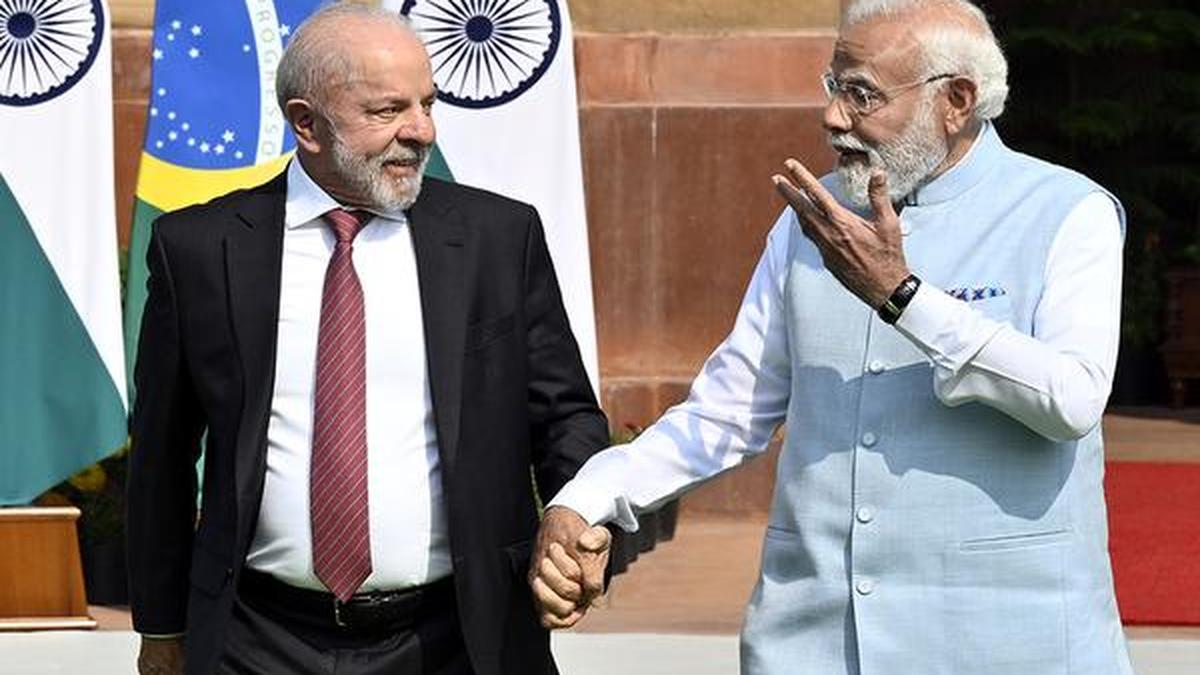
The story so far: India and Brazil signed a memorandum of understanding (MoU) on rare earths and critical minerals during President Lula da Silva’s state visit to India on February 21, 2026. The joint statement said the two countries want to work together across the full mineral “value chain” and that the understanding includes exploration, mining, processing, recycling, and refining. The statement also said the aim is to strengthen supply chains and competitiveness.
India is currently trying to build capacity at home across the critical minerals value chain and to reduce dependence on any one country by building more overseas partnerships for minerals and processing. On the domestic front, the Union Cabinet approved the National Critical Mineral Mission in January 2025 to cover all stages of the value chain, including exploration, mining, beneficiation, processing, and recovery from end-of-life products. It is meant to run from 2024-25 to 2030-31 with substantial public expenditure.
India also published a list of 30 critical minerals in July 2023 and has used the Mines and Minerals (Development and Regulation) Amendment Act 2023 to give the Centre more power to auction blocks for critical and strategic minerals. By September 2025, the Ministry of Mines said it had run multiple rounds of such auctions covering several blocks. Further, the state-backed vehicle Khanij Bidesh India Ltd. is currently exploring overseas acquisitions and signing exploration arrangements, including in Argentina and Chile.
India has also used changes in customs duty to reduce the cost of importing inputs that it doesn’t have enough of at home. This includes customs duty cuts in recent budgets for some critical minerals and for scrap and waste that can be processed to recover these minerals.
Finally, the Indian government is also pushing late-stage manufacturing. According to Union Minister for Mines G. Kishan Reddy, India aims to begin domestic production of rare-earth permanent magnets by the end of 2026 under a government-backed programme, with the stated goal of cutting import dependence in sectors like electric vehicles and defence.
In India’s official briefing, Secretary (East) P. Kumaran said President Lula spoke of Brazil’s “substantial” reserves of which only about 30% had been explored and that Brazil would value India as a partner to explore and process them. Associated Press reported that the MoU is non-binding.


Iran warns of grave threats to its citizens from U.S. and Israeli strikes, asserting its refusal to submit to aggression.

Israeli military initiates limited ground operations against Hezbollah in Lebanon amid escalating violence and humanitarian crisis.

Sri Lanka introduces a four-day workweek for public sector to conserve fuel amid escalating energy crisis concerns.

EU and UN explore Black Sea initiative to reopen the Strait of Hormuz amid rising oil prices and regional tensions.

Russia fines Telegram $432,366 for not removing banned content amid accusations of hosting illegal material.

Shorts News:Watch: Smoke billows near Dubai airport after drone attack

West Asia conflict disrupts pharma air routes, threatening cancer drug supplies and forcing companies to find alternative shipping methods.

Trump accuses Iran of weaponising AI for disinformation, citing misleading claims about military successes and public support rallies.

Myanmar's Parliament convenes under military control, following a controversial election that reinforces the Army's grip on power.

Trump urges allies to secure the Strait of Hormuz, but Japan and Australia refuse to send naval support amid rising tensions.

AI-created videos circulating on Elon Musk's X depict American soldiers captured by Iran, an Israeli city in ruins, and US embassies ablaze; a surge of lifelike deepfakes despite a policy crackdown to curb wartime disinformation.

Explore the implications of "no quarter" in warfare, its legal prohibitions, and recent controversial remarks by U.S. officials.

Iran-Israel war: Follow live updates from The HIndu on the West Asia conflict on Marh 16, 2026