WCM-Q students study biodiversity on Purple Island
The Peninsula
Doha, Qatar: First year pre medical students at Weill Cornell Medicine Qatar (WCM Q) in February explored Qatar s rich biodiversity during a field tri...
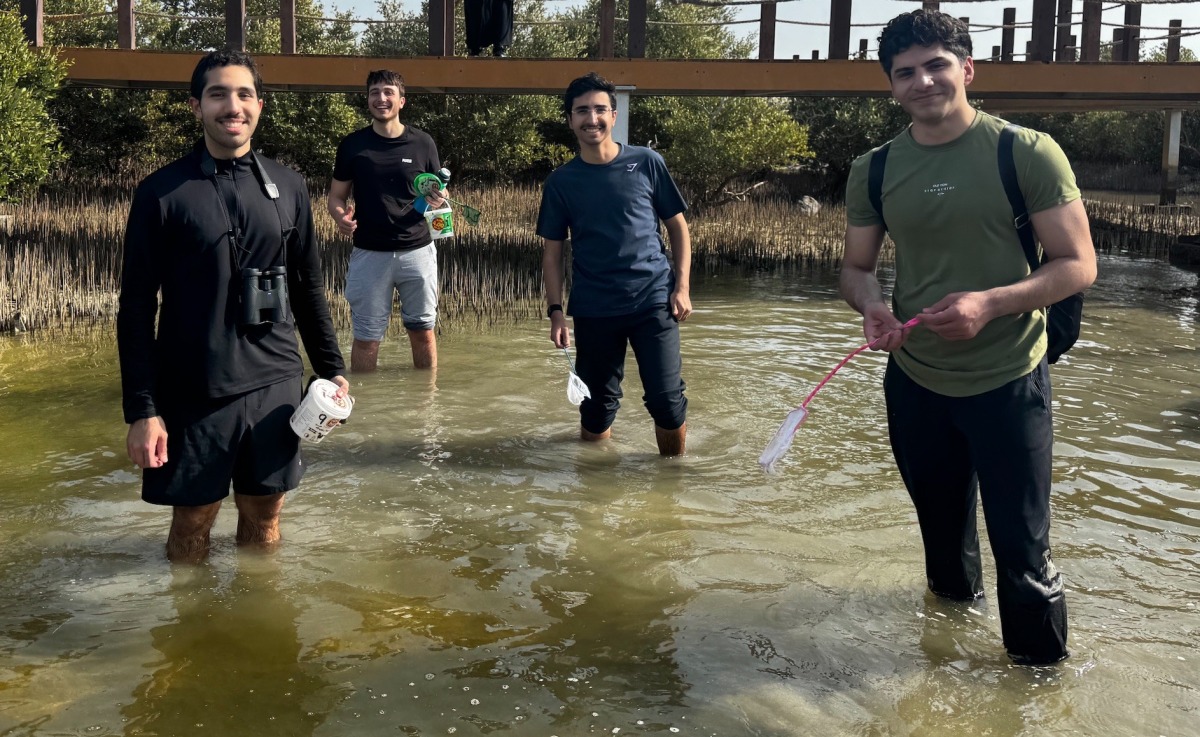
Doha, Qatar: First-year pre-medical students at Weill Cornell Medicine-Qatar (WCM-Q) in February explored Qatar’s rich biodiversity during a field trip to the mangrove forest at Jazirat Bin Ghannam, also known as Purple Island.
Divided into three groups, the students visited the island on three separate days, where they identified and collected invertebrates and observed how local flora and fauna have adapted to the environment.
Under the supervision of Dr. Kuei-Chiu Chen, a professor of biology at WCM-Q, the students collected invertebrate animals and brought the specimens to WCM-Q’s state-of-the-art laboratory. There, they will process the tissue samples and extract deoxyribonucleic acid (DNA) sequences from selected genes, which will then be used to identify the species.
The students identified various marine invertebrates, including clams, snails, crabs, sponges, moss animals, segmented worms, sea stars, and shrimp, all of which lack a backbone. To minimize the impact on the animal population, each pair of students collected only one specimen.
In addition to marine life, the students studied plant species found on the island, including gray mangrove (Avicennia marina), Zygophyllum qatarense, and glaucous glasswort (Arthrocaulon macrostachyum), all of which are adapted to the dry environment near the sea and can tolerate salt.


Doha, Qatar: Weather inshore until 6am on Thursday will be scattered clouds to partly cloudy at times, with a chance of scattered rain, the Department...

Cairo: The Arab Parliament reiterated its strong condemnation of the continued and repeated Iranian attacks targeting a number of Arab countries, stre...

Manama: The General Command of the Bahrain Defense Force (BDF) said that its air defense systems have intercepted and destroyed 130 missiles and 234 d...

Doha, Qatar: Advisor to the Prime Minister and Official Spokesperson for the Ministry of Foreign Affairs Dr. Majed bin Mohammed Al Ansari said the Isr...

Doha, Qatar: Advisor to the Prime Minister and Official Spokesperson for the Ministry of Foreign Affairs Dr. Majed bin Mohammed Al Ansari said the Isr...

Manama: The General Command of the Bahrain Defense Force (BDF) said that its air defense systems have intercepted and destroyed 130 missiles and 234 d...

Dakar: Senegal football fans slammed AFCON S decision to strip the country of its Africa Cup of Nations title and give it to Morocco, calling the move...

Doha, Qatar: HE Sheikh Saud bin Abdulrahman bin Hassan Al Thani, Deputy Prime Minister and Minister of State for Defense Affairs received a phone call...

Doha, Qatar: HE Sheikh Saud bin Abdulrahman bin Hassan Al Thani, Deputy Prime Minister and Minister of State for Defense Affairs received a phone call...

Doha, Qatar: The Qatar Central Bank has announced the Eid Al Fitr holidays for banking and financial institutions in the country. Pursuant to Clau...

Doha, Qatar: The Qatar Central Bank has announced the Eid Al Fitr holidays for banking and financial institutions in the country. Pursuant to Clau...

Doha, Qatar:The Ministry of Transport urged all ships and marine vessels to stay away from hydrographic survey operations area, which will take place...

Manila: Philippine President Ferdinand Marcos on Wednesday put the brakes on a public transportation fare hike announced just a day earlier, promising...