Water, salt and sugar packs must contain warning on presence of micro or nano plastics: Madras High Court
The Hindu
Madras High Court mandates warnings on water, salt, and sugar packaging about potential micro and nano plastics presence.
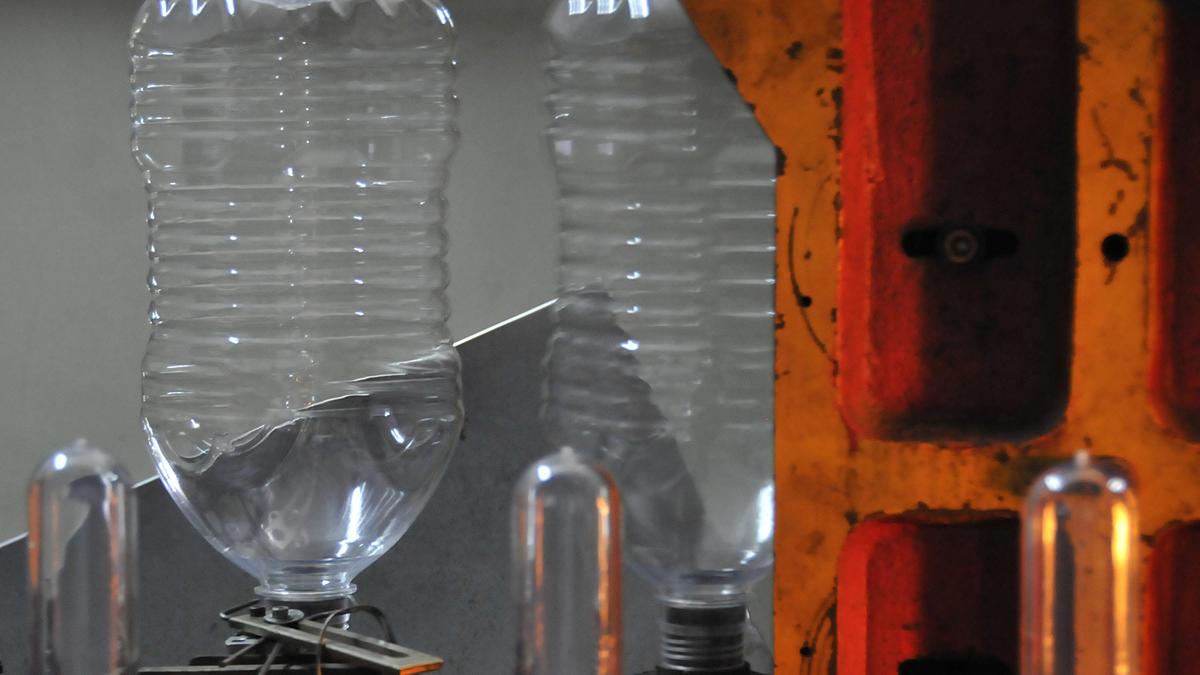
In a significant order, the Madras High Court has directed the Union Ministry of Health and Family Welfare as well as the Food Safety and Standards Authority of India (FSSAI) to forewarn customers about the possible presence of micro and nano plastics (MNPs) in packaged drinking water, salt and sugar sold through Polyethylene Terephthalate (PET) bottles and in plastic packs.
A special Division Bench of Justices N. Sathish Kumar and D. Bharatha Chakravarthy, constituted to hear forest and environment related issues, ordered that the labels on the PET bottles as well as the sugar and salt packets must contain the warning ‘This water may contain micro/nano plastics’ or ‘This salt/sugar may contain micro/nano plastics’ in red colour font of size 10.
The Ministry, as well as FSSAI, were directed to issue an appropriate notification, in compliance of the court order, within four weeks and issue instructions to all companies that sell drinking water, salt and sugar in PET bottles and other plastic packaging to comply with the new labelling requirements scrupulously. The court also called for a status report from the FSSAI by April 10, 2026.
It was during the hearing of a case related to the ban imposed by Tamil Nadu government on single use plastics, amici curiae T. Mohan, Chevanan Mohan, Rahul Balaji and M. Santhanaraman told the court that the banned plastics somehow find their way into the pristine forests of the Nilgiris Biosphere and other parts of the Western Ghats and end up being consumed by the wild animals.
The court was also apprised of an interim report of a research undertaken by PSG Institue of Medical Sciences and Research in Coimbatore on the adverse impact caused by microplastics. The report stated that microplastics were small plastic fragments and they comprise several elements, including Bisphenol A (BPA) which was a chemical compound used in the production of plastics.
Since BPA could interfere with hormone functions, the institute measured its levels in cord blood. The analysis of 10 samples found the BPA concentration to range from 0.43 to 1.1578 µg/kg body weight in the samples. “The average concentration was 0.7194 0.2 µg/kg body weight. As per current guidelines, these concentrations were above the recommended tolerable daily intake (TDI) value of 0.2 ng/kg bw/day,” the report read.


Jairam Ramesh emphasizes the need to reduce time and cost for domestic remittances, highlighting their economic significance.

India, Japan, and Indonesia enhance maritime cooperation through a trilateral naval exercise in the Andaman Sea.

Discover what immunity is and learn effective ways to enhance your immune system for better health and well-being.

Madras High Court mandates warnings on water, salt, and sugar packaging about potential micro and nano plastics presence.

CPI(M) leader M.A. Baby advocates for a secular alliance with Congress to combat BJP ahead of West Bengal elections.

Andhra Pradesh State Budget: Follow live updates from The Hindu, as State Finance Minister Payyavula Keshav presents the Budget for FY2026-27

Discover the heartfelt romance of "Couple Friendly," a mature film exploring modern relationships in Chennai's vibrant backdrop.

BJP Legislator says ‘residents of Kashmir occupying land illegally in Jammu’, evokes sharp reactions
BJP Legislator claims Kashmiris illegally occupy land in Jammu, sparking strong backlash from various political parties.

A theatrical production at Narada Gana Sabha on February 20 featuring close to 300 differently-abled participants is looking for volunteers. Read on and find out if you will fit the bill

Three militants arrested in Manipur; security forces recover arms and ammunition during operation in Tengnoupal district.

PM Modi and Vice President Radhakrishnan honor the 40 CRPF martyrs of the 2019 Pulwama terror attack on its anniversary.

As Valentine’s Day 2026 approaches, we take a look at how relationships are evolving, how restaurants and other businesses are gearing up.

A radiator blast caused a significant explosion at Brundavan Laboratories in Choutuppal, but no casualties were reported.