Visit Oya’s Umami, a new restaurant in Goa that serves authentic Naga food
The Hindu
Experience Naga-inspired Asian street food at Oya's Umami in Goa, where bold flavors and unique dishes await.
“Food, for all of us, is a memory,” says Ati Aier with a smile, as I bite into a fluffy, cloud-like mushroom bao. “For me, it was my grandmother’s amrusu, a hearty rice gruel with bamboo shoot juice, laced with the sharpness of chillies.”
We are in Miramar at Ati’s newly opened restaurant, Oya’s Umami. Ati has been hosting supper clubs at her home for a few years now, as well as popups at several events, where her attempts to simplify Naga flavours for the uninitiated have not gone unnoticed. Along with her husband Abhijit, Ati runs Goa Meat Company, which supplies smoked meats, jerkies, spicy pickled liver and chillies to chefs and notable restaurants in Goa, including Grumps, Elephant and Co., Grind Bar, Larder & Folk and Goodfellas. The couple’s backyard is where the meats are smoked. Locally sourced coconut wood, fibre, coir and husk are used, lending a unique, self-contained, sustainable angle to the enterprise.
Ati belongs to Nagaland’s vibrant Ao tribe of Mokokchung village. Having served as a Japanese interpreter in New Delhi before moving to Goa in 2018, she claims to have gravitated towards the language and culture via anime and the simplicity of Japanese food, especially the play of umami. She could immediately relate it with Naga cuisine, connecting the depth of flavours and the pleasing savoriness to ingredients such as axone, which is a fermented soybean paste.
In the Ao tribe, Oya refers to a doting elder sister, a symbol of love and warmth, a role that Ati assumed when she opened the doors of her home in 2021 to diners looking for hearty Naga inspired meals. Thus, the name Oya’s Umami.
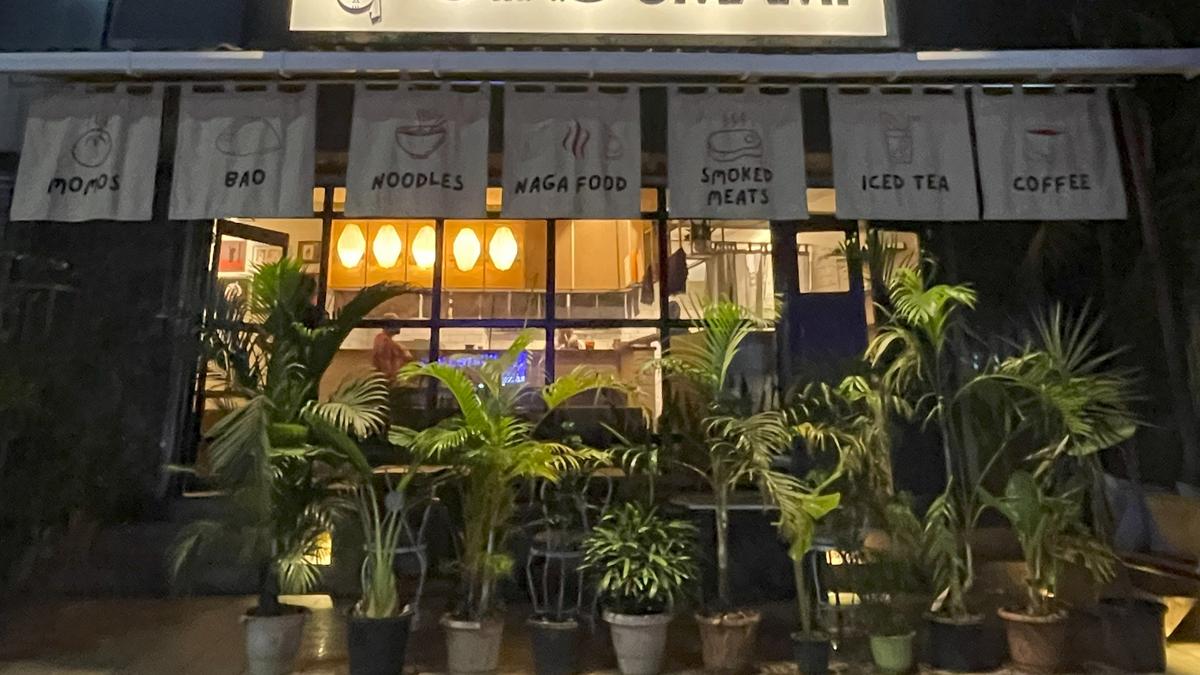
Oya’s Umami is now open with 28 covers. The interiors are simple and inspired by a Japanese ramen shop. There is a little al fresco area surrounded by greenery from potted plants. The menu is Naga-inspired Asian street food with appetisers and small plates like momos, baos, and baked chicken wings.
I tried the citrus salad with slices of smoked chicken, a perfectly zesty opening to a meal. The toasty meat adds an unexpected dimension to the taste. Next, the cold homemade egg noodles with black sesame paste, which lends a nutty creaminess to the dish, served with shredded chicken on top. It is easy to get lost in this delicious mound of silky strands, until you are jolted by the fierce sharpness of mountain pepper punctuating the dish; strangely its scent is quite like kaffir lime. The baos are soft as clouds. I had the mushroom bao, with chewy, meaty shiitake and the boldness of the three-chilli sauce with bird’s eye chilli, ghost pepper and red bell peppers.
“Your mushroom bao has anishi in it. Did you know?” says Ati. I know that fermentation is a common practice in Naga cuisine and had earlier asked her about anishi, made from taro leaves; often smoked or dried and used with pork.


Union Minister Kiren Rijiju meets Tamil Nadu Bishops and pastors to discuss minority welfare and counter anti-BJP narratives.

Japan may consider minesweeping in the Strait of Hormuz post-ceasefire, says Foreign Minister Motegi, amid ongoing regional tensions.

Delhi University job fair guidelines excluding School of Open Learning students spark protests over equity and access to opportunities.

Rwanda's Fanny Utagushimaninde, at 15, becomes the youngest player to score a T20 international century.

Assembly polls 2026: Follow updates from The Hindu on the upcoming elections in five States, on March 22, 2026

Currently, only the services in the 32 series stop at the section of the road adjacent to the Broadway terminus, temporarily closed on account of reconstruction work. Small traders association tells R. Ragu that ensuring the services now accommodated at the temporary terminus at Island Grounds stop at NSC Bose road would benefit visitors to the markets in Parrys

The Hindu photo feature on Aragam which is now known as book village. Photos and text by Imran Nissar

The silent reading movement in the Mylapore-Mandaveli-RA Puram area showed up first at Nageswara Rao Park around two years ago, with modest ambitions, when Balaji launched it along with other reading enthusiasts from the region. This initiative has now moved parks, and seems to set to get entrenched in one. Due to renovation work at Nageswara Park, the reading session became irregular. With the Nageswara Rao park work gaining more surface area, it had to be shifted elsewhere. And it seems set to continue with a newly discovered green patch in RK Nagar in the Sundays to follow.

Explore Tamil Nadu's upcoming four-cornered election contest, featuring key players DMK, AIADMK, TVK, and Naam Tamizhar Katchi.

Trump plans to deploy ICE officers for airport security unless Democrats fund the Department of Homeland Security amid ongoing shutdown.

Cuba experiences its second nationwide blackout in a week, exacerbated by an ongoing U.S. oil blockade and energy crisis.

Kamal Haasan urges Tamil media to avoid the term "censorship" in films, advocating for artistic freedom and recognition of certification.

Pottalurani residents boycott elections again, demanding closure of fish waste processing units impacting health and environment.