Visible progress, invisible exclusion Premium
The Hindu
India is perfecting a growth model designed to function with clinical efficiency, while quietly leaving its vast labour force behind
Budget 2026-27 signals a transition away from pandemic-era crisis management to what is now a borrowing-heavy doctrine for financing growth and capital expenditure (capex) spending.
By guiding fiscal deficit to 4.3% of GDP and scaling public capital expenditure to ₹12.2 lakh crore, the government aims to project a broader infra-capex enabled vision of a ‘Viksit Bharat’ while giving a necessary push to MSMEs in manufacturing this time. That public infrastructure and MSME growth are no longer framed as areas of temporary stimulus, but part of the structural backbone of the economy is reassuring.
And yet, beneath the veneer of macro-economic stability, the fiscal math, as projected by the Finance Minister, masks a more precarious reality. As manufacturing scales in strategic frontiers like MSMEs, semiconductors, and biopharma, the mechanism connecting this massive capital expansion to actual employment outcomes has become increasingly tenuous. While capital formation successfully drives headline GDP, absorption of labour is stalled. This suggests that India is perfecting a growth model designed to function with clinical efficiency, while quietly leaving its vast labour force behind.
For much of India’s fiscal history, capex played a secondary role. It expanded when revenues permitted and was restrained when deficits widened. That changed after the pandemic. From 2020-21 onwards, capex expenditure ceased to function as a counter-cyclical instrument and instead became the organising principle of fiscal policy.
The data capture this shift. Capex expenditure as a share of total expenditure rose from roughly 12% in 2020-21 to over 22% in recent estimates. The underlying logic is well established. Public infrastructure spending is expected to crowd in private investment, raise productivity, and generate employment. Yet, the labour indicators running alongside this expansion reveal a disconnect. The youth NEET rate (share of people who are not in education, employment, or training) for ages 15-29 remains in the 23%-25% range, materially higher than several peer economies. Nearly one in four young Indians is structurally outside employment, education, or training even as public investment accelerates.
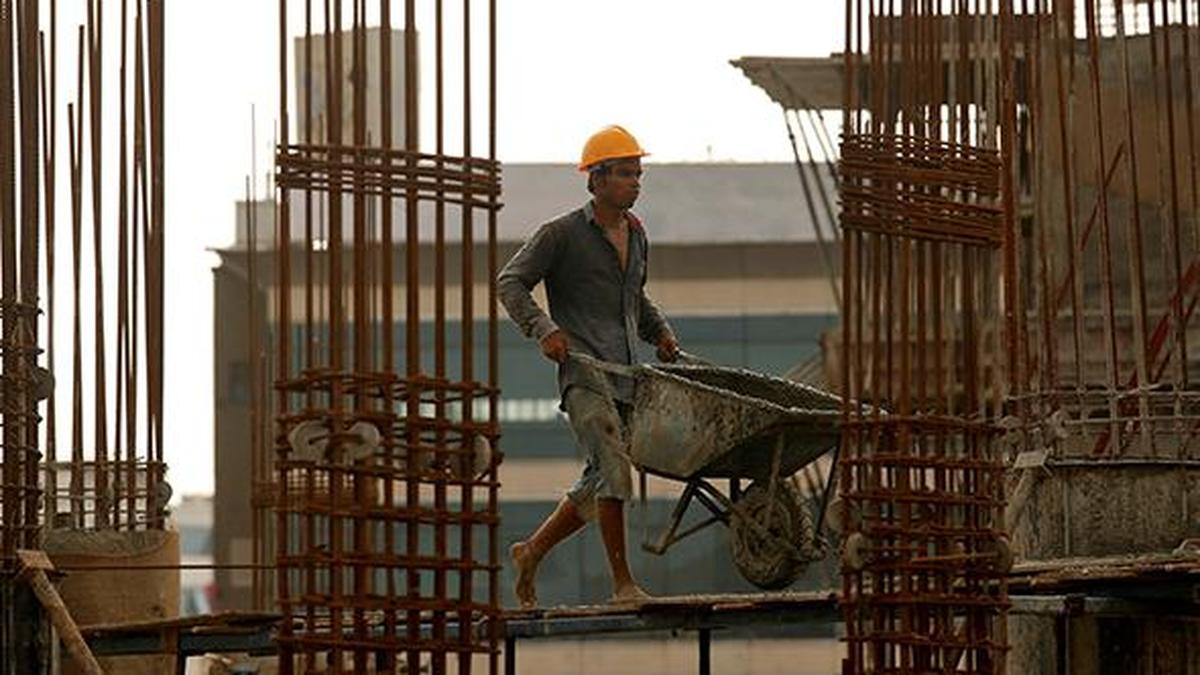
Construction reflects the sector most directly fuelled by public investment in the post-2015 infrastructure push. Agriculture reflects the sector a developing economy typically sheds labour from as productivity rises elsewhere. The trajectories of the two have moved in directions opposite to what development theory would anticipate across periods.


Markets fall 2% as Israel attacks Iran’s South Pars gas field, pushing Brent crude above $112 and rupee below ₹93.

HDFC Bank shares drop over 4% following chairman’s ethical resignation, raising insider trading and management concerns.

Erran Berger, the Vice President of Product Engineering at LinkedIn, thinks the former type of division of labour is rapidly disappearing

India mandates oil and gas firms to share import and export data to mitigate consumer shortages amid rising global prices.

HDFC Bank's chairman Atanu Chakraborty resigns over ethical concerns; Keki Mistry appointed interim chairman for three months.

Stock markets continue to rise for the third day as Sensex and Nifty gain nearly 1%, fueled by IT stocks.

Indian-flagged vessels in the Strait of Hormuz carry 2 lakh MT LNG and 16.7 lakh MT crude, amidst geopolitical tensions.

Equity analysts downgrade earnings forecasts for oil marketing companies, citing rising costs and market pressures for fiscal 2027.

Plastic product prices may surge by 50-60% in April due to rising polymer costs amid ongoing geopolitical tensions.

Centre offers 10% more LPG to States that accelerate piped gas rollout amid ongoing supply challenges and increased consumer demand.

Indian-flagged vessels in the Strait of Hormuz carry 2 lakh MT LNG and 16.7 lakh MT crude, amidst geopolitical tensions.

Stock markets continue to rise for the third day as Sensex and Nifty gain nearly 1%, fueled by IT stocks.

Rising oil prices and LPG shortages are driving India's shift to electric cooking, offering cost-effective and energy-efficient alternatives.