Vancouver Island family heartbroken as B.C. stops funding $1M drug for girl with terminal condition
CBC
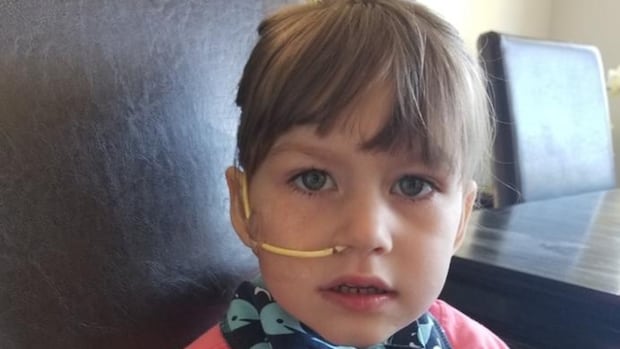
A Vancouver Island family is in shock after learning the British Columbia government will stop funding an extremely expensive medication their young daughter needs for a rare genetic condition.
Nine-year-old Charleigh Pollock is the only person in B.C. with Batten disease, or neuronal ceroid lipofuscinosis type 2 (CLN2).
It's a rare and terminal genetic disorder that causes multiple seizures daily, eventually causing brain damage.
Pollock's mother, Jori Fales, said the family is still processing the news, announced Wednesday, that the B.C. government will pull funding for Pollock's access to Brineura, a $1-million-per-year medication which is given through an infusion of fluid to the brain to slow the progression of CLN2.
"Emotions have gone from sheer heartbreak to anger to sadness; it's just been a roller-coaster the last 24 hours," Fales said.
Thursday marked Pollock's last infusion of Brineura.
Fales called the government's decision to pull funding with one day's notice before the last infusion "a little heartless."
She said her daughter has been let down.
"At the end of the day, it should have always been the decision of her medical care team, and her family and Charleigh. And none of that has happened here."
On Thursday, B.C. Minister of Health Josie Osborne said it was a tough decision to end the funding.
She said the cost of the medication had nothing to do with the reason the funding was pulled, but that it was determined Pollock's condition had deteriorated to the point where she met "discontinuation criteria" for Brineura.
"Clinical evidence shows that once a patient has declined in their motor and language functions by a certain amount, Brineura no longer has the benefit of slowing down the progression of the disease, although patients can continue to live on into mid-adolescence," Osborne said.
Fales denied that her daughter's condition has worsened.
"Charleigh is not in advanced progression of her disease. This is simply not true," she said.


The government of Saskatchewan has announced plans to reduce the length of non-resident game bird hunting licences to combat illegal guiding.

An 87-year-old Alberta man is fighting extradition to the United Kingdom to stand trial for historical allegations of physical and sexual assault involving minors.

Eight casinos across southwest B.C. have been sold to First Nations in the last two years, with the province's gambling scene set to be reshaped as a result.

Hamilton hosts the Junos Sunday, and the musical awards show is bringing tourists, musicians, concerts and a ton of themed events to the city this week.

The multi-million-dollar deal at the heart of a high-profile fight between the Canadian government and one of the world’s biggest carmakers contains multiple clauses about the company’s footprint in Ontario, according to a copy obtained by CBC Windsor.

In recent months, Calgary police have carried out three day-long safety blitzes, parading out dozens of officers to flood an area with their increased presence — at least, temporarily.

A national organization is seeking people with experience in Canada's forestry sector as they put together a working group that will examine ways to improve forest recovery following wildfires.

Ella Heyder is bracing for a breakup, even though she already moved out decades ago.

Shawne Hopkins never saw it coming.

Politicians return to Queen’s Park Monday for a shortened spring session, as Premier Doug Ford prepares to unveil his eight budget amid heightened global economic uncertainty.

Despite a recent announcement that a water supply pipeline will be build in Oneida Nation of the Thames, some members of the community say that's no excuse for taking water for granted.

As scandal has swirled around former prince Andrew Mountbatten-Windsor, questions and curiosity have also focused on his ex-wife, Sarah Ferguson, and their daughters, Princesses Beatrice and Eugenie.

Friday may have been the first day of spring, but winter storms are not over yet for Newfoundland.