US-Israeli strike on Iran could push up Malaysia’s oil revenue – but also its subsidy bill
The Straits Times
The Iran conflict jolts global oil markets, creating a complex challenge for Malaysia's fuel subsidy scheme and national economy. Read more at straitstimes.com.
Follow our live coverage here.
KUALA LUMPUR – Global oil prices jolted higher after the US-Israeli strike on Iranian targets triggered retaliatory attacks from Tehran, raising fears of a broader Middle East conflict that could choke a critical shipping lane.
Brent crude – the global benchmark for oil prices – briefly spiked to about US$78 (S$99.60) per barrel on March 2 before easing slightly as traders weighed the risk of wider disruption.
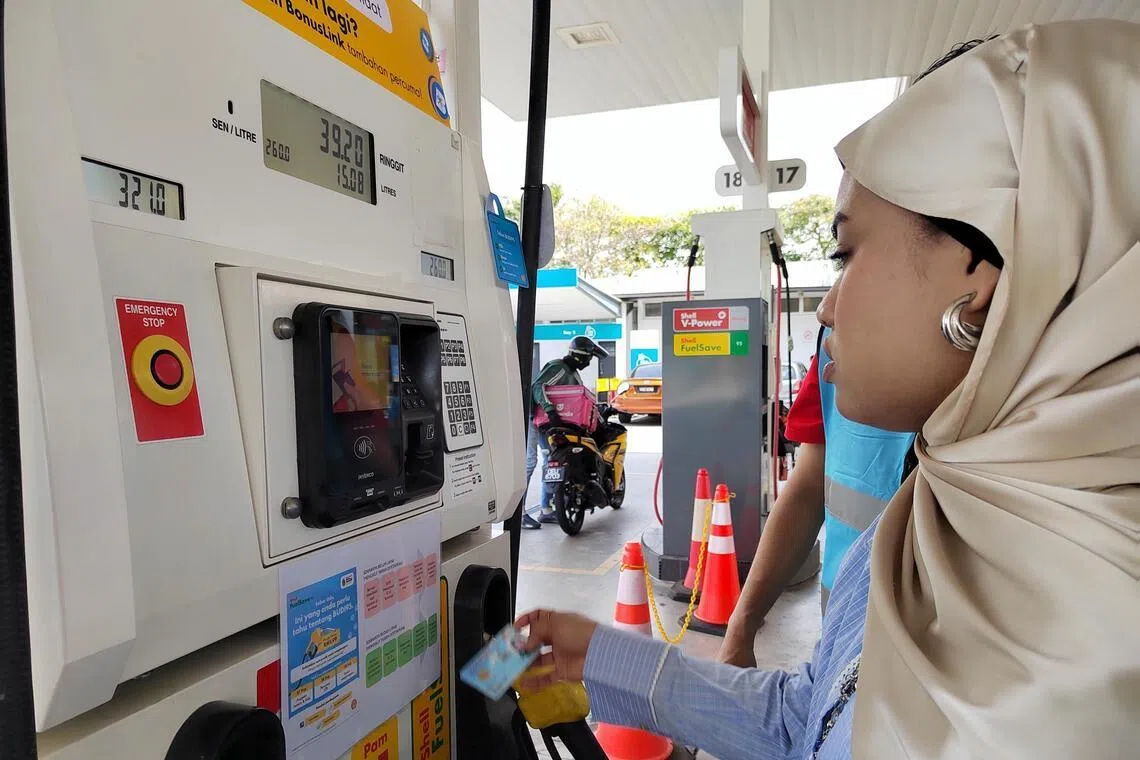
For Malaysia, the concern is less about supply and more about the bill. Higher crude prices boost petroleum revenues, but they also drive up the cost of fuel subsidies that the administration has struggled to rein in – threatening to undo months of difficult work to bring government spending under control.
Economists warned that if elevated prices persist, the government will face renewed pressure to either absorb the extra cost or pass it on to consumers at a politically sensitive moment.
“Regional conflicts come in different degrees, depending on the scale and duration of the Middle East conflicts,” Socio-Economic Research Centre executive director Lee Heng Guie told The Straits Times.


GENEVA, March 16 - The head of a U.N. investigation said on Monday that an Israeli air strike on a prison last year was a war crime, and warned of risks of further repression following the current U.S.-Israeli bombings. Read more at straitstimes.com.

The negotiations were held over the weekend and concluded on March 16. Read more at straitstimes.com.

BERLIN/BRUSSELS/LONDON, March 16 - U.S. allies said they had no immediate plans to send ships to unblock the Strait of Hormuz, rebuffing a request by President Donald Trump for military support to keep the vital waterway open. Read more at straitstimes.com.

VATICAN CITY, March 16 - Pope Leo met on Monday with an investigative journalist who alleges that a prominent Catholic organisation with ties to right-wing politicians in the U.S. and other countries covered up sexual and financial crimes, which the group firmly denies. Read more at straitstimes.com.

China urged an immediate ceasefire after deadly cross-border clashes flared. Read more at straitstimes.com.

DEBRECEN, Hungary, March 16 - Istvan Hollo, a 76-year-old supporter of Hungarian Prime Minister Viktor Orban, spends up to an hour daily on Facebook promoting the right-wing leader's messages to bolster his chances in an April 12 parliamentary election. Read more at straitstimes.com.

The two former ministers are set to return to the fold as UMNO seeks to strengthen its position ahead of upcoming state and federal elections. Read more at straitstimes.com.

The phone will debut alongside an Oppo AI Pen accessory. Read more at straitstimes.com.

MADRID, March 16 - Spain will not take part in any military mission in the Strait of Hormuz because it considers the U.S.-Israeli war on Iran to be illegal, Madrid's defence and foreign affairs ministers said on Monday. Read more at straitstimes.com.

Any changes would be due to logistics amid the Iran war, US Treasury Secretary Scott Bessent said. Read more at straitstimes.com.

VATICAN CITY, March 16 - Pope Leo urged journalists on Monday to highlight the suffering caused by war, cautioning against news reports that risk sliding into propaganda by glorifying conflicts or serving as \"a megaphone\" to amplify the voices of those in power. Read more at straitstimes.com.

AMSTERDAM, March 16 - Dutch police are investigating an explosion that damaged an office building in Amsterdam and was claimed by the same extremist organisation which also claimed it was behind a recent blast at a Jewish school in the area, a police spokesperson said on Monday. Read more at straitstimes.com.

The move has been welcomed by the “Accidental Americans” struggling with the US tax system. Read more at straitstimes.com.