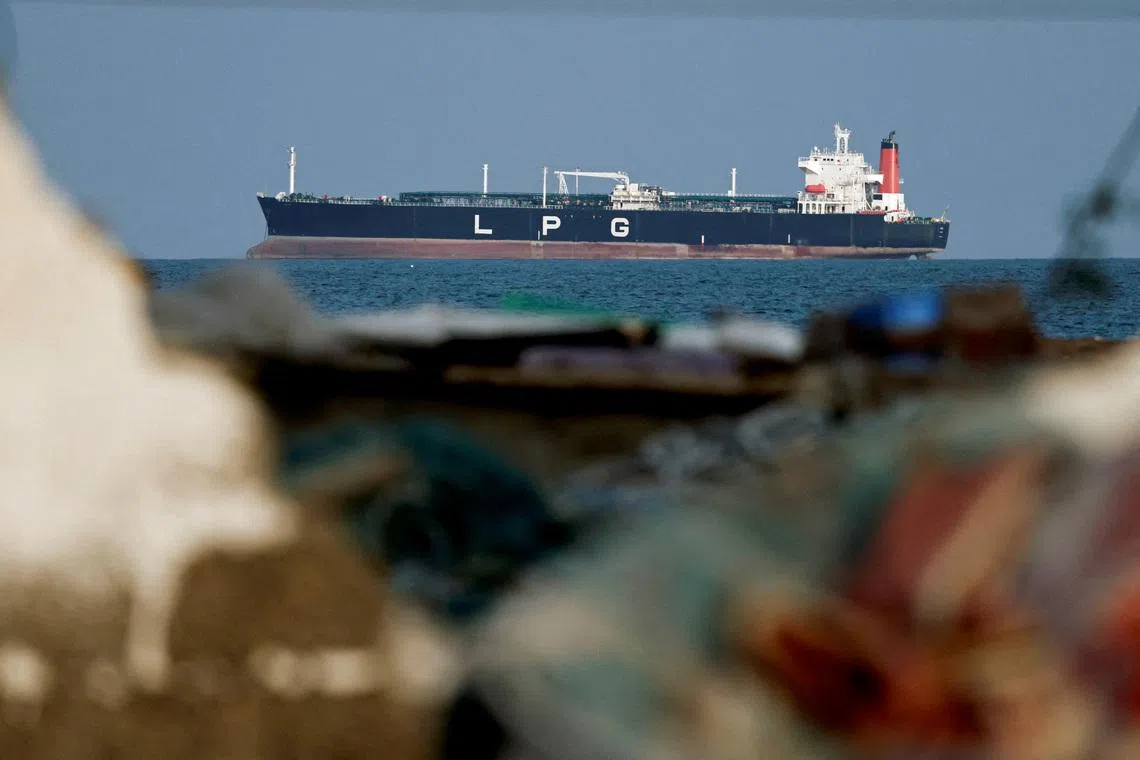
Hormuz alternative oil routes inadequate to cope with demand
The Straits Times
Some 350 oil tankers, some loaded and some empty, are currently stranded in the area. Read more at straitstimes.com.
PARIS – Iran’s threats against oil tankers transiting the Strait of Hormuz – a chokepoint through which some 20 per cent of global exports pass in peacetime – has forced countries in the region to seek alternative routes.
But analysts warn those routes are not yet sufficient to deal fully with global oil demand.
“Saudi Arabia and the UAE can reroute some crude output to terminals outside the Gulf,” the International Energy Agency stated in its latest monthly oil report, saying that this can “help offset lost crude flows via Hormuz”.
But data intelligence firm Kpler warns that alternative export routes “remain insufficient, with record loadings from Fujairah (UAE) and Yanbu (Saudi Arabia) still leaving effective Middle Eastern exports at only about one-third of normal levels.”
Kpler says Asian refiners are expected to step up purchases of long-haul cargoes from the Atlantic Basin with no quick reopening of Strait of Hormuz traffic likely.
Almost 20 million barrels per day (mb/d), or about 20 per cent of global oil consumption, typically pass through the Strait of Hormuz, mostly bound for China, India, South Korea and Japan.


It would serve as a way to formalise the kinds of things the US should be importing from and exporting to China. Read more at straitstimes.com.

BBC argued that Donald Trump's subsequent re-election showed it did not harm his reputation. Read more at straitstimes.com.

Upgrades include better active noise cancellation and an improved microphone system. Read more at straitstimes.com.

Some 350 oil tankers, some loaded and some empty, are currently stranded in the area. Read more at straitstimes.com.

GENEVA, March 16 - The head of a U.N. investigation said on Monday that an Israeli air strike on a prison last year was a war crime, and warned of risks of further repression following the current U.S.-Israeli bombings. Read more at straitstimes.com.

The negotiations were held over the weekend and concluded on March 16. Read more at straitstimes.com.

BERLIN/BRUSSELS/LONDON, March 16 - U.S. allies said they had no immediate plans to send ships to unblock the Strait of Hormuz, rebuffing a request by President Donald Trump for military support to keep the vital waterway open. Read more at straitstimes.com.

VATICAN CITY, March 16 - Pope Leo met on Monday with an investigative journalist who alleges that a prominent Catholic organisation with ties to right-wing politicians in the U.S. and other countries covered up sexual and financial crimes, which the group firmly denies. Read more at straitstimes.com.

China urged an immediate ceasefire after deadly cross-border clashes flared. Read more at straitstimes.com.

DEBRECEN, Hungary, March 16 - Istvan Hollo, a 76-year-old supporter of Hungarian Prime Minister Viktor Orban, spends up to an hour daily on Facebook promoting the right-wing leader's messages to bolster his chances in an April 12 parliamentary election. Read more at straitstimes.com.

The two former ministers are set to return to the fold as UMNO seeks to strengthen its position ahead of upcoming state and federal elections. Read more at straitstimes.com.

The phone will debut alongside an Oppo AI Pen accessory. Read more at straitstimes.com.

MADRID, March 16 - Spain will not take part in any military mission in the Strait of Hormuz because it considers the U.S.-Israeli war on Iran to be illegal, Madrid's defence and foreign affairs ministers said on Monday. Read more at straitstimes.com.