U.S. may soon reclassify marijuana to allow medical research. What to know
Global News
U.S. President Donald Trump is expected to sign an executive order that would reclassify marijuana and ease federal restrictions on research for potential new medical products.
U.S. President Donald Trump is expected to sign an executive order that would reclassify marijuana and ease federal restrictions on research that could lead to new medical marijuana products.
“We are considering that, yeah,” Trump told reporters Monday when asked about reports about the impending order.
“A lot of people want to see it, the reclassification, because it leads to tremendous amounts of research that can’t be done unless you reclassify. So we are looking at that very strongly.”
Here is what you need to know:
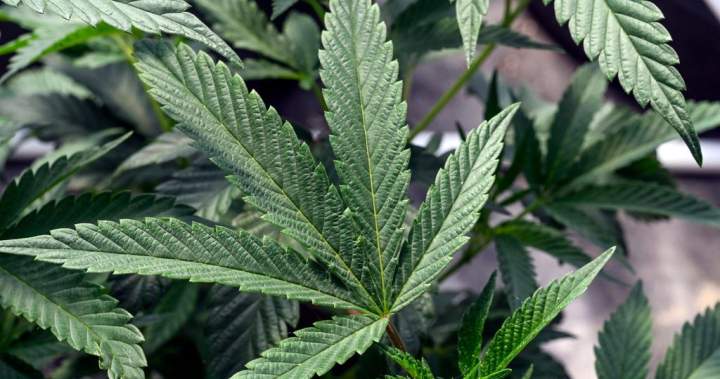
Presently, under the U.S. Controlled Substances Act, marijuana is listed as a Schedule I substance like heroin, implying it has high potential for abuse and no medical value.
The new executive order would move it to the Schedule III classification that includes controlled substances such as codeine, morphine, certain stimulants, and some forms of steroids.
The reclassification would make it easier for researchers to obtain funding for clinical trials and for pharmaceutical companies to apply for FDA approval. As a result of its Schedule I status, bureaucratic and financial hurdles have largely kept drug companies from conducting the clinical trials necessary for regulatory approval of new marijuana-derived drugs.
Marijuana in any form has been illegal in the United States according to federal law. Forty U.S. states have enacted laws permitting the sale of marijuana products for medical purposes through dispensaries and 24 also allow recreational use among adults. These state-approved products will remain federally illegal under the Controlled Substances Act unless manufacturers apply for and obtain approval from the U.S. Food and Drug Administration.


The decision halts an order to end broad recommendations for all children to be vaccinated against flu, rotavirus, hepatitis A, hepatitis B, some forms of meningitis and RSV.

It was both a big win and hopefully not too big of a loss for the Edmonton Oilers on Sunday.

Some experts say that a cyberwar through 'proxies' may be the next stage of the Iran war, with civilian infrastructure also coming under threat.

The study is being billed by the university as "the first to study a wide range of factors which link ADHD symptoms and mental ill health symptoms over time."

The group says MAGA Energy hasn't paid its lease for three years, and therefore the company is no longer allowed on their land in Edmonton.

The analysis by the Canadian Climate Institute says oilsands producers will pay an average of about 50 cents per oil barrel, if the minimum carbon price rises to $130 per tonne.

Between November 29 and February 27, authorities recorded 406 outbreaks of bird flu in domestic birds in 32 European countries and 2,108 outbreaks in wild birds, they said.

Dr. Michael Domeier, director of the Marine Conservation Science Institute, told Global News that they tag the adult females as they are the most interesting.

Regina’s recycling contamination is currently triple the limit and city is urging resident to change sorting habits now to avoid citywide fines and higher resident fees.

The study found that higher ultra-processed food intake at age three years was associated with adverse behavioural and emotional symptoms at age five years.

Edmonton's single-use waste rules were controversial and unpopular when introduced in 2023 — but new data shows the changes are having the intended effect of reducing garbage.

Carney's speech to Australia's parliament highlighted a soon-to-launch Canadian low earth orbit satellite network that experts say could soon compete with Elon Musk's Starlink.

The Pentagon said in a statement Thursday that it has “officially informed Anthropic leadership the company and its products are deemed a supply chain risk, effective immediately.”