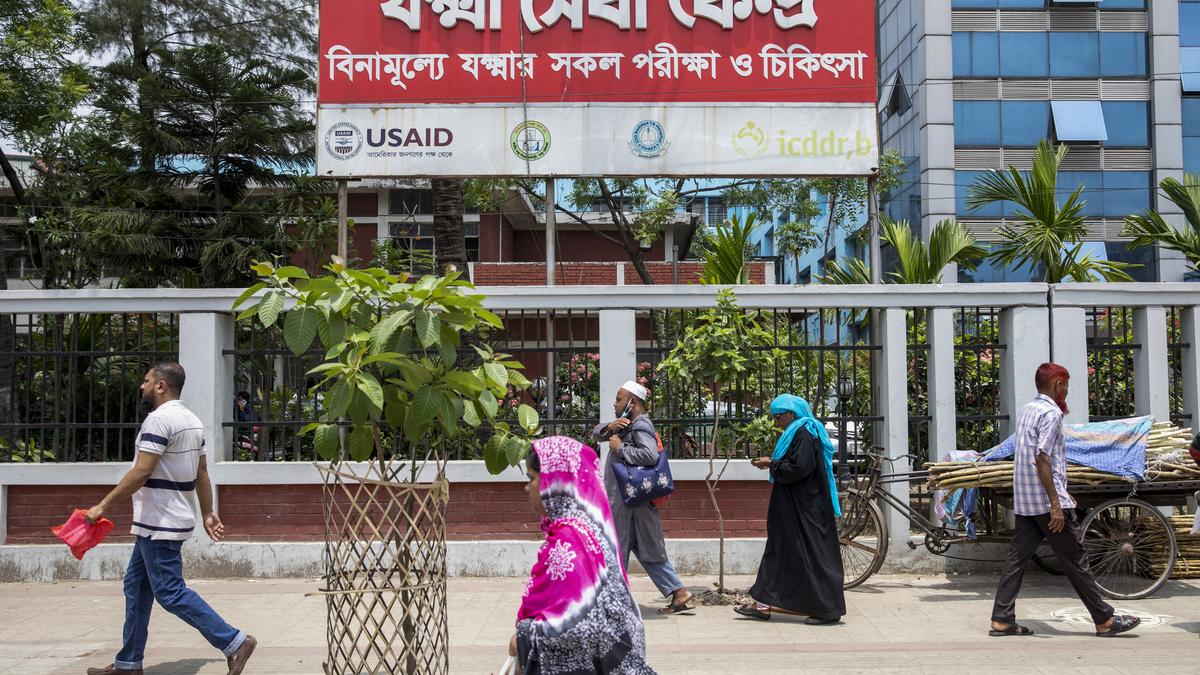
U.S. aid cuts push Bangladesh’s health sector to the edge
The Hindu
Bangladesh faces devastating consequences as US aid cuts threaten progress in eradicating tuberculosis and other critical health initiatives.
Bangladesh hoped to celebrate progress towards eradicating tuberculosis this year, having already slashed the numbers dying from the preventable and curable disease by tens of thousands each year. Instead, it is reeling from a $48 million snap aid cut by U.S. President Donald Trump’s government, which health workers say could rapidly unravel years of hard work and cause huge numbers of preventable deaths.
“Doctors told me I was infected with a serious kind of tuberculosis,” labourer Mohammed Parvej, 35, told AFP from his hospital bed after he received life-saving treatment from medics funded by the US aid who identified his persistent hacking cough.
But full treatment for his multidrug-resistant tuberculosis requires more than a year of hospital care and a laborious treatment protocol — and that faces a deeply uncertain future.
“Bangladesh is among the seven most TB-prevalent countries globally, and we aim to eradicate it by 2035,” said Ayesha Akhter, deputy director of the formerly US-funded specialised TB Hospital treating Parvej in the capital Dhaka.
Bangladesh had made significant progress against the infectious bacteria, spread by spitting and sneezing, leaving people exhausted and sometimes coughing blood.
TB deaths dropped from more than 81,000 a year in 2010, down to 44,000 in 2023, according to the World Health Organization, in the country of some 170 million people.
Akhter said the South Asian nation had “been implementing a robust programme”, supported by the US Agency for International Development (USAID).


Saudi Arabia expels Iranian military staff amid escalating tensions and ongoing missile attacks during the U.S.-Israeli war on Iran.

Russia claims control of Potapivka village in Ukraine's Sumy region amid ongoing military efforts to establish a buffer zone.

Iranian missile strikes on Israeli towns cause widespread damage and injuries, marking a significant escalation in the ongoing conflict.

As Gor makes first trip as U.S. Special envoy to South Asia, Delhi watches strategic signals closely
Sergio Gor's inaugural trip as U.S. Special Envoy to South Asia signals strategic U.S. engagement amid regional tensions.

Slovenians vote in a tight election between liberal and populist candidates, impacting the country's future domestic and foreign policies.

Netanyahu asserts U.S.-Israel alliance fights Iranian threats, emphasizing global security after missile strikes on Israeli and European targets.

Israeli settlers attack Palestinian villages in the West Bank, causing injuries and destruction amid ongoing settlement expansion.

Britain asserts no evidence of Iran planning missile strikes on Europe, despite Israeli claims of missile capabilities.

UNESCO reports over half of countries have banned phones in schools due to concerns about attention, cyberbullying, and social media impact.

Analysis reveals a U.S.-operated Patriot missile likely caused a pre-dawn explosion in Bahrain, injuring numerous civilians.

Sri Lanka raises fuel prices by 25% amid ongoing West Asia conflict, impacting petrol and diesel costs significantly.

Iran strikes near Israeli nuclear research center as Trump threatens attacks on Iranian power plants
Iran's missile strikes near Israel's nuclear site escalate tensions as Trump threatens retaliation against Iranian power plants.

Saudi Arabia intercepts one of three ballistic missiles targeting Riyadh amid ongoing regional tensions and threats from Iran.