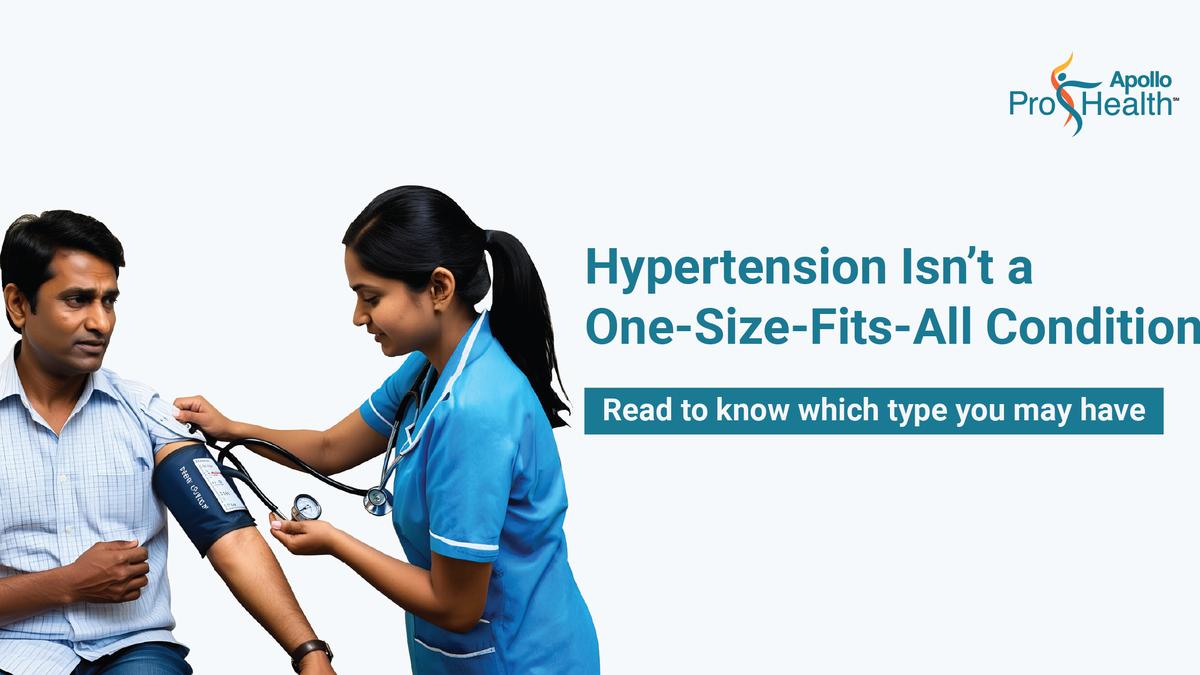
Types of Hypertension and Why It Matters
The Hindu
Discover the different forms of hypertension, their causes, risks, and treatments to prevent long-term organ damage.
When we think of high blood pressure (hypertension), it’s often viewed as a single condition. In reality, hypertension occurs in multiple forms, each with its own causes, risks, and treatment needs. Identifying the type of hypertension not only helps uncover hidden health concerns but also guides doctors toward appropriate tests and tailored treatment. Early detection can significantly reduce the risk of long-term damage to vital organs like your heart, kidneys, brain, and eyes
Approximately 90% of people with high BP have primary (essential) hypertension, which develops gradually and isn’t linked to a specific disease. Contributing factors include genetics, ageing, high salt intake, sedentary lifestyle, stress and weight gain. Long-term management involves a combination of lifestyle changes and medication, where necessary.
The remaining 10% have secondary hypertension, often seen in younger individuals. This form has an identifiable cause such as chronic kidney disease, hormonal disorders (e.g., Cushing’s syndrome), obstructive sleep apnoea, or certain medications (steroids, contraceptive pills). Addressing the root cause can lead to significant improvement or even normalisation of high BP.
Some individuals show elevated BP only in a medical setting. Known as white coat hypertension, this temporary rise is often triggered by anxiety or stress during clinical visits. At home, their readings return to normal. Though it may seem harmless, this condition still carries cardiovascular risks, especially when combined with other factors like diabetes or high cholesterol.
Conversely, masked hypertension is when BP appears normal during clinic visits but remains consistently high in daily life. Stress, poor sleep, smoking, and missed medications are common contributors. Both forms require 24-hour ambulatory BP monitoring and should not be ignored as they carry long-term health risks.
Then there’s resistant hypertension, where BP remains high despite taking three or more antihypertensive medications, including a diuretic. Possible causes include secondary causes like kidney problems or hormonal disorders, poor medication adherence, or an ineffective drug regimen. It’s a warning sign that calls for further investigation such as blood tests, imaging, and a review of lifestyle and treatment strategies.
High BP can also develop during pregnancy, even in women with no history of hypertension. Causes may include hormonal shifts, vascular changes, or placental interactions with the mother’s body. Gestational hypertension arises after 20 weeks of pregnancy and usually resolves within 6-12 weeks post-delivery. However, in ~25% of cases, elevated BP may persist.


Congress nominates Umesh Meti and Samarth Mallikarjun for Karnataka bypolls, keeping candidacies within influential families.

South Africa wins the toss and opts to bat in the fourth T20 match against New Zealand in Wellington.

High in the Nilgiris, a quiet ecological revival is underway. Once lost to plantations and invasive species, native grasslands and shola forests are slowly returning—bringing back wildlife, improving water security, and strengthening climate resilience. Driven by civil society groups, conservationists, and indigenous communities, this restoration story offers hope at a time when fragile ecosystems across India face growing threats.

Blasts and sirens sounded in Jerusalem as Israel warned of incoming Iranian missile threats amid escalating tensions.

275 former judges and officials criticize USCIRF's report on religious freedom, calling it biased and lacking credible evidence.

Jharkhand Police request Indian Army's help to safely defuse an active WWII-era bomb found near Subarnarekha river.

Tamil Nadu Assembly election: VCK under compulsion to consider local candidates, says Thirumavalavan
VCK leader Thirumavalavan emphasizes the need for local candidates amid concerns over past electoral losses due to outsiders.

Explore Tamil Nadu's upcoming four-cornered election contest, featuring key players DMK, AIADMK, TVK, and Naam Tamizhar Katchi.

I and EPS were appointed CMs, Stalin elected by people, says O. Panneerselvam

The ₹88.41 crore AMRUT scheme aims to eliminate Kavali's water scarcity, transforming the town’s infrastructure and services.

A 4.1 magnitude earthquake struck Sikkim's Mangan district; no casualties or property damage reported.

Telangana government updates building rules, increasing TDR usage, allowing more floors, and easing setback regulations for developers.

The escalating Israel-Iran conflict over the South Pars gas field threatens global energy security and impacts India's energy imports.