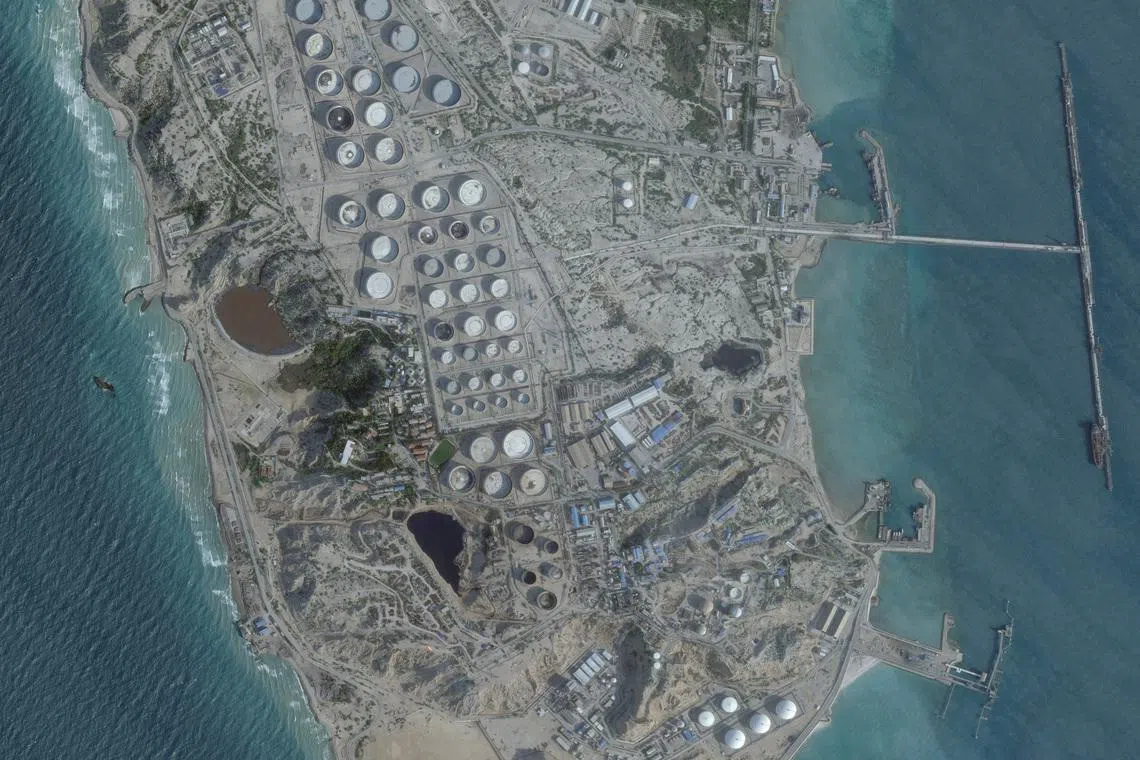
Trump threatens to strike Iran's Kharg Island oil network if shipping lanes remain blocked
The Straits Times
WASHINGTON/DUBAI/JERUSALEM, March 14 - U.S. President Donald Trump threatened to order strikes on the petroleum infrastructure of Iran's Kharg Island oil hub unless Tehran stopped attacking vessels in the vital Strait of Hormuz, a warning that could further roil markets already coping with a historic disruption in supply. Read more at straitstimes.com.
WASHINGTON/DUBAI/JERUSALEM, March 14 - U.S. President Donald Trump threatened to order strikes on the petroleum infrastructure of Iran's Kharg Island oil hub unless Tehran stopped attacking vessels in the vital Strait of Hormuz, a warning that could further roil markets already coping with a historic disruption in supply.
Trump paired his ultimatum with a social media post saying the United States had "totally obliterated" military targets on the island, the export terminal for 90% of Iran's oil shipments, which lies about 300 miles (483 km) northwest of the strait.
U.S. strikes did not target Kharg's oil infrastructure, but "should Iran, or anyone else, do anything to interfere with the Free and Safe Passage of Ships through the Strait of Hormuz, I will immediately reconsider this decision," Trump wrote.
Iran had no ability to defend against U.S. attacks, the president added. "Iran’s Military, and all others involved with this Terrorist Regime, would be wise to lay down their arms, and save what’s left of their country, which isn’t much!" he posted on Truth Social.
Iran's armed forces responded on Saturday by saying any strike on their country's oil and energy infrastructure would lead to strikes on facilities owned by oil companies cooperating with the United States in the region, Iranian media reported.
Iran's semi-official Fars news agency reported, citing sources, that more than 15 explosions were heard on Kharg Island during the U.S. attacks. The sources said the attacks targeted air defenses, a naval base, and airport facilities, but caused no damage to oil infrastructure.


About 12 per cent of active registered express buses have yet to complete the verification process. Read more at straitstimes.com.

It will also deliberate on the implementation of a five-year national policy plan. Read more at straitstimes.com.

Financial commitments, such as repayment of credit cards, eat into the bulk of their monthly budget. Read more at straitstimes.com.

The conflict exposes the city to many risks, but some are seeing opportunities too. Read more at straitstimes.com.

The 'unprecedented' freeze on trillions of dollars in financial assistance was instituted in early 2025. Read more at straitstimes.com.

The EU recently struck trade accords with India and a bloc of South American countries. Read more at straitstimes.com.

Mr Dan Caldwell was a former top adviser to US Defense Secretary Pete Hegseth. Read more at straitstimes.com.

They allegedly shared images and videos of school shootings in other countries with one another. Read more at straitstimes.com.

CHISINAU, March 16 - A Russian attack on a hydroelectric plant in southern Ukraine triggered an oil spill and polluted water systems in neighbouring Moldova, with supplies cut completely in the country's second-largest city, officials said on Monday. Read more at straitstimes.com.
MOSCOW, March 16 - Russian air defence units downed at least 67 Ukrainian drones headed for Moscow on Monday, according to data published by the city's mayor, Sergei Sobyanin. Read more at straitstimes.com.

MOSCOW, March 16 - Russia has taken control of 12 settlements in Ukraine in the first two weeks of March as part of advances along the front line in eastern and southern Ukraine, Russian state-run news agencies quoted top general Valery Gerasimov as saying on Monday. Read more at straitstimes.com.

The eastern half of the US, including New York, Chicago and Atlanta, has been hit with widespread air travel delays and cancellations. Read more at straitstimes.com.

It could lead to a protracted conflict with devastating humanitarian consequences, the leaders said in a joint statement. Read more at straitstimes.com.