Trump says 32,000 people were killed in Iran's crackdown on protesters
CBSN
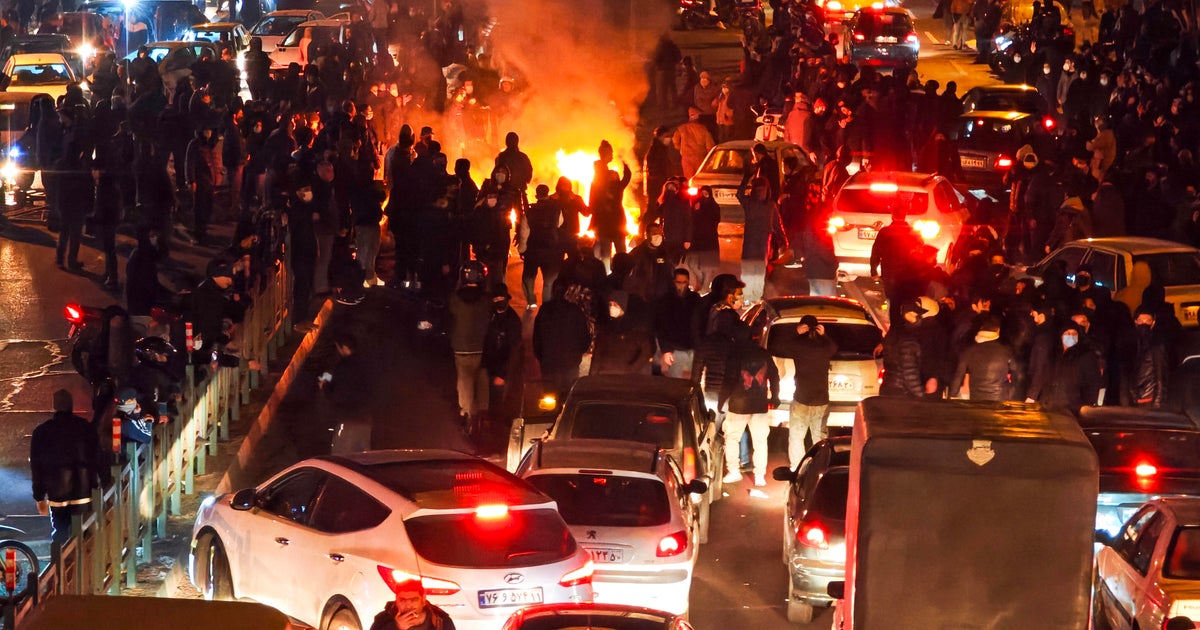
President Trump said in a news briefing Friday that 32,000 people were killed during the recent protests in Iran, a far higher number than has previously been reported. In:
President Trump said in a news briefing Friday that 32,000 people were killed during the recent protests in Iran, a far higher number than has previously been reported.
Mr. Trump, who made the remarks while addressing the Supreme Court's ruling striking down his sweeping tariffs, did not offer a source for the death toll. When asked if he had a message for the people of Iran, Mr. Trump said "the people of Iran are very different than the leaders of Iran" and called it "a very, very, very sad situation."
Mass anti-government protests roiled Iran in January until a government crackdown crushed the demonstrations. January 8 and 9 are believed to be the bloodiest, most brutal days in the country's history since the current government was founded in 1979. But an internet blackout has made it difficult to get information about the death toll.
Two sources, including one inside Iran, previously told CBS News that at least 12,000, and possibly as many as 20,000 people have been killed throughout Iran in the protests. One Iranian man was able to get through the blackout and speak to CBS News on a video call, describing what sounded like a massacre of anti-government protesters in a public square. The U.S.-based Human Rights Activists News Agency has put the number of arrests at more than 50,000.
Mr. Trump offered support for the people of Iran throughout the protests and crackdown. Meanwhile, U.S. military forces have been building up in the region as he tries to pressure the Islamic Republic to make a deal on its nuclear program.


Jerusalem — Israel's government has approved a process to register land in the occupied West Bank as "state property," drawing condemnation from Arab nations and critics who said it would accelerate annexation of the Palestinian territory. In:

Washington — U.S. military forces boarded another sanctioned tanker in the Indian Ocean after tracking the vessel from the Caribbean Sea in an effort to target illicit oil connected to Venezuela, the Pentagon said Sunday. In:

The online activity of the 18-year-old behind the deadly shooting inside a Canadian high school last week revealed an interest in firearms, mass violence and a history of consuming violent "gore" content, according to expert analysis. In:

On Valentine's Day at the Milan Cortina Olympics, a renewed supply of free condoms for the athlete villages was promised by the organizers after going short during the week. In:

The Olympic curling committee issued a warning after a heated fight filled with cheating allegations and audible curse words overshadowed a feisty match between Sweden and Canada. In:

The Iranian security agents came at 2 a.m., pulling up in a half-dozen cars outside the home of the Nakhii family. They woke up the sleeping sisters, Nyusha and Mona, and forced them to give the passwords for their phones. Then they took the two away. In:

A Slovak fugitive who had been on the run for 16 years was finally arrested when he turned up in Milan to support his national ice hockey team at the Milano Cortina Winter Olympics, police said Friday. In:

London — Britain's High Court ruled Friday that the government's decision last year to outlaw the protest group Palestine Action as a designated terrorist organization was unlawful, but it kept the ban in place pending an appeal. In:

The ice dance competition of the 2026 Winter Olympics may be over, but many fans can't stop talking about Madison Chock and Evan Bates' performance — or France's controversial win after the judges' scores left the Americans just 1.43 points shy of gold. Kiki Intarasuwan and The Associated Press contributed to this report. In:

Gisèle Pelicot, the French woman who became a global symbol of courage when she publicly stepped forward to testify against her ex-husband and dozens of other men in a mass rape trial, told "CBS Sunday Morning" that she believes her story "could be useful to others."

The families of jailed Iranian protesters say the country's rulers have proposed a cruel bargain: publicly celebrate the Islamic Revolution that brought them to power, or risk the lives of their loved ones. Seyed Rahim Bathaei contributed to this report. In:

Brussels — European allies at NATO on Thursday brushed aside concerns that the United States has stepped back from its leadership role of the world's biggest security organization, leaving them and Canada to do the lion's share of defending Europe. In:

Cortina d'Ampezzo, Italy — Ukrainian skeleton athlete Vladyslav Heraskevych is out of the Milan Cortina Games after refusing a last-minute plea from the International Olympic Committee to use a helmet other than the one that honors athletes killed in the war with Russia. In: