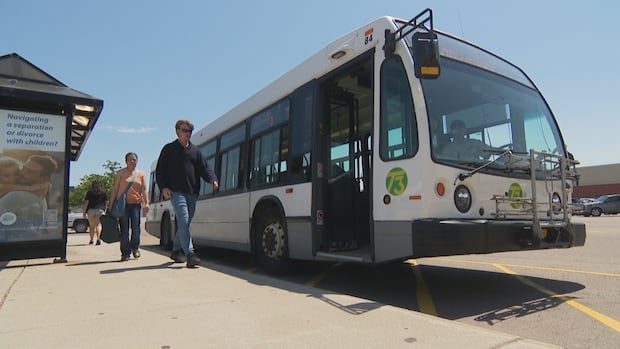
'Truly a necessity': Charlottetown commits to adding more bus shelters over 5 years
CBC
If you're one of the thousands of people in P.E.I.'s capital region waiting out in the elements for a bus, there could be some shelter coming to your bus stop.
The City of Charlottetown is spending $100,000 each year for the next five years to install new bus shelters in what one councillor calls "truly a necessity" for bus riders.
"The growth [and] development of the City of Charlottetown calls for that. The transit system is an essential service and we're very cognizant of that," Coun. Mitchell Tweel said.
He said that spending translates to between six and nine new shelters this year, continuing for the next five years. The city is also looking at improving accessibility to the stops it currently has.
Right now, there are about 400 T3 Transit stops in the capital region but only about 45 bus shelters.
Some stops have benches but others don't. Some are without shade from the sun's heat or shelter from rain or snow. Some don't offer easy access from the bus's steps to the sidewalk.
Stops are marked with a green and yellow T3 sign, but accessibility and climate change are current problems for some riders CBC News spoke to.
David Cooper with Leading Mobility, a transportation planning firm that's worked with major transit authorities across the country, says bus shelters are high priority for riders all across the country.
"No matter what agency I worked in, having a shelter is one of the top customer suggestions that we receive, in addition to having their bus run more frequently or enhancing the transfers. Shelters are quite important at those key nodes," he said.
"I'd say it's Top 3 all the time. No matter the size of community, transit customers want shelters."
Shelters can be pricey to build and maintain, though.
Some cities erect them with power connections for lighting and new sidewalk construction to make them more accessible. Riders are asking for those things, but they do come at a cost.
"It's a refuge," Cooper said. "If you're out in inclement weather and it's windy, it's raining and snowing, it protects you from those elements."
Tweel agreed.


An 87-year-old Alberta man is fighting extradition to the United Kingdom to stand trial for historical allegations of physical and sexual assault involving minors.

Eight casinos across southwest B.C. have been sold to First Nations in the last two years, with the province's gambling scene set to be reshaped as a result.

Hamilton hosts the Junos Sunday, and the musical awards show is bringing tourists, musicians, concerts and a ton of themed events to the city this week.

The multi-million-dollar deal at the heart of a high-profile fight between the Canadian government and one of the world’s biggest carmakers contains multiple clauses about the company’s footprint in Ontario, according to a copy obtained by CBC Windsor.

In recent months, Calgary police have carried out three day-long safety blitzes, parading out dozens of officers to flood an area with their increased presence — at least, temporarily.

A national organization is seeking people with experience in Canada's forestry sector as they put together a working group that will examine ways to improve forest recovery following wildfires.

Ella Heyder is bracing for a breakup, even though she already moved out decades ago.

Shawne Hopkins never saw it coming.

Politicians return to Queen’s Park Monday for a shortened spring session, as Premier Doug Ford prepares to unveil his eight budget amid heightened global economic uncertainty.

Despite a recent announcement that a water supply pipeline will be build in Oneida Nation of the Thames, some members of the community say that's no excuse for taking water for granted.

As scandal has swirled around former prince Andrew Mountbatten-Windsor, questions and curiosity have also focused on his ex-wife, Sarah Ferguson, and their daughters, Princesses Beatrice and Eugenie.

Friday may have been the first day of spring, but winter storms are not over yet for Newfoundland.

While we officially welcomed spring last week, an incoming system will be a reminder that snow is still very much part of the new season, especially early on.