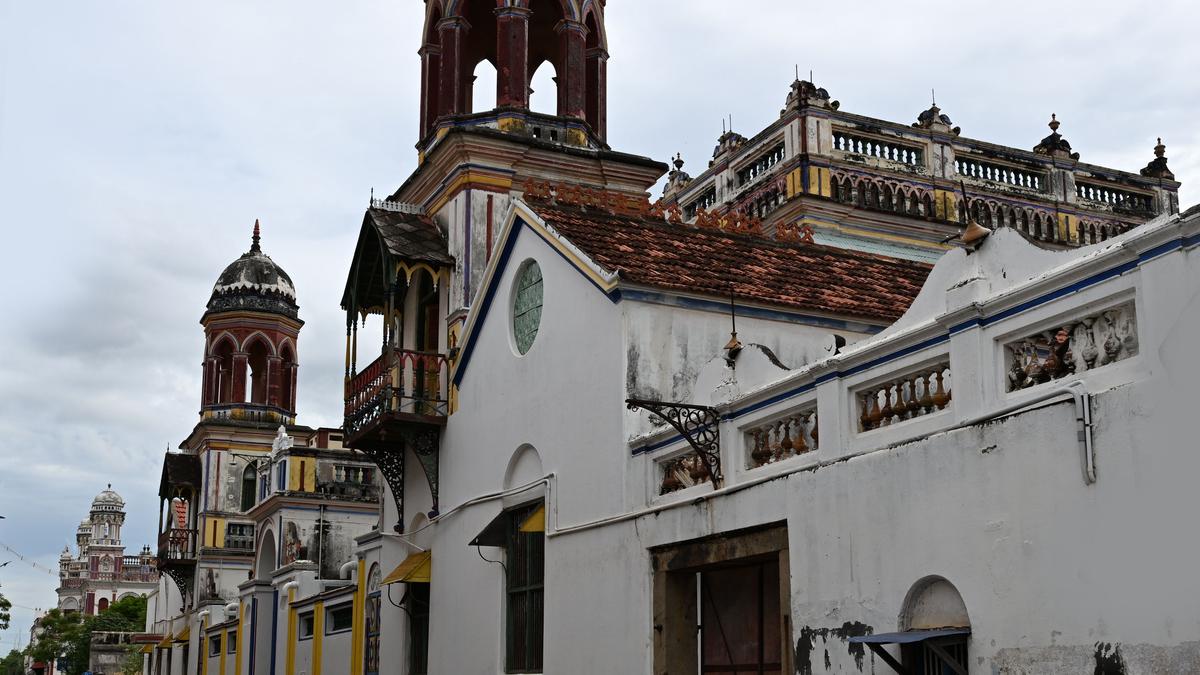
The palatial bungalows in Chettinad become symbols of the region’s rich cultural heritage
The Hindu
Chettinad's historic palatial buildings are being transformed into luxurious heritage mansions, attracting tourists and preserving rich cultural heritage.
More than a century ago when palatial buildings were constructed in Chettinad, a sprawling region spanning 1,553 kilometres comprising two towns and 73 villages across Sivaganga and Pudukkottai districts, no one would have thought that they would one day become symbols of heritage. The region is surprisingly emerging as a sought-after destination for overseas travellers, especially Europeans.
Despite lacking the typical tourist draws of beaches or high-altitude hills, Chettinad’s charm lies in its numerous palatial bungalows, nestled in villages amid a dry and arid landscape. While infrastructure for leisure activities is still developing, many of these bungalows, once in disrepair, have been meticulously renovated to welcome foreign tourists. Remarkably, some of these renovated bungalows, tucked away in remote areas, are generating substantial revenue, with daily rentals reaching up to ₹15,000 a room during the tourist season. This initiative not only preserves Chettinad’s architectural heritage but also stimulates local economic growth, ushering in an era of prosperity for this hidden gem.
Karaikudi, Devakottai, Pallathur, Kanadukathan, Kandanur, Kothamangalam, Rayavaram, Athangudi, Kadiyapatti, and Kottaiyur are among the important towns and villages that house architecturally marvellous bungalows.
The business acumen of the Nagarathars, also known as Nattukottai Chettiars, has drawn Europeans from Italy, France, Switzerland, England, Germany, Denmark, Norway, and beyond to the palatial buildings. These travellers are willing to invest their time, money, and energy in exploring the region’s culture, heritage, monuments, and forts. The buildings, evolved over nearly two centuries, are a testament to the region’s unique architecture. The veritable palaces feature expansive verandas, reception halls, courtyards, dining rooms, wedding halls, and puja rooms. Interestingly, the bungalows have separate courtyards for women and servants. The houses are built around an east-west central courtyard, which provides shade, light, coolness, and air.
The construction materials used include bricks for walls, lime plasters, terracotta tiles for roofing, marbles, and stone floors. Burma teak is a prominent feature in almost all houses. The structure of the houses comprises brick and stone pillars, and teak wooden beams, which are adorned with exquisite carvings. The tops of pillars, door frames, door and window imposts, and ceilings are delicately carved with inspiration from goddesses, flora and fauna, and puranic stories. Every element of these palatial buildings showcases intricate carvings, making them a true marvel of architecture and a testament to the region’s rich cultural heritage. Chettinad finds a place in the Tentative List submitted by the Permanent Delegation of India to UNESCO for nomination as World Heritage Site recently.
Similar to royal residences, some of these houses have been meticulously renovated. Their original structure and ethnicity has been preserved and luxurious infrastructure incorporated to cater to tourists. This transformation allows visitors to experience a world unlike their own. Acclaimed architects have been involved in the renovation, sourcing materials from various countries to maintain the buildings’ authenticity.
Leading hoteliers have collaborated with the property owners to convert some of these iconic buildings into heritage mansions, while others have independently tapped into the tourism potential.


Residents of Chettichavadi express concerns over deteriorating groundwater quality due to long-standing garbage dumping issues in Salem West.

Community Health Officers in Vijayawada protest for reduced workload and continued incentives amid growing dissatisfaction over salary changes.

Telangana faces 13,929 healthcare vacancies, primarily in doctors and nurses, as recruitment efforts aim to address the shortage.

For most patients with TB who are severely underweight, nutritional support is an essential and not optional part of treatment

Family of custodial death victims demands harsh punishment for nine convicted policemen to prevent future abuses of power.

Rajinikanth refutes TVK leader's claims about DMK threats preventing his political entry, expressing gratitude to supportive political figures.

CM announces Cabinet Sub-Committee on Musi rejuvenation; rehabilitation for all displaced

Ramanathapuram identifies 145 polling stations as sensitive, ensuring security with paramilitary forces ahead of assembly elections, says DEO.

BJP Puducherry president V. P Ramalingam files nomination for Raj Bhavan, joined by Union Minister Mandaviya and Khushbu Sundar.

History-sheeter 'Thoppai' Ganesh shot dead by police in Chennai after attacking officers during attempted escape.

The government plans to amend the FCRA, introducing new regulations for NGO asset management and accountability for key functionaries.

The draft policy for “Responsible Digital Use Among Students”, released on Monday by the Department of Health and Family Welfare, has recommended that parents set structured routines with clear screen-time rules and prioritise privacy, safety, and open conversation with children on digital well-being.

Police Observer Sushant Kumar Saxena conducts surprise inspection at Shencottai police station, reviewing warrants and security arrangements ahead of elections.