The many lives of breast cancer: understanding rare subtypes Premium
The Hindu
Explore the diverse subtypes of breast cancer, their unique characteristics, and the importance of early detection and treatment.
Conversations about breast cancer usually bring up a single picture in one’s mind: a woman feels a lump, gets it tested, is told she has breast cancer, and then follows a pathway of surgery, chemotherapy, radiation and hormone tablets. That picture is almost always based on the commonest form of the disease – what the World Health Organization now calls “invasive carcinoma of no special type” (NST), formerly known as invasive ductal carcinoma. Around 70–80% of invasive breast cancers fall into this group.
But breast cancer is not one disease. Under the microscope, it is a family of diseases that all happen to arise in the breast. Some are aggressive, some are surprisingly gentle, some have not yet turned into true cancer, and some occur in groups we rarely talk about, such as men. The subtype of breast cancer in the pathology report can change the likely behaviour of the disease and the kind of treatment it needs.
In India, where breast cancer has become the most-commonly diagnosed cancer among women in many urban registries, these rare forms are not a side-show: they are part of the everyday reality of oncology.
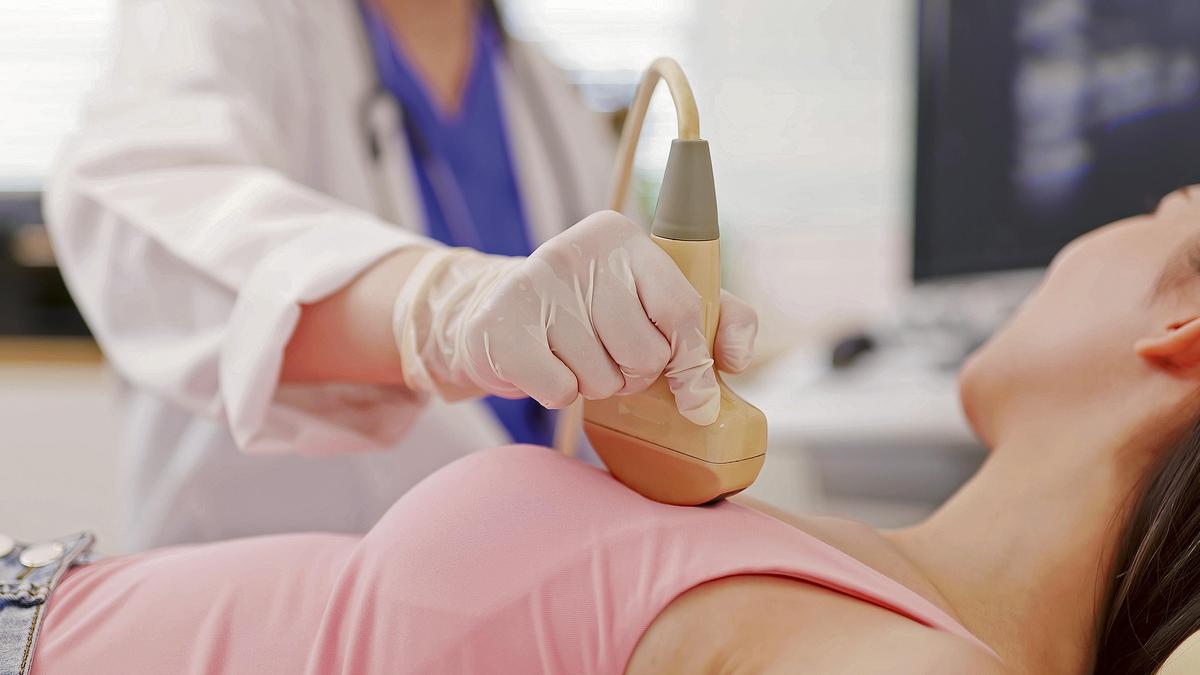
Once a lump is detected on examination or imaging, the next crucial step is tissue diagnosis. In modern practice, this is usually done on small samples taken with a core needle biopsy. The pathologist then studies thin slices of this tissue under the microscope and performs special stains to look for hormone receptors and other markers.
From this process comes the pathological diagnosis. It tells us: whether there is cancer at all, where it seems to have started (ducts vs lobules), what pattern the cells form, and whether they express oestrogen, progesterone or HER2 receptors.
Two women may both hear the words “you have breast cancer” but have very different diseases under the microscope. At this stage, communication between the radiologist, pathologist and surgeon is indispensable. The image, the biopsy and the clinical examination must all make sense together, especially when the pattern is unusual. This is why multidisciplinary breast units – where these specialists work together – are important to manage rare types safely.


PM Modi and President Murmu extend Eid-ul-Fitr greetings, promoting unity, harmony, and compassion for a progressive nation.

Security forces in Manipur seized 29 firearms and 50 IEDs during operations amid ongoing ethnic violence.

A data jam on March 28 by OpenCity will have participants studying how the Assembly constituencies in and around Chennai are faring on a set of parameters

Matheesha Pathirana will miss the start of IPL 2026, while Harshit Rana's participation remains uncertain for KKR.

Shashi Tharoor advocates for peace in the West Asia conflict, emphasizing the urgent need for de-escalation and international cooperation.

Assembly polls 2026: Follow updates from The Hindu on the upcoming elections in five States, on March 21, 2026

Maharashtra women's panel chief resigns amid controversy over ties to rape-accused godman, facing political pressure and public backlash.

India's Iran policy could be shaped by the evolving dynamics of the U.S.–Israel war

Will G. Sudhakaran's independent run disrupt the Left's stronghold in Ambalappuzha and reshape Kerala's political landscape?

The Hindu Morning Digest gives a select list of stories to start the day. Read the top news today on March 21, 2026

Manjeswaram gears up for a tightly contested Kerala Assembly election in 2026, featuring key candidates from UDF, NDA, and LDF.

Thirty-three detained Bangladeshi nationals from Tamil Nadu are being deported to Bangladesh via West Bengal with police escort.

Tree felling for a flyover and underpass on the Manikonda-Hitech City stretch sparks outrage as Hyderabad’s road expansion drives another green loss.