The laws around remission policy | Explained
The Hindu
An explainer by The Hindu on the Supreme Court judgment in the Bilkis Bano case and how remission laws work
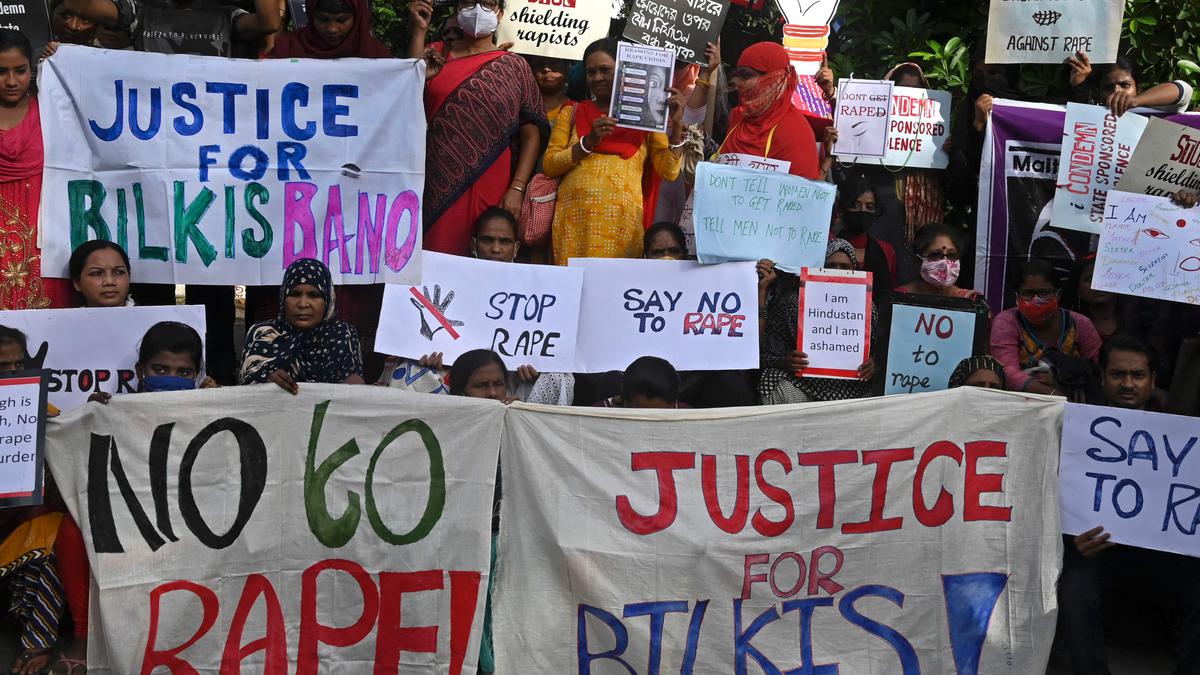
The story so far: The Supreme Court on January 8 set aside the remission of 11 convicts sentenced to life imprisonment for the gang rape of Bilkis Bano and murder of her family, during the 2002 communal riots in Gujarat. The remission order was passed by the Gujarat government in August 2022.
Article 72 and 161 of the Constitution provide powers to the President and Governor respectively to grant pardon, commutation, remission, respite or reprieve to a convict. These are sovereign powers vested in the heads of the Union and State executive to be exercised on the advice of the council of ministers.
Apart from this, the appropriate State government under Section 432 of the Criminal Procedure Code, 1973 (CrPC) may remit the whole or part of the punishment to which a convict has been sentenced. In case of life imprisonment convicts, this remission can be done only after a period of 14 years in jail as per Section 433A of the CrPC.
The heinous crimes for which the 11 persons were convicted were committed in Gujarat in March 2002. However, considering the need for fair trial, these cases were shifted to Maharashtra by the Supreme Court in 2004. A CBI trial court in Mumbai sentenced the convicts to life imprisonment in 2008.
One of the convicts, Radheshyam Shah, moved the Supreme Court in 2022 seeking directions to the Gujarat government to consider his remission application under the State’s ‘Remission policy’ of 1992. The argument was that this was the policy in force at the time of the commission of offence (2002) and at the time of sentencing (2008). The Supreme Court in an order in May 2022, directed the Gujarat government to consider Shah’s application for premature release under the 1992 policy. The Godhra Jail Advisory Committee (JAC) headed by the District Magistrate unanimously recommended the remission of sentence for the 11 convicts and they were freed in August 2022.
The premature release of the 11 convicts by the Gujarat government raised certain serious legal and moral questions.
Firstly, the provisions of CrPC are quite clear, that the appropriate State government for considering the remission application should have been Maharashtra where the sentencing happened and not Gujarat where the offence was committed or jail term was being served. Also, the law requires the opinion of the presiding judge of the convicting court to be obtained before considering the remission petition, which was not followed in this case.


VCK leader Thirumavalavan emphasizes the need for local candidates amid concerns over past electoral losses due to outsiders.

Women teachers over 50 express discontent after Revenue Department denies blanket exemption from SIR and census duties in Karnataka.

Union Minister skips crucial NCTP meeting amid backlash over controversial Transgender Rights Bill, raising concerns within the community.

Former Minister Semmalai urges parties to limit freebies and prioritize development for Tamil Nadu's future prosperity.

New Mangalore Port will receive 72,700 tonnes of LPG next week, including a 16,714-tonne discharge on March 22.

The Centre lifts air fare caps after three months, citing stabilized operations and rising aviation fuel costs amid geopolitical tensions.

Residents of Salem South demand solutions for traffic congestion, mosquito issues, and inadequate drinking water supply ahead of elections.

Experience Guuranda in Chennai: A captivating blend of Narungga stories, dance, music, and shadow puppetry celebrating Aboriginal culture.

Police warn against downloading APK files and clicking suspicious links to avoid falling victim to cyber fraud.

CM A. Revanth Reddy reviews Bhadrachalam temple development plans, targeting completion by March 2027 while adhering to Agama Shastra.

First-half blitz helps Punjab FC drub Kerala Blasters FC

Vellore Mayor Sujatha Anandakumar and a councillor face legal action for violating the Model Code of Conduct by distributing sports equipment.

Supreme Court judge Justice Nagarathna highlights government's role in court backlog, urging judicial reforms for effective litigation management.