Primary Country (Mandatory)

Other Country (Optional)

Set News Language for United States

Primary Language (Mandatory)
Other Language[s] (Optional)
No other language available

Set News Language for World

Primary Language (Mandatory)
Other Language(s) (Optional)

Set News Source for United States

Primary Source (Mandatory)
Other Source[s] (Optional)

Set News Source for World

Primary Source (Mandatory)
Other Source(s) (Optional)
  • Countries
    • India
    • United States
    • Qatar
    • Germany
    • China
    • Canada
    • Singapore
    • World
  • Categories
    • National
    • International
    • Business
    • Entertainment
    • Sports
    • Special
    • All Categories
  • Available Languages for United States
    • English
  • All Languages
    • English
    • Hindi
    • Arabic
    • German
    • Chinese
    • French
  • Sources
    • India
      • AajTak
      • NDTV India
      • The Hindu
      • India Today
      • Zee News
      • NDTV
      • BBC
      • The Wire
      • News18
      • News 24
      • The Quint
      • ABP News
      • Zee News
      • News 24
    • United States
      • CNN
      • Fox News
      • Al Jazeera
      • CBSN
      • NY Post
      • Voice of America
      • The New York Times
      • HuffPost
      • ABC News
      • Newsy
      • USA TODAY
      • NBC News
      • CNBC
    • Qatar
      • Al Jazeera
      • Al Arab
      • The Peninsula
      • Gulf Times
      • Al Sharq
      • Qatar Tribune
      • Al Raya
      • Lusail
    • Germany
      • DW
      • ZDF
      • ProSieben
      • RTL
      • n-tv
      • Die Welt
      • Süddeutsche Zeitung
      • Frankfurter Rundschau
    • China
      • China Daily
      • BBC
      • The New York Times
      • Voice of America
      • Beijing Daily
      • The Epoch Times
      • Ta Kung Pao
      • Xinmin Evening News
    • Canada
      • CBC
      • Radio-Canada
      • CTV
      • TVA Nouvelles
      • Le Journal de Montréal
      • Global News
      • BNN Bloomberg
      • Métro
    • Singapore
      • CNA
      • The Straits Times
      • Lianhe Zaobao
The holy trinity of cancer care: biochemistry, microbiology and pathology   
Premium

The holy trinity of cancer care: biochemistry, microbiology and pathology Premium

The Hindu
Friday, February 06, 2026 05:49:51 AM UTC

Explore how biochemistry, microbiology, and pathology collaborate in cancer care for early detection, personalized treatment, and survival monitoring.

Cancer originates at the genetic micro-molecular level within a cell — resulting in a cascade of subtle biochemical and cellular abnormalities that escape internal patrol — and eventually manifests as a detectable disease. Onco-biochemistry involves quantifying tumour markers, enzymes, hormones and metabolites in blood and body fluids for diagnosis, prognosis and monitoring treatment response or resistance. Clinical biochemists monitor the chemical signature of cancer and the body’s systemic response to treatment. They determine the baseline biochemical parameters in a cancer patient and any reversal of these chemical signals as a result of cancer treatment.

Tumour markers such as prostate specific antigen (PSA), cancer antigen‑125 (CA‑125) and carcinoembryonic antigen (CEA) can flag prostate, ovarian and colon cancers even before symptoms appear. Enzyme tests such as lactate dehydrogenase (LDH) and Beta2M give an idea of the overall cancer burden. Protein electrophoresis, a test that separates blood proteins, can reveal a distinct “M‑spike” that helps diagnose multiple myeloma. Subsequently, the down-trending of these values reveals whether treatment is working, before a radiological scan can capture the changes.

Advanced biochemical techniques such as serum-free light chain assays allow the treating oncologist to detect even tiny amounts of remaining cancer cells that could trigger a relapse. Measuring therapeutic drug levels in blood allows precise and safe dosing. Baseline and periodic liver function tests and kidney function blood tests reveal the trend of systemic response. Clinical biochemists are the first to spot cancer related life-threatening complications such as tumour lysis syndrome and hypercalcemia of malignancy. In the high-risk environment of a bone marrow transplant, biochemistry provides the “dashboard” for recovery by monitoring rejection and electrolyte homeostasis.

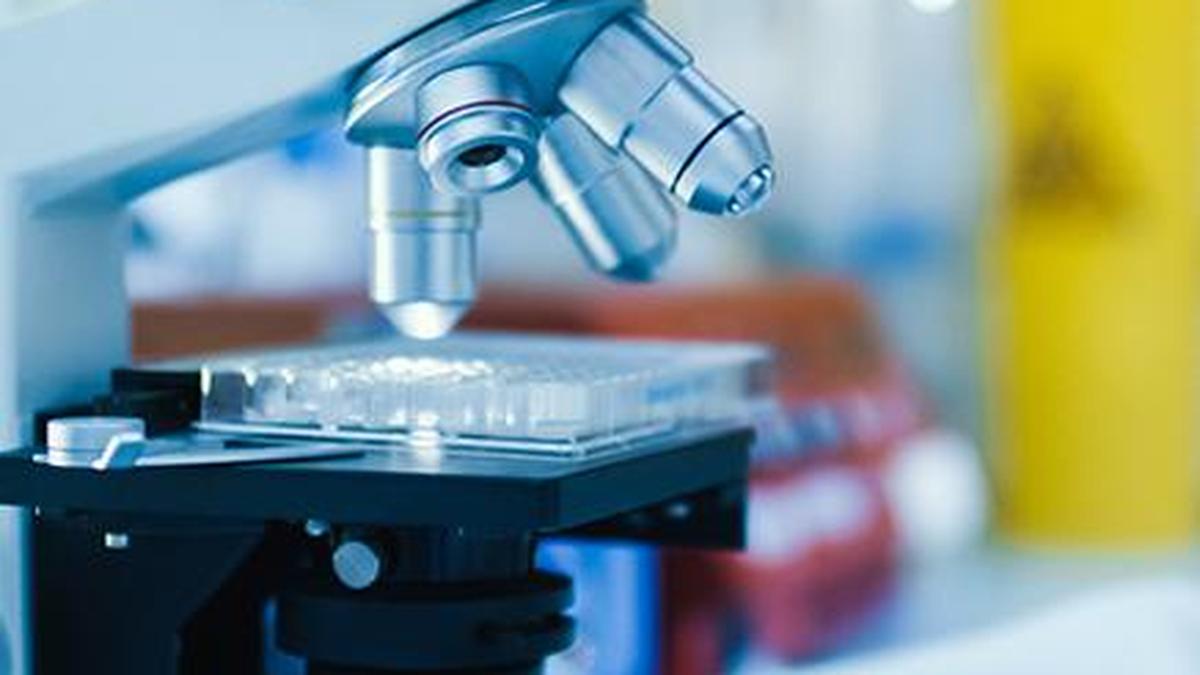
How oncopathology works | Photo Credit: Special Arrangement

Microbiologists play a significant role in the management of cancer patients. Approximately 20% of cancers are caused by microbes: viruses and bacteria. Viruses including the human papillomavirus, hepatitis B virus, hepatitis C virus, Epstein-Barr virus, Kaposi’s sarcoma-associated herpesvirus andHuman T-lymphotropic Virus-1 all cause cancer. Bacteria such as Helicobacter pylori are associated with stomach cancer. Early detection of these microbes and treatment of the infection caused may help in prevention.

Additionally, cancer treatment weakens the immunity of patients and renders them susceptible to life-threatening opportunistic infections. Microbiologists use advanced detection techniques such as BACTALERT 3D/240 (blood microbe culture system), MALDI TOF (matrix‑assisted laser desorption ionisation time‑of‑flight) for rapid and accurate detection of the culprit microbes and to identify the specific antimicrobial agents (drugs) needed to treat the infection. Early detection, therefore, supports rational antibiotic use, de-escalation of antibiotic therapy and antibiotic stewardship. Cumulatively, these advanced microbiological diagnostic techniques prevent the emergence of antimicrobial resistant microbes and impact countless lives.

Read full story on The Hindu
Share this story on:-
More Related News
NASA announces overhaul of Artemis lunar programme amid technical delays

NASA revamps its Artemis lunar program to address delays and ensure a Moon landing by 2028.

West Asia flight disruptions: Stranded Indians in Dubai, Doha and Jordan share stories of uncertainty and support

West Asia flight disruptions: Stranded Indians in Dubai, Doha and Jordan share stories of uncertainty and support

IISc and Pratiksha Trust launch moonshot project on brain co-processors

IISc and Pratiksha Trust launch a groundbreaking project to develop AI-powered brain co-processors for stroke rehabilitation.

Why India needs to radically think its doctoral education programmes Premium

India must revamp its PhD programs to prioritize practical innovation and societal relevance over traditional publication metrics.

Why India needs to radically think its doctoral education programmes Premium

India must revamp its PhD programs to prioritize practical innovation and societal relevance over traditional publication metrics.

In pictures: Lunar eclipse enthrals skywatchers across India and the globe

Witness the blood moon during the lunar eclipse day in India and other countries, through pictures here.

What is a megamaser? Premium

Discover the fascinating world of hydroxyl megamasers, powerful cosmic lasers revealing secrets of distant galaxies and the universe's evolution.

How the next major breakthrough in cancer could come from India Premium

Discover how India's unique resources could lead to groundbreaking advancements in global cancer care and research.

Science Snapshots: March 1, 2026 Premium

Discover groundbreaking research on Mars lightning, innovative smart materials, and a universal ageing marker in just one minute.

How do astronauts return from space and survive re-entry?

A launch vehicle’s ascent battles gravity to gain orbital velocity, while re-entry is a controlled struggle against the atmosphere to systematically shed that immense kinetic energy through aerobraking, thermal protection and precise guidance within the re-entry corridor. Operating as a semi-ballistic body, the crew module performs a deorbit burn, manages communication blackout, and deploys a three-stage parachute system to ensure a safe splashdown.

Nissan Gravite: A value-driven seven-seater

The Nissan Gravite is a budget-friendly seven-seater MPV designed for practical family use in India. Sharing its platform with the Renault Triber, it offers flexible 2-to-7 seating, a removable third row, generous boot space, and a fuel-efficient 1.0-litre petrol engine delivering around 19 km/l. With features such as a floating touchscreen, wireless connectivity, digital instrument cluster, and six airbags as standard, the Gravite blends affordability, safety and everyday usability in a compact footprint tailored to urban and small-family needs.

Meet the teenage cyclists from Tamil Nadu racing at the Track Asia Cup

Discover the dedication of Tamil Nadu's teenage cyclists competing at the Track Asia Cup, balancing sport and academics.

Why are scientists studying gypsum in the Salar de Pajonales? Premium

Explore how Salar de Pajonales in Chile serves as a vital Mars analogue for studying microbial life and ancient fossils.

© 2008 - 2026 Webjosh  |  News Archive  |  Privacy Policy  |  Contact Us