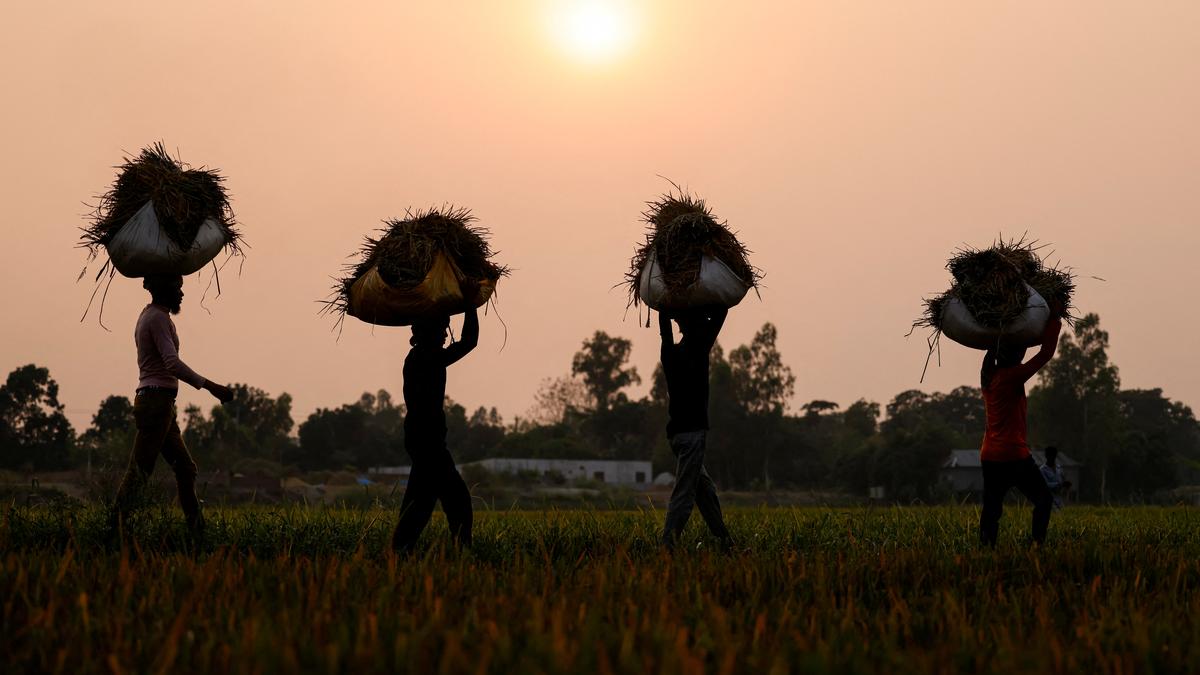
The hands that build our nation: Honouring May Day
The Hindu
Celebrate International Labour Day on May 1, honouring workers' contributions and the fight for fair treatment worldwide.
Every year on May 1, people around the globe celebrate International Labour Day, also known as International Workers’ Day. It’s a day dedicated to recognising the hard work and contributions of workers — the people who keep the world running, often behind the scenes.
The roots of Labour Day go back to the late 1800s, during a time when factory workers were made to work long hours in tough conditions. In 1886, in Chicago, thousands of workers went on strike demanding something we now take for granted — an eight-hour workday. What started as a peaceful protest turned violent during what is now known as the Haymarket Affair. Despite the chaos, their fight sparked a global movement for workers’ rights.
Today, May Day is not just a holiday — it’s a reminder of the struggles and strength of workers across the world.
While May Day began as a global movement, India’s voice joined in on May 1, 1923, when the day was celebrated for the first time in the country — right in Chennai (then known as Madras).
The man behind it? Singaravelar, a bold freedom fighter, lawyer, and advocate for workers’ rights. He founded the Labour Kisan Party of Hindustan and organised two public meetings to honour workers and demand better treatment for them. This historic moment marked India’s entry into the international labour movement.
During British rule, many Indian workers faced harsh conditions — long hours, very low wages, and almost no rights. Whether in mills, plantations, mines or railway construction, workers were often overworked and underpaid. They had little say in their working conditions and were rarely treated with dignity.
Singaravelar’s celebration of May Day was not just symbolic — it was a call to stand up, speak out, and demand justice for Indian labourers. From that day onward, India began shaping its own journey of worker protection, rights, and recognition. (above picture) As part of this growing recognition of workers’ rights, the Triumph of Labour statue, sculpted by Debi Prasad Roy Chowdhury from the Government of Madras School of Arts and Crafts.was installed at Marina Beach, Chennai, in 1959, to honour the contributions of labourers. Sculpted by Debi Prasad Roy Chowdhury, from the Madras School of Art (now Government College of Fine Arts, Chennai) it stands as a symbol of their enduring fight.


Kerala's political parties continue to marginalize women candidates, highlighting a troubling disconnect between gender demographics and representation.

The High Court of Karnataka on Tuesday ordered the issue of a notice to the State government on a PIL petition, which had complained about disturbances caused to people residing in the localities around the National Public School situated in Rajajinagar 5th block due to use of loudspeakers with high volume in the school and parking of school buses in residential areas.

China is extensively mapping ocean floors to enhance submarine warfare capabilities against the U.S. and allies across key oceans.

AIADMK's 2026 manifesto promises free rations, women's benefits, education reforms, and economic growth initiatives for Tamil Nadu.

The vehicle towing drive will soon resume in the city to ease traffic congestion. The Bengaluru Traffic Police (BTP), in coordination with the Greater Bengaluru Authority (GBA), is set to relaunch the vehicle towing drive across the city shortly to tackle traffic congestion and illegal parking.

Panic buying, not shortage, is leading to long queues at Hyderabad petrol pumps.

District Collector urges collective action against TB during World TB Day rally, highlighting screening efforts and patient support initiatives.

DMK finalises seat-sharing for the 2026 Tamil Nadu Assembly elections, contesting 175 seats with allies DMDK and VCK.

Collector V. Saravanan and Police Commissioner Kamini promote voter awareness through outreach programs and traditional events in Tiruchi.

Mysuru DC stresses precautionary measures to reduce road accidents, urging officials to identify and address high-risk areas.

Growing influence of Artificial Intelligence highlighted

Telangana MP urges quick approval and funding for Musi River and 7,444 km sewerage projects during AMRUT review meeting.

Former Udupi MLA K. Raghupathi Bhat, who had launched an indefinite dharna in front of the Udupi Urban Development Authority (UUDA) office on Monday against the Authority’s alleged illegal refusal to grant single site approval for 1.1 acres of his land at Badanidiyur, ended his dharna on Tuesday.