The contentious Intermediate weightage in EAMCET off this year as well
The Hindu
Government is of the view that the academic system has not yet totally recovered from the effects of the COVID-19 Pandemic
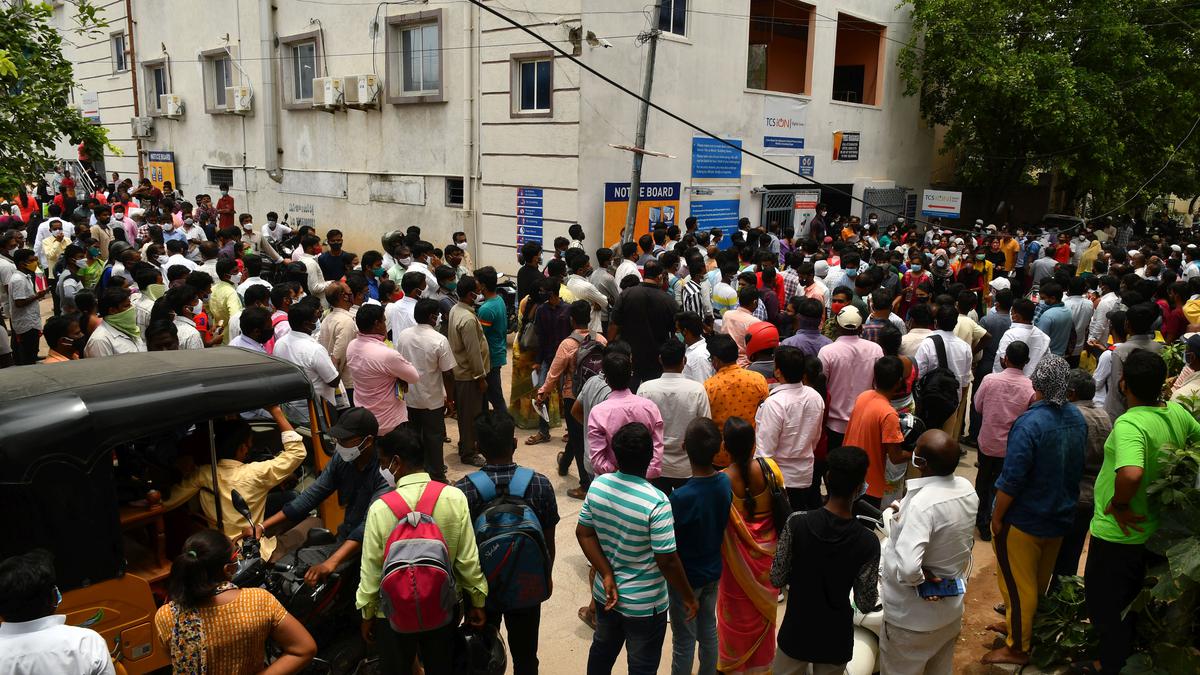
For the fourth consecutive year, the 25% weightage given to Intermediate marks in calculating the final rank in Engineering, Agriculture and Medical streams has been waived off by the government citing the reasons that the pandemic-affected academic system is yet to come back on track.
The weightage was waived off in 2020 when all the Intermediate students were declared passed due to the COVID-19 pandemic. Similar concession was given in the 2021 and 2022 exams as well, as the syllabus was not completed with offline and online mode classes disturbing the learning practices of students. This year too, the government decided not to consider the weightage as only 70% of the first year syllabus is being considered for question paper preparation.
The rank of a student is determined by 75% weightage to the total marks secured in EAMCET and 25% weightage to the total marks secured in relevant group subjects of Intermediate examinations like Mathematics, Physics and Chemistry or Biology, Physics and Chemistry.
The weightage issue has been a contentious one since it was introduced in the EAMCET- 2009 when the corporate colleges had turned themselves into tuition centres preparing students for engineering and medical entrance exams ignoring the Intermediate course totally as the marks had no relevance in securing a seat in the professional courses.
After much discussion and opposition from the colleges the Telangana State Council of Higher Education (then AP State Council of Higher Education) introduced 25% weightage for the marks in the final calculation of the Common Entrance Test rank forcing the colleges also to focus on the main syllabus. Officials then said this helped students to learn the core subjects better rather than preparing only for the entrance test.
The original idea was also to scrap the EAMCET altogether in four years from 2009 and admit students in engineering and medical streams based only on Intermediate marks so as to reduce the pressure of ranks on the students. However, it did not materialise with opposition from the corporate colleges and also due to various guidelines emerging from the national-level that entry into engineering, medical and other professional courses should be done through an entrance test.
The 25% weightage system continued after that as well with officials finding that it reduced pressure on Intermediate students admitted to corporate colleges while it also provided some level playing field for those studying in the government sector and also hailing from the rural areas who did not had access to quality coaching.


Vaccination policies must prioritize saving human lives over individual choice amid rising vaccine skepticism, asserts scientist Dr. Virander Singh Chauhan.

Seven Indian fishermen from Rameswaram arrested by Sri Lankan Navy, sparking protests and calls for government intervention.

Kerala cyber police file a case against X for an AI video allegedly defaming PM Modi and the Election Commission.

iKure and Izawa Co. partner to combat avoidable blindness by integrating innovative eye care technology into rural healthcare networks.

Thousand Lights MLA from the DMK N. Ezhilan, in an interview to The Hindu, observes that any popular personality entering politics will attract the limelight. But only a structured party machinery combined with popularity can ensure success. In this interview, he speaks about his tenure as first-time MLA from Thousand Lights Assembly constituency in Chennai, Vijay’s political entry shaping the 2026 elections, redressal of key grievances and more.

Abhishek Banerjee challenges BJP's Suvendu Adhikari in Nandigram, pledging community health initiatives if Trinamool Congress wins.

Rising LPG shortages in Karnataka boost firewood demand, reviving an informal market as households and hotels seek alternatives.

Against the backdrop of intense poll activity, a 400-metre stretch of an arterial road in the outskirts of Chennai (technically in Madurapakkam panchayat under Tambaram assembly constituency) presents a salute to the idea of res publica, which underpins India’s system of governance, where citizens have a say, at least before a government is securely ensconced in the seat of power. A Republic Day initiative shines bright every night

Fadnavis claims zero FIR in Ajit Pawar crash is a defamation attempt by Karnataka against Maharashtra's investigation efforts.

Set to unfold as a one-day pop-up on April 5, the Easter Sadya brings together both vegetarian and non-vegetarian menus, offering a peek into the food traditions of the Syrian Christian (Nasrani) community. While the traditional Sadya is often associated with dishes such as sambar, avial, and rice, this version expands to include community-specific festive dishes.

BJP nominates mother of R.G. Kar victim Abhaya to contest from Panihati in West Bengal Assembly elections.

Veteran Malayalam actor-director E.A. Rajendran passes away at 71, leaving behind a rich legacy in the film industry.

Dakshina Kannada Zilla Panchayat has rolled out digital mode of water bill generation and collection in 23 gram panchayats on a pilot basis for the first time in Karnataka. This is set to be extended to the remaining 200 panchayats shortly, according to the Zilla Panchayat Chief Executive Officer Narwade Vinayak Karbhari.