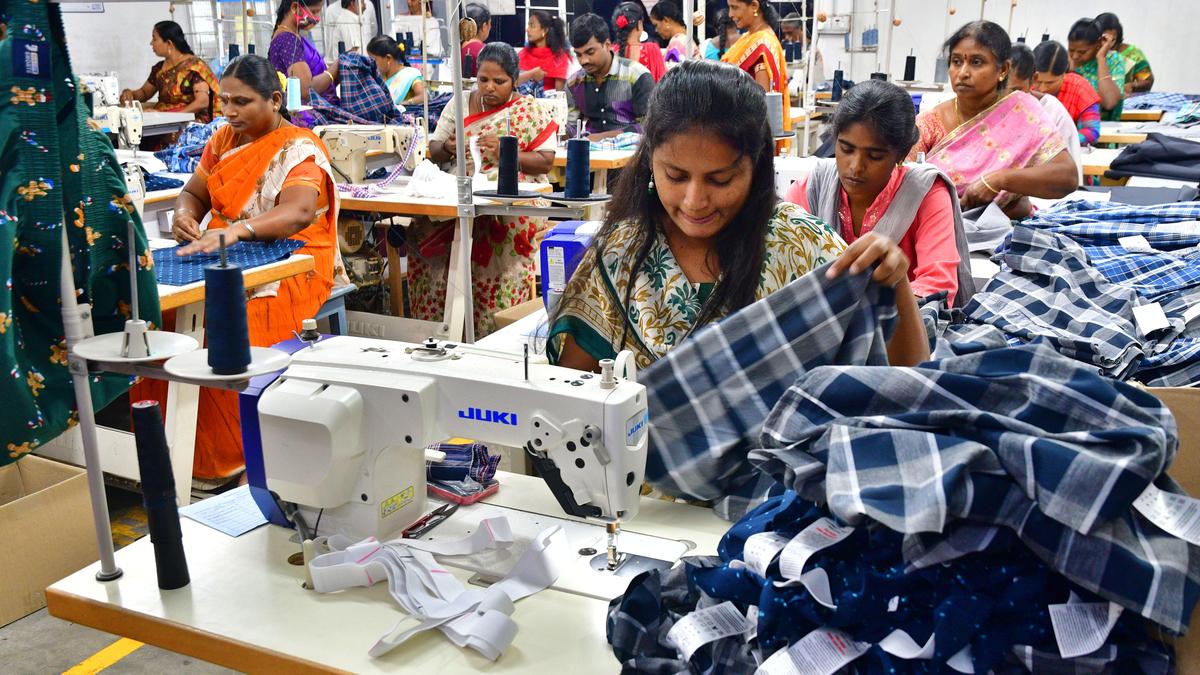
The blue collar ‘fades away’ fast, say studies
The Hindu
Blue and grey collar workers have to be won over in the first three months; and organisations are increasingly alive to the need to chalk out strategies to retain them
Showrooms often advertise blue-collar job vacancies with prominently-hung boards. “Staff needed, full-time or part-time”. Blue-collar vacancies generally get filled quickly. And the positions are also deserted with equal speed.
Smitha Nair, a human-resource professional turned entrepreneur, notes on the scale of difficulty levels in personnel management, retaining blue-collar workers tends towards “very difficult”.
A report by The Udaiti Foundation and Quess Corp Limited found that initial three months of employment is critical to retention, as a substantial number of new associates “jump ship” in that period. The dropout rate among female associates is higher.
The report is based on an analysis of monthly Quess payroll data of over 15 lakh employees from 2020 to 2023.
Associates who stick to the job during the first three months tend to persist in the job for much longer — for a minimum of one year.
The percentage of those dropping out in the first month is higher in the low-earning category as compared to high-earning associates, signalling salary to be a significant factor contributing to dropout rates.
“Unlike white collar jobs, where attrition usually strikes after one year of employment, the ‘turnover rate’ for blue and grey collar staff is high during the first 90 days and we need to address it,” says M.P. Karthick, assistant vice president, Data and Applied Research, The Udaiti Foundation.


Explore North East India with South Star Rail's three unique 14-day train tour packages from Mangaluru, starting April 25.

A woman and her son sustained burn injuries in a gas cylinder fire in Bagalkot, Karnataka, and were hospitalised.

Directed by Nicholas Kharkongor, the show also stars Angira Dhar, and Ranveer Brar in pivotal roles

T.N. CM Stalin blames Centre's delimitation focus for diverting attention from the cooking gas shortage crisis.

UDF plans to challenge Kerala BJP chief Rajeev Chandrasekhar over alleged asset concealment and criticizes CPI(M) for corruption.

Telangana's Civil Supplies Commissioner assures no fuel shortage, with 20,000 kilolitres of petrol available

Delhi Assembly faces second bomb threat in two days amid Budget session; security measures intensified, but no suspicious items found.

Protect your eyes this summer with simple habits like wearing sunglasses, staying hydrated, and maintaining proper hygiene.

Hyderabad Collector assures no fuel shortage, urges public to ignore rumors and avoid panic buying.

Learn how elderly and disabled voters can easily cast their ballots from home in the 2026 Assembly Elections.

Parliament Budget Session LIVE: Track updates on the Parliament Budget Session as the Transgender Bill moves to the Rajya Sabha. Follow The Hindu for the latest updates on the Budget Session on March 25, 2026.

Congress leaders in Kerala accuse LDF and NDA of a secret deal to undermine their influence in the upcoming Assembly elections.

Agnikul Cosmos successfully test-fires a revolutionary 3D printed booster engine, enhancing launch efficiency and scalability in space transportation.