Texas’ abortion ban has left doctors with their hands tied. New Mexico’s governor is inviting them to her state
CNN
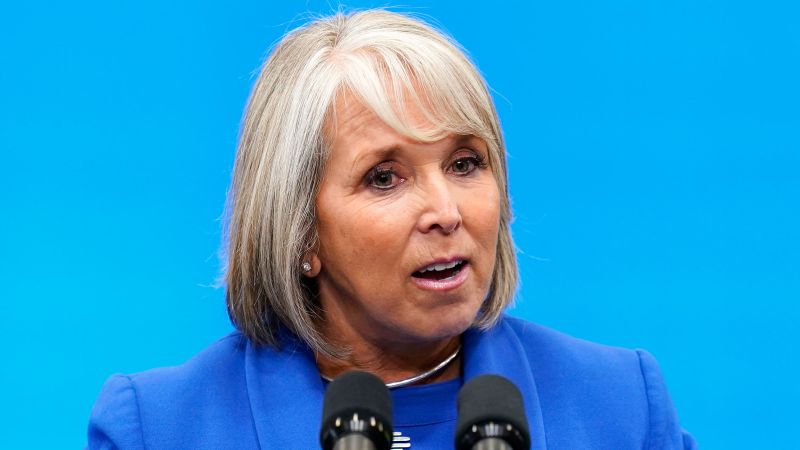
Dr. R. Todd Ivey, a practicing OBGYN in Houston, Texas, opened his Sunday paper last weekend to find a letter from New Mexico Gov. Michelle Lujan Grisham – directed at him.
Dr. R. Todd Ivey, a practicing OBGYN in Houston, Texas, opened his Sunday paper last weekend to find a letter from New Mexico Gov. Michelle Lujan Grisham – directed at him. “It must be distressing that a draconian abortion ban has restricted your right to practice and turned it into a political weapon,” Lujan Grisham wrote. “I certainly respect those of you who remain committed to caring for patients in Texas, but I also invite those of you who can no longer tolerate these restrictions to consider practicing next door in New Mexico,” she added. “We’re fiercely committed to protecting medical freedoms here and we’re taking steps to ensure that what happened in Texas never happens in New Mexico.” The letter, addressed to health care providers in Texas, appeared in five full-page ads in major newspapers across Texas. It’s part of New Mexico’s $400,000 campaign dubbed “Free to Provide,” aimed at recruiting doctors from neighboring Texas who feel restricted by their state’s strict abortion ban. Ahead of the letter’s publishing, the campaign strategically placed six “Free to Provide” billboards around the Houston Medical Center. Why specifically target doctors from Texas?


Tens of thousands of taxpayer dollars were spent on expenses for hair and makeup artists and a horse for the advertisement showcasing outgoing Department of Homeland Security Secretary Kristi Noem in front of Mount Rushmore, according to invoices seen by CNN.

President Donald Trump was presented Sunday with a potential off-ramp to the more than month-long Department of Homeland Security shutdown: fund every part of the department except enforcement operations by Immigration and Customs Enforcement, two sources familiar with the conversations told CNN.

Immigration and Customs Enforcement agents are heading to 13 airports today to help with crowd management as travelers at some airports wait in hours-long security lines amid the DHS shutdown. Follow here for the latest.

A consortium of the nation’s top architectural and historic preservation groups is targeting President Donald Trump’s plans to temporarily close and extensively renovate the Kennedy Center, filing a new lawsuit Monday that asks a federal judge to indefinitely halt the project.

ICE agents sent to airports as TSA callouts remain high; separately, two people have died after a plane collided with a fire truck at New York’s second biggest airport. Follow for live updates

Mike Pence used to dream of following two successful Donald Trump terms with his own turn in the White House.

An Air Canada plane was damaged after colliding with a vehicle on a runway at New York’s LaGuardia Airport Monday, according to video from the scene and air traffic control audio.

A statue of Christopher Columbus has been erected outside of an ornate federal office building on the White House grounds — the latest sign of the Trump administration’s efforts to reshape cultural and historical representations across the nation’s capital.

Kentucky Gov. Andy Beshear, speaking in JD Vance’s home state of Ohio on Saturday, tore into the vice president, questioning his Appalachian roots and telling voters they “deserve better.”

President Donald Trump has said ICE agents will head to US airports tomorrow amid a partial government shutdown. Follow for live updates

Cuba is working to restore the electricity supply after another island-wide blackout left more than 10 million people without power.

President Donald Trump said Sunday border czar Tom Homan will be in charge of deploying Immigration and Customs Enforcement agents to airports on Monday, with Homan telling CNN the agents will help with security at entrances and exits to ease the Transportation Security Administration’s workload.

Donald Trump wants us to believe that a deal with Cuba is close at hand. After this past week, I am not so sure.