Teenager in China becomes youngest person diagnosed with Alzheimer's disease
CTV
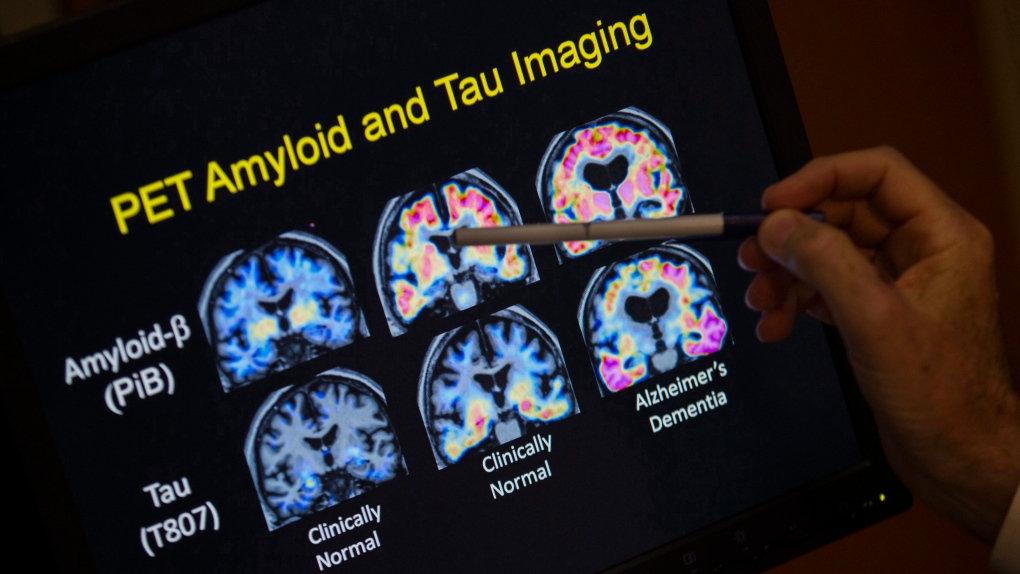
A teenager in China is the youngest person ever diagnosed with probable Alzheimer's disease, according to a study published on Dec. 31 by the doctors who diagnosed him.
A teenager in China is the youngest person ever diagnosed with probable Alzheimer's disease, according to a study published on Dec. 31 by the doctors who diagnosed him.
Alzheimer’s is a degenerative disease that affects thinking, memory and behaviour. The overwhelming majority of Alzheimer’s patients are over 65, making this case especially exceptional.
The study, published in the Journal of Alzheimer's Disease, outlines how the unnamed 19-year-old began to show signs of memory loss two years before he was referred to the Innovation Center for Neurological Disorders and Department of Neurology at Xuanwu Hospital, in Beijing.
He'd begun having difficulty concentrating on his high school studies two years earlier, and started to suffer from short-term memory loss one year earlier.
"For example, he could not recall events from just one day prior or the places of his personal belongings," the authors wrote. "He also had difficulty reading and reacting."
Gradually, the teen's memory worsened. The authors wrote he often lost his belongings, couldn't remember whether he had eaten, and struggled to describe content he had just read.
As a result of his worsening condition, he had to withdraw from high school. Before the onset of his symptoms, he'd been considered an above-average student.


Based on the Japanese wellness practice of Shinrin-yoku, forest bathing has been known to reduce stress, improve mood, lower blood pressure and boost the immune system.

More than 2,000 people remained without power Sunday afternoon after Hawaii suffered its worst flooding in more than 20 years when heavy rains fell across the islands.

SpaceX and Tesla will build two advanced chip factories at a sprawling facility in Austin, Texas, one to power cars and humanoid robots, and another designed for artificial intelligence data centers in space, CEO Elon Musk said on Sunday.

March is Nutrition Month, and two Ottawa dietitians joined "CTV Your Morning Ottawa" to mark the occasion and share three sample performance plates for three different levels of activity.

This year’s hard winter weather likely left significant damage for many homeowners coming into spring. Building and renovation expert Ryan Thompson spoke to CTV’s Your Morning about some of the biggest areas to focus on around the exterior of your home, to help prevent serious damage after the cold, hard winter.

Iranians are managing to get online during the current war with the U.S. and Israel despite drastic censorship and frequent blackouts, throwing the spotlight on to providers of tools such as VPNs (virtual private networks).

March is Nutrition Month, and two Ottawa dietitians joined "CTV Your Morning Ottawa" to mark the occasion and share three sample performance plates for three different levels of activity.

Dozens of models with Down syndrome strutted down a catwalk at a fashion show in Romania’s capital for an evening celebrating style, “atypical beauty” and courage to mark World Down Syndrome Day.

Hawaii suffered its worst flooding in more than 20 years as heavy rains fell on soil already saturated by downpours from a winter storm a week ago, officials said Friday while warning that still more rain was expected during the weekend.

While Canada is well known for its accomplishments in space — including building the robotic arms used on the Space Shuttle and the International Space Station — the country still has no ability to launch its own satellites. This week, Ottawa committed nearly a quarter‑billion dollars towards changing that.

March is Liver Health Month, and while many people think about alcohol and diet when it comes to liver health, a growing risk factor is chronic hepatitis B.

It’s an enduring stereotype that Canadians are unfailingly nice, quick to apologize even when they have done nothing wrong. But an online urban legend claims the opposite of Canada’s soldiers, painting a picture of troops so brazen in their brutality that international laws were rewritten to rein them in.

Friday marks the first official day of spring in the northern hemisphere, but it will still feel like winter this weekend for many Canadians, as snow, sleet, rain and sub-zero temperatures are forecast across the country.