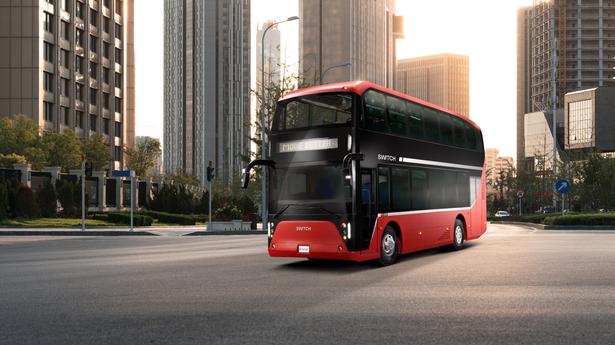
Switch Mobility unveils electric double decker AC bus
The Hindu
Firm bags contract to deploy 200 such buses for BEST in Mumbai
Switch Mobility Ltd., the electric bus and light commercial vehicle subsidiary of Ashok Leyland Ltd., on Thursday unveiled electric double decker air-conditioned bus Switch EiV 22 which will be deployed by the BEST [Brihanmumbai Electric Supply & Transport] in Mumbai to ferry passengers.
Designed, developed and manufactured in India and utilising Switch’s global electric bus experience, Switch EiV 22 is equipped with the latest technology, ultra-modern design, highest safety and best-in-class comfort features, the company said.
The double decker has a lightweight aluminium body construction, which offers higher passenger-to-weight ratio and a competitive cost per km, per passenger.
It can ferry nearly twice the number of seated passengers as a comparable single decker bus with just 18% increase in kerb weight, it said.
Switch India said it has already secured an order for 200 electric double decker buses in Mumbai which will be deployed in the coming months and now is looking at dominating the electric double decker segment in India by supplying such buses to different cities of the country.
A 231 kWh capacity, 2-string, liquid cooled, higher density NMC chemistry battery pack with dual gun charging system powers the vehicle. This enables the electric double decker to have a range up to 250 km for intra city applications.
Dheeraj Hinduja, chairman, Switch Mobility, said, “It’s an extremely proud moment for us as we bring back the iconic double decker to India. Ashok Leyland was a pioneer among Indian manufacturers when it first launched the double decker in 1967 in Mumbai and Switch is carrying forward that legacy.”


Erran Berger, the Vice President of Product Engineering at LinkedIn, thinks the former type of division of labour is rapidly disappearing

India mandates oil and gas firms to share import and export data to mitigate consumer shortages amid rising global prices.

HDFC Bank's chairman Atanu Chakraborty resigns over ethical concerns; Keki Mistry appointed interim chairman for three months.

Stock markets continue to rise for the third day as Sensex and Nifty gain nearly 1%, fueled by IT stocks.

Indian-flagged vessels in the Strait of Hormuz carry 2 lakh MT LNG and 16.7 lakh MT crude, amidst geopolitical tensions.

Equity analysts downgrade earnings forecasts for oil marketing companies, citing rising costs and market pressures for fiscal 2027.

Plastic product prices may surge by 50-60% in April due to rising polymer costs amid ongoing geopolitical tensions.

Centre offers 10% more LPG to States that accelerate piped gas rollout amid ongoing supply challenges and increased consumer demand.

Indian-flagged vessels in the Strait of Hormuz carry 2 lakh MT LNG and 16.7 lakh MT crude, amidst geopolitical tensions.

Stock markets continue to rise for the third day as Sensex and Nifty gain nearly 1%, fueled by IT stocks.

Rising oil prices and LPG shortages are driving India's shift to electric cooking, offering cost-effective and energy-efficient alternatives.

The rupee fell to a record low of 92.63 against the dollar, while equities surged with Sensex up 633.29 points.

Alibaba is sharpening its artificial intelligence strategy by focusing on agents that connect the many businesses under its sprawling corporate umbrella.