Supreme Court's Conservatives Poised To Take Down Decades-Old Precedent
HuffPost
A pair of cases now before the court could hobble the ability of federal agencies to set regulations.
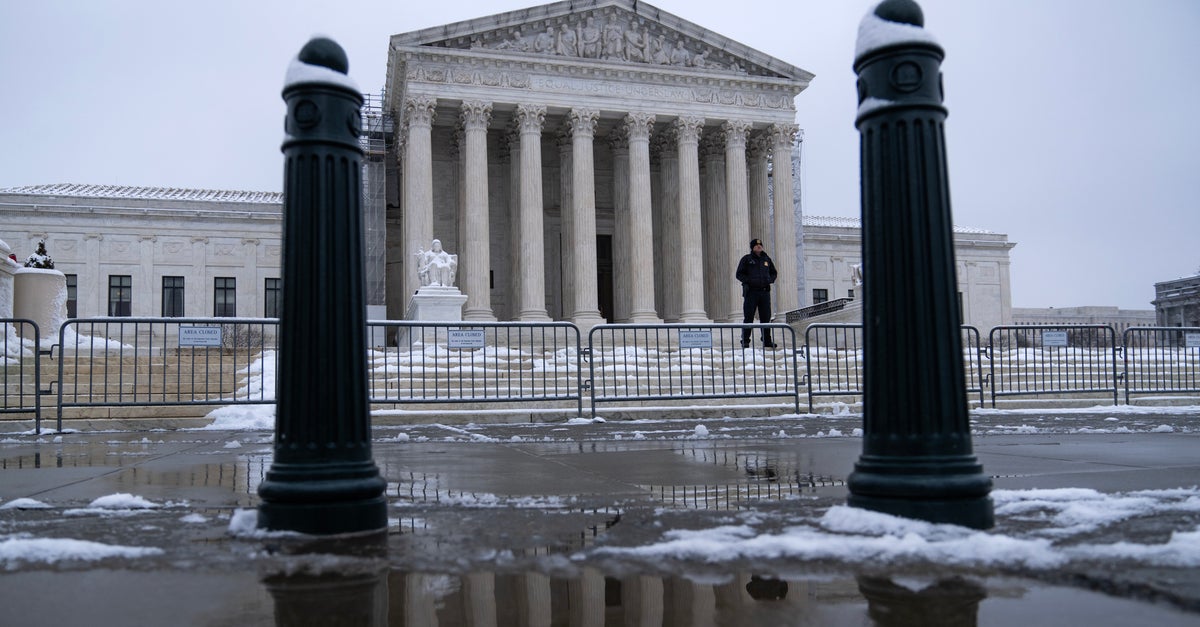
The conservative supermajority on the Supreme Court appeared ready to overturn another major decades-old precedent when it heard arguments on Wednesday in two cases about fishing regulations.
The cases — Relentless, Inc. v. Department of Commerce and Loper Bright Enterprises v. Raimondo — challenged regulations imposed by the National Marine Fisheries Service in 2020 that require fishing boats to pay the salary of the federal inspectors who ride on their boats. But the family-owned fishing companies challenging those regulations made a much broader argument: that the court should overturn its own 40-year old precedent in the case Chevron v. Natural Resources Defense Council, and rule that no federal agency can issue any regulation without specific authorization from Congress. That case’s precedent, the lawyers argued, was out of date and no longer necessary.
If the court overturns its ruling in Chevron, agencies would be more reticent to issue regulations where laws passed by Congress are ambiguous. It would also open the door to a flood of litigation over existing regulations. And since Congress lacks the institutional capacity and the calendar space to pass legislation authorizing every agency rule and regulation written under ambiguous legislative language, the courts would be the final arbiter on each regulatory decision.
In recent years, conservative justices have made clear their hostility to the Chevron decision. The Supreme Court has largely stopped using it in administrative law cases, instead relying on newer judicial canons to strike down federal regulations, like the so-called major questions doctrine in the 2022 case of West Virginia v. EPA. But what was most telling about the cases was how explicit the lawyers for Relentless and Loper Bright were in explaining the partisan and ideological motivations for their arguments.
For decades, the Chevron ruling provided a legal framework for how courts should defer to a government agency’s interpretation or enactment of a regulation: If Congress hadn’t clearly stated an interpretation in the statute, the precedent goes, then the federal court should allow the agency’s decision to stand, unless the regulation represented an unreasonable interpretation of the underlying law.


Stephanie Ruhle said after weeks of trying to get President Donald Trump on the phone, he finally picked up and sniped at her.

"Robert Mueller just died," Trump posted on Truth Social. "Good, I’m glad he’s dead. He can no longer hurt innocent people!"

Long before the Mueller report, Robert Mueller served as a Marine in Vietnam, prosecuted John Gotti and overhauled the FBI.

The lawyer served as special counsel overseeing the investigation into Russian interference in the 2016 election.

Gov. Josh Green said the cost of the storm could top $1 billion, including damage to airports, schools, roads, people's homes and a Maui hospital in Kula.

“What they're doing in trying to affect and buy an election by coming in and spending $10 million at the last minute — all it did was turn voters against them,” Sen. Tammy Duckworth told HuffPost.

The waiver will bring some 140 million barrels of oil to global markets and help relieve pressure on energy supply, Treasury Secretary Scott Bessent posted on X.

Police have released body camera footage from Justin Timberlake's drunken driving arrest in New York’s Hamptons in 2024.

President Donald Trump’s administration has said the policy is reasonable and necessary to protect the military.

Mika Brzezinski needed a little more time than her co-host to process the staggering exchange.

CBS News Radio will close after nearly 100 years of operation, the company announced.

If Mississippi loses this fight at the Supreme Court, it could mean major changes to how mail-in ballots are counted everywhere.

The courts, state election officials and even candidates themselves all have opportunities to stop any election trickery in its tracks.