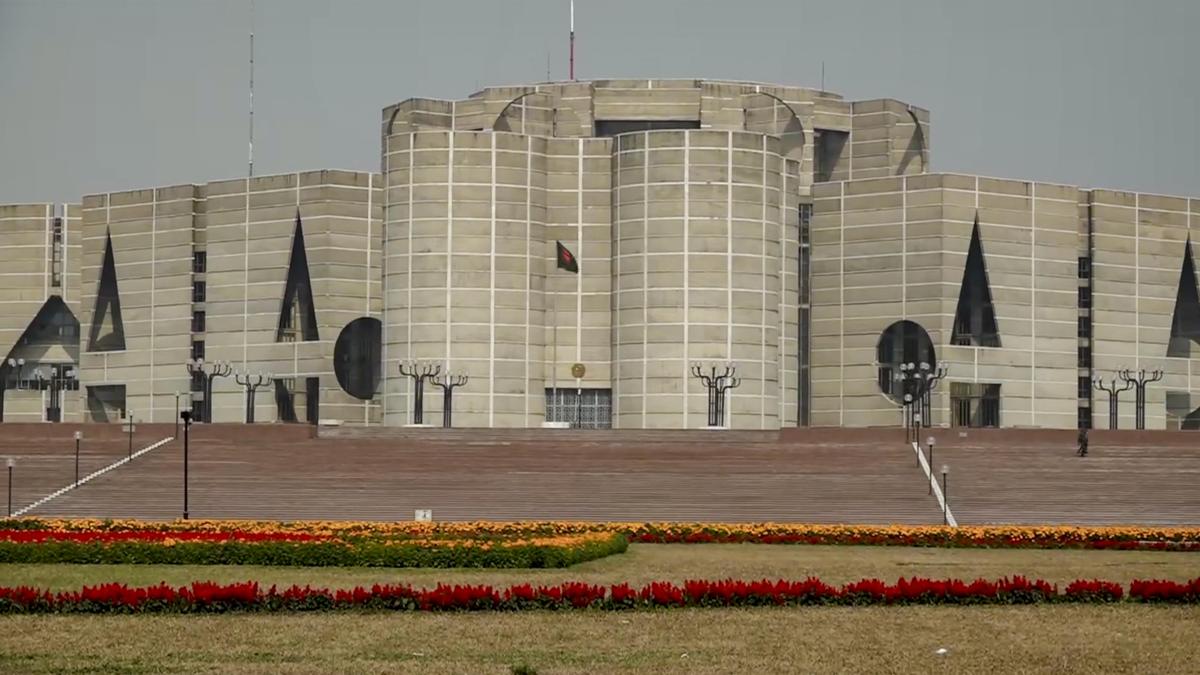
Strong Opposition set to test BNP’s dominance as Bangladesh’s new Parliament takes shape
The Hindu
Bangladesh's new Parliament faces strong Opposition, testing BNP's dominance and promising robust political debate and governance scrutiny.
Bangladesh’s 13th Parliament is set to be one of the country’s most politically contested in nearly three decades, with the Bangladesh Nationalist Party (BNP) forming the government after winning a two-thirds majority and the Jamaat-e-Islami-led alliance emerging as the strongest Opposition bloc since the 1996 elections. The BNP secured 209 of 297 seats in the February 12 parliamentary polls, while the Jamaat-led alliance won 77 seats, positioning itself as the principal Opposition.
Political analysts say that, unlike in previous Parliaments where the Opposition benches were often criticised for being ineffective, the current House is likely to see robust debate and closer scrutiny, particularly on issues of governance, law and order, and constitutional reform. The size and ideological cohesion of the Opposition, they argue, will ensure an active Parliament.
Jamaat-e-Islami Ameer Shafiqur Rahman has also signalled that his party intends to play a strong role both inside and outside Parliament. “With 77 seats, we have nearly quadrupled our parliamentary presence and become one of the strongest Opposition blocs in modern Bangladeshi politics. This is not a setback; this is a foundation,” he said.
Despite allegations of irregularities, Mr. Rahman said Jamaat had accepted the overall election results. However, he alleged that innocent citizens and voters had been attacked in different parts of the country following the polls.
According to him, Jamaat supporters, members of the 11-party alliance, independent candidates, and individuals holding political views differing from those of the BNP were targeted. Condemning the incidents, he said his party stood in solidarity with the victims and demanded accountability.
Meanwhile, BNP Acting Chairman Tarique Rahman, in his first public remarks after the results, called for unity and responsible politics, urging parties to rise above divisions.


Iran warns of grave threats to its citizens from U.S. and Israeli strikes, asserting its refusal to submit to aggression.

Israeli military initiates limited ground operations against Hezbollah in Lebanon amid escalating violence and humanitarian crisis.

Sri Lanka introduces a four-day workweek for public sector to conserve fuel amid escalating energy crisis concerns.

EU and UN explore Black Sea initiative to reopen the Strait of Hormuz amid rising oil prices and regional tensions.

Russia fines Telegram $432,366 for not removing banned content amid accusations of hosting illegal material.

Shorts News:Watch: Smoke billows near Dubai airport after drone attack

West Asia conflict disrupts pharma air routes, threatening cancer drug supplies and forcing companies to find alternative shipping methods.

Trump accuses Iran of weaponising AI for disinformation, citing misleading claims about military successes and public support rallies.

Myanmar's Parliament convenes under military control, following a controversial election that reinforces the Army's grip on power.

Trump urges allies to secure the Strait of Hormuz, but Japan and Australia refuse to send naval support amid rising tensions.

AI-created videos circulating on Elon Musk's X depict American soldiers captured by Iran, an Israeli city in ruins, and US embassies ablaze; a surge of lifelike deepfakes despite a policy crackdown to curb wartime disinformation.

Explore the implications of "no quarter" in warfare, its legal prohibitions, and recent controversial remarks by U.S. officials.

Iran-Israel war: Follow live updates from The HIndu on the West Asia conflict on Marh 16, 2026