Striking workers want more from employers, unions amid string of failed deals: experts
Global News
A recent string of rejected tentative agreements across the country is a sign that workers are expecting more from their employers, and their unions, experts said.
A recent string of rejected tentative agreements across the country is a sign that workers are expecting more from their employers, and their unions, experts said.
“Pre-pandemic, union members were content with wage increases that more or less kept pace with inflation,” said Larry Savage, a professor in the labour studies department at Brock University. But the pandemic, inflation and low unemployment have combined to create a heightened environment for union militancy, he said.
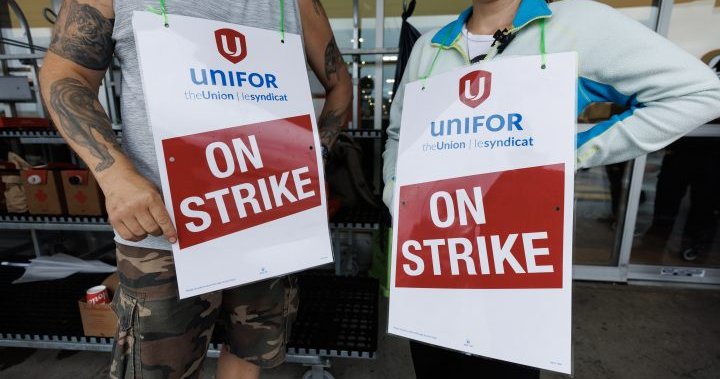
Last week, workers at 27 Metro grocery stores across the Greater Toronto Area rejected a tentative agreement that had been reached just after a strike deadline.
The workers had gone into bargaining with a 100 per cent strike vote, and chose to walk off the job Saturday to fight for more instead of accepting the deal.
Kim Coughlin and Samantha Henry, two Metro employees and members of the bargaining committee, said the tentative deal they reached was the best the group has ever achieved — but it wasn’t enough for the 3,700 workers who are dealing with the skyrocketing cost of living, and who still remember working through the COVID-19 pandemic and having their $2-an-hour `hero pay’ taken away.
For many members, that hero pay is what they’re trying to get back with this agreement, said Coughlin.
Metro has said it’s “extremely disappointed” that Metro workers decided to strike instead of voting for the agreement, which the company said provided “significant increases,” as well as improved pension and benefits.
Meanwhile on the other side of the country, B.C. port workers also recently rejected a proposed agreement from a federal mediator — but another tentative agreement was reached shortly after and will be brought to workers for another vote by Friday.


A former BC Ferries CEO says the Queen of the North sinking remains ‘disturbing’ 20 years later. The ferry struck an island in Wright Sound on March 22, 2006. Two people died.

The 2026 Kraft Hockeyville top two contestants have been named. The winner receives $250,000 for ice rink upgrades, and the runner-up will receive a prize worth about $100,000.

The Office of the Parliamentary Budget Officer scrutinizes federal spending decisions and helps to cost out campaign proposals during elections.

Man’s best friend is proving to be a true lifeline. All across Saskatchewan, service dogs are providing essential, life-changing support every day.

Two days after the first day of spring, parts of Atlantic Canada and Quebec will see another blast of winter with Environment Canada forecasting several centimetres of snow.

UNESCO recognized several Maritime historical groups including the executive director of the Black Loyalist Heritage Centre for their work on the Black Loyalist archive.

Aid shipments are beginning to arrive in Cuba and a Russian oil delivery is expected this month, but fuel shortages remain critical.

Tensions flared as CAQ leadership rivals clashed over Quebec’s “third link” project in the first debate to replace Premier François Legault.

Toronto police have charged a 60-year-old man with second-degree murder in connection with the death of Xian Wei Shao, whose remains were discovered in a north end home last week.

Finance Minister François-Philippe Champagne says the government has found ways to cut spending by $60 billion but cautions that published spending cuts require important context.

Three Canadians from Quebec who were stranded in the Persian Gulf since Feb. 28 have returned home following a coordinated repatriation effort.

Federal departments announced that they plan to cut more than 12,000 jobs over three years as part of the Carney government’s spending review plan.

Canada’s Integrated Threat Assessment Centre says the U.S.-Israeli war against Iran has heightened an already present threat against Jewish Canadians and public officials.