Simultaneous elections are essential to become a developed nation by 2047: Chaudhary Premium
The Hindu
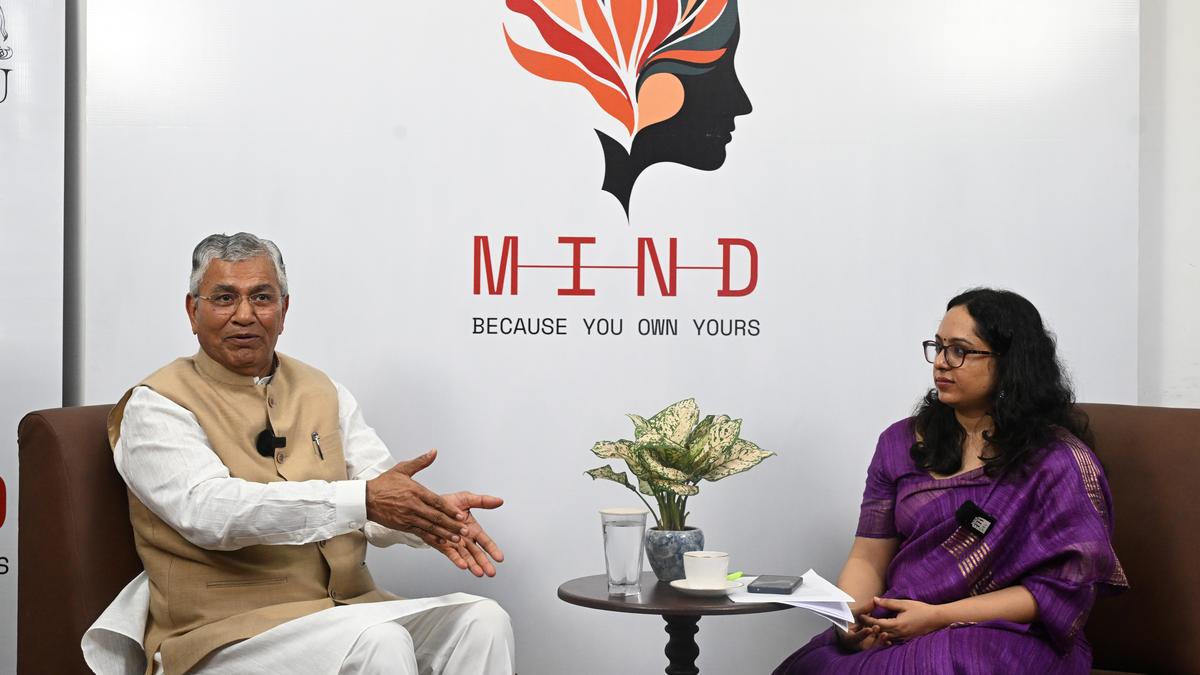
The Hindu Mind event: P.P. Chaudhary emphasizes simultaneous elections as vital for India's development by 2047, urging political unity for electoral reform.
Simultaneous polls are crucial from an economic standpoint, according to P.P. Chaudhary, BJP MP and chairperson of the Joint Parliamentary Committee (JPC) examining the Bill on concurrent elections. In a wide-ranging conversation at The Hindu MIND event moderated by Sobhana K. Nair, he, however, admitted that the Constitution (129th Amendment) Bill, 2024, in its present form has many infirmities, including excessive power to the Election Commission (EC), which needs to be addressed. Edited excerpts:
The JPC on simultaneous polls has had 16 meetings consulting a wide array of witnesses, including six former Chief Justices of India. You have made your support for the legislation very clear. Why do you believe India needs to synchronise its election cycle?
This reform is necessary from an economic standpoint to prevent wastage of manpower and to avoid disruption of investment. ‘One nation, one election’ is key for ‘Viksit Bharat’. In Uttarakhand, for instance, tourism accounts for 43% of the State’s revenue and operates effectively for only four months. An election held in April-May during this window severely disrupts the economy. Nationwide, separate voter lists for panchayat, municipal, Assembly and Lok Sabha elections must be prepared repeatedly, largely by government school teachers. Their frequent deployment for training and election duties disrupts teaching, hurting students, especially those from disadvantaged backgrounds. A paper presented to the Ram Nath Kovind Committee (an 8-member high-level panel on simultaneous elections) by [former Finance Commissioner] N.K. Singh and Prachi Mishra [economics professor] estimated a recurring loss of 1.6% of the GDP, roughly ₹7 lakh crore, due to frequent elections, a cost that could otherwise fund housing, infrastructure, and development. [Former IMF chief economist] Gita Gopinath has also acknowledged the economic impact. Elections cause investment delays, including FDI, as investors wait for political clarity at both the State and Central levels. Without at least four-and-a-half years of stable governance, meaningful outcomes cannot be delivered. If India aspires to become a developed nation by 2047, electoral reform is essential. To quantify the losses more accurately, the panel has asked Chief Secretaries of all States and Union Territories to study the impact of frequent elections.
There are two main criticisms of this legislation. Firstly, that it violates the basic structure of the Indian Constitution. Secondly, it is against the federal framework of the Constitution. After all, elections are the only way to hold the government accountable. What are your thoughts?
I have a question for those critics. From 1951 to 1967, elections were held simultaneously for the Lok Sabha and all State Assemblies. Were those elections against the basic structure of the Constitution? Were they against federalism? Even the Congress has attempted to synchronise the elections by dissolving seven State Assemblies around 1968. Even today, several States still have elections held simultaneously. Is democracy, federalism and fundamental rights not fully protected in those States? This legislation is crucially about fixing the date of elections in such a way that they are held simultaneously. It does not seek to alter the federal framework or basic structure of the Constitution. There was only one caveat, which we also agree with, that the formulation of the Bill may require certain changes in drafting. Which is precisely why Parliament referred the Bill to the JPC to examine and make changes in its formulation.
How will the national election and State polls synchronise?


About 60,000 students from 350 colleges celebrate creativity at SRMIST's Milan cultural fest in Chennai.

Southern Railway submits draft MoU for MRTS takeover to Tamil Nadu government, awaiting Railway Board's approval for project advancement.

Delhi High Court grants bail to SUV driver accused of killing two, pending trial and conditions set by the magistrate.

Telangana govt prepared to meet challenges posed by rapid rise of AI: IT Minister

Allahabad High Court criticizes U.P. police's FIRs as exaggerated and script-like, granting interim protection to the accused.

HRD Minister Nara Lokesh envisions Amaravati's Central Library as a symbol of Andhra Pradesh's history and modern educational innovation.

PM Modi discusses bilateral cooperation in trade, technology, and AI with leaders from Mauritius, Sri Lanka, and Slovakia.

Congress plans Kisan Sammelans to address the negative impact of the India-U.S. trade deal on farmers' livelihoods.

Mysuru-based anti-corruption activist Snehamayi Krishna, the complainant in the MUDA case against Chief Minister Siddaramaiah and his family members, was questioned for almost all day by the Bengaluru City Police on Friday for allegedly using forged documents and audio to make false allegations.

Alexandra Kosteniuk discusses her chess journey, the game's evolution, and her motivations as a top player in her 40s.

Youth Eco Summit 2026 Reframes the AI Conversation for the New Generation

O. Panneerselvam claims DMK has a strong chance of retaining power, citing their achievements in the past five years.

From traditional handicraft items from Manipur to a variety of dress materials from across state by women Self-Help group members are on display at the stalls at the National SARAS mela in Karavali Utsava ground in Mangaluru. The nine-day long mela began on Friday.