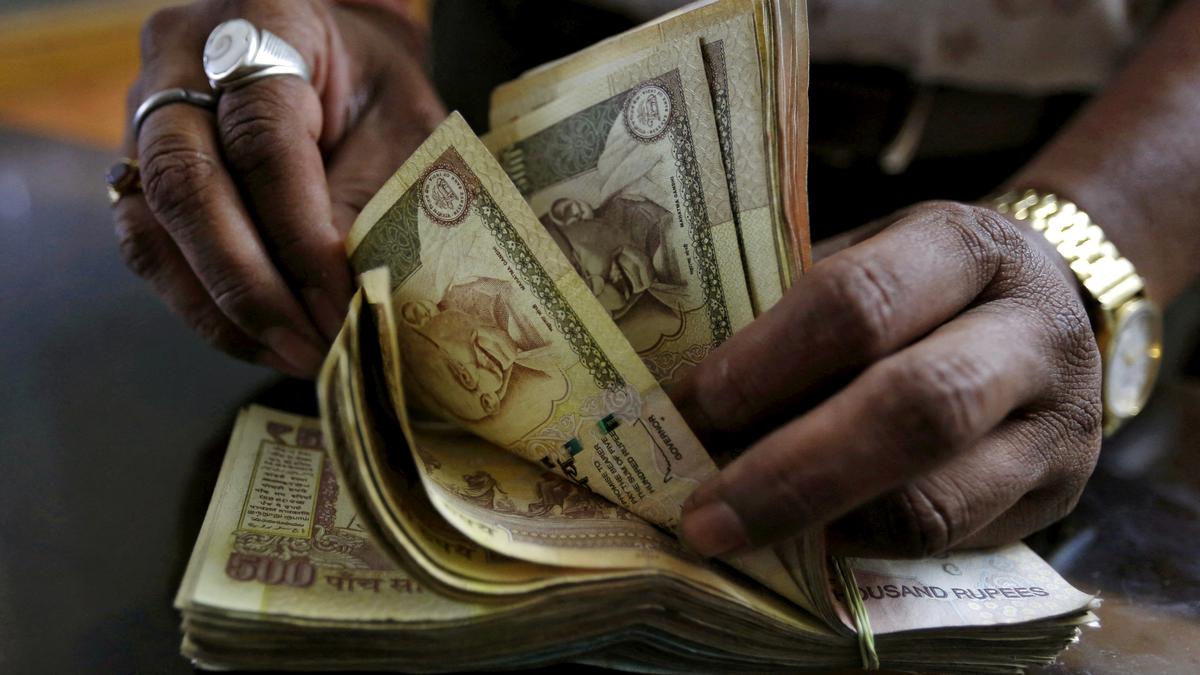
Rupee rises 9 paise to 83.19 against U.S. dollar in early trade
The Hindu
In the domestic equity market, the 30-share BSE Sensex was trading 568.23 points or 0.89% higher at 64,159.56. The broader NSE Nifty advanced 155.80 points or 0.82% to 19,144.95
The rupee appreciated by 9 paise to 83.19 against the U.S. dollar in early trade on November 2, tracking its Asian peers as risk-on sentiments prevailed in the market as the U.S. Fed was a bit dovish in its policy meeting.
A weak U.S. dollar overseas and positive domestic equities supported the local unit in early trade, forex traders said.
The U.S. Fed kept interest rates on hold, and its chairman looked content with the economy's soft landing. Following the decision, the dollar index softened, and the 10-year bond yield fell to 4.70.
At the interbank foreign exchange, the domestic unit opened at 83.23 against the dollar and then touched an early high of 83.19, registering a gain of 9 paise over its previous close.
On Wednesday, the rupee settled at 83.28 against the U.S. dollar. The local unit hit all-time low level of 83.35 against the American currency during intra-day.
"Asian currencies all gained against the dollar after the dovish FED as risk-on sentiments prevailed in the market. Brent oil rose slightly to $85.45 per barrel," said Anil Kumar Bhansali, Head of Treasury and Executive Director of Finrex Treasury Advisors LLP.
Mr. Bhansali noted that the rupee made a new closing low of 83.29/30 on demand from importers, FPI outflows and ECB redemptions.


OpenAI plans to nearly double its workforce to 8,000 from 4,500 by the end of 2026, the Financial Times reported on Saturday, citing two people with knowledge

Global equity markets plummet as West Asia tensions rise and oil prices surge, triggering significant investor anxiety.

The rupee hits a record low of 93.94 against the dollar amid foreign fund outflows and a crashing equity market.

The Thane police have arrested two co-founders of cryptocurrency exchange platform CoinDCX in connection with an alleged fraud of Rs 71.6 lakh, officials said

Meta Chief Executive Mark Zuckerberg is building a CEO agent to help him do his job, the Wall Street Journal reported

Insurance penetration and density are often misunderstood and do not reveal how many families are insured or whether they would be financially secure if the main earning member were to die. The real issue is not reach but adequacy, as households may have life insurance but not enough cover to replace lost income, leaving them financially vulnerable.

Five top firms lose ₹1 lakh crore in market value, with HDFC Bank experiencing the largest decline of ₹56,124.48 crore.

L&T confirms 95% of its West Asia project sites are safe, while addressing logistics challenges amid ongoing regional conflicts.

Mines Ministry to auction 19 critical mineral blocks on March 23, expanding strategic resources for clean energy and technology sectors.

Mines Ministry to auction 19 critical mineral blocks on March 23, expanding strategic resources for clean energy and technology sectors.

Five top firms lose ₹1 lakh crore in market value, with HDFC Bank experiencing the largest decline of ₹56,124.48 crore.

HDFC Bank terminates three senior officials over client onboarding issues at its DIFC branch amid ethical concerns following chairman's resignation.

Air India CEO warns of potential flight cuts and reduced travel demand due to rising fuel costs amid ongoing Gulf conflict.