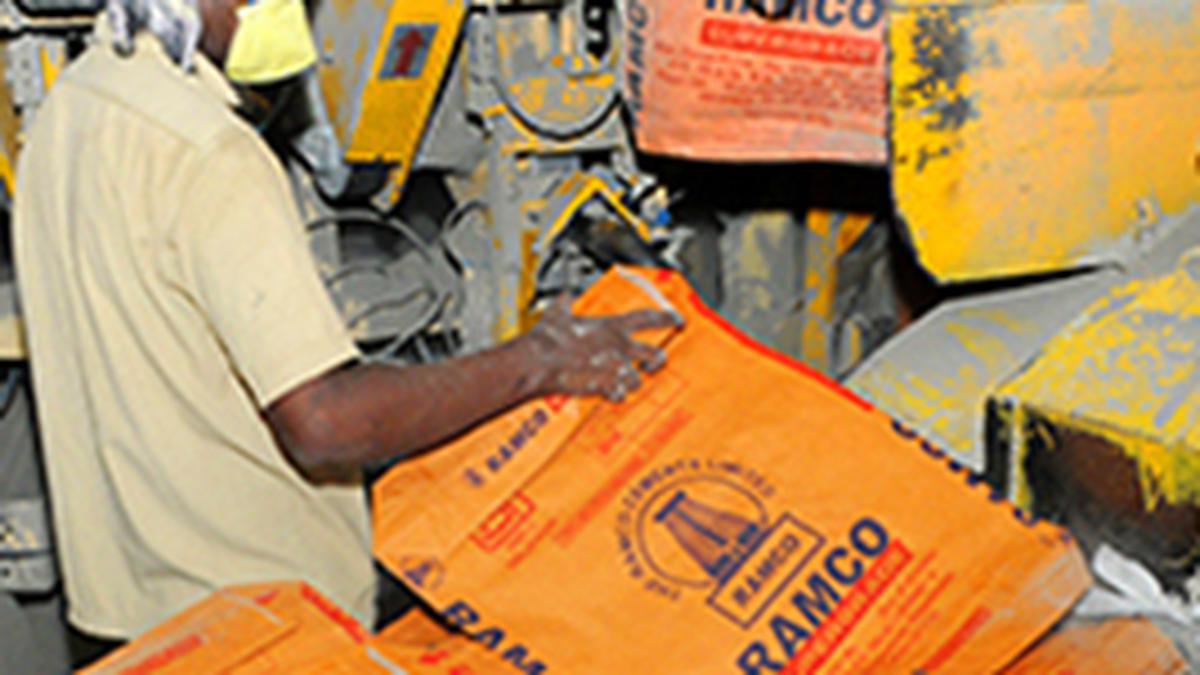
Ramco Cements Q3 net dips 19% as input costs surge
The Hindu
Revenue from operations rose to ₹1,991 crore from ₹1,541 crore
The Ramco Cements Ltd standalone net profit for the quarter ended December contracted to ₹67 crore from ₹83 crore in the year-ago period due to steep increase in input cost mainly fuel price.
During the period under review, revenue from operations rose to ₹1,991 crore from ₹1,541 crore while input cost increased by 28% to ₹254 crore, it said in a regulatory filing.
Cement sales rose to 3.57 million tonnes from 3.01 million tonnes. There was a 12% fall in windfarms generation to 2.01 crore units. The capacity utilisation of clinker at Kolimigundla plant in AP reached 55%.
The cement major said despite an improvement in average price of cement during the quarter, it could not cover the cost increase since the pet coke/coal prices remain at elevated levels. Rail transportation cost increased by 15% due to re-imposition of busy season surcharge from October.
On the expansion, it said that out of 12 MW waste heat recovery systems in Kolimigundla, 5 MW was commissioned in November. Another 3 MW will be commissioned in February and balance by May.
Thermal Power Plant of 18 MW and railway siding would be commissioned in FY24. The modernisation of RR Nagar plant would be commissioned before March.
With regard to capacity expansion of its dry mix products in TN, production has started in one unit in December and another unit in February. The remaining two units in AP & Odisha would be commissioned during FY24.


Global equity markets plummet as West Asia tensions rise and oil prices surge, triggering significant investor anxiety.

The rupee hits a record low of 93.94 against the dollar amid foreign fund outflows and a crashing equity market.

The Thane police have arrested two co-founders of cryptocurrency exchange platform CoinDCX in connection with an alleged fraud of Rs 71.6 lakh, officials said

Meta Chief Executive Mark Zuckerberg is building a CEO agent to help him do his job, the Wall Street Journal reported

Insurance penetration and density are often misunderstood and do not reveal how many families are insured or whether they would be financially secure if the main earning member were to die. The real issue is not reach but adequacy, as households may have life insurance but not enough cover to replace lost income, leaving them financially vulnerable.

Five top firms lose ₹1 lakh crore in market value, with HDFC Bank experiencing the largest decline of ₹56,124.48 crore.

L&T confirms 95% of its West Asia project sites are safe, while addressing logistics challenges amid ongoing regional conflicts.

Mines Ministry to auction 19 critical mineral blocks on March 23, expanding strategic resources for clean energy and technology sectors.

Mines Ministry to auction 19 critical mineral blocks on March 23, expanding strategic resources for clean energy and technology sectors.

Five top firms lose ₹1 lakh crore in market value, with HDFC Bank experiencing the largest decline of ₹56,124.48 crore.

HDFC Bank terminates three senior officials over client onboarding issues at its DIFC branch amid ethical concerns following chairman's resignation.

Air India CEO warns of potential flight cuts and reduced travel demand due to rising fuel costs amid ongoing Gulf conflict.

Options are widely used by retail traders to speculate on the value of the stock for immediate gains and such behaviour in large scale can distort the market